Buffet Table Setup: Layout, Food Placement & Tips
A good buffet table setup makes serving easier, keeps the table organized, and helps guests move comfortably during a party. Whether you are hosting a family gathering, a holiday dinner, or a birthday celebration, the right arrangement makes a big difference.
A buffet does not need expensive decorations or special equipment. With a sturdy table, serving trays, food labels, utensils, and a little planning, you can build a setup that looks good and works well.
The key is to arrange food in a logical order, leave space between dishes, and keep everything within easy reach. This guide covers how to set up a buffet table, choose serving equipment, pick a layout, decorate, keep food safe, and avoid common mistakes.
Table of Contents
What Is a Buffet Table Setup?
A buffet table setup is an arrangement of food, drinks, and serving equipment on a table or station so guests can choose their own portions. Instead of food being served to each person, guests move along the table and take what they want.
It is popular for home parties, holiday meals, family gatherings, weddings, and other events.
A typical buffet includes:
- Plates and napkins
- Appetizers and salads
- Main dishes and sides
- Sauces and condiments
- Serving spoons, forks, and tongs
- Drinks and desserts
The exact arrangement depends on the event, the space, and the number of guests.
Why Is a Good Buffet Arrangement Important?
A thoughtful buffet food table arrangement has several benefits:
- Easier serving: Guests find food without asking where things are.
- Less crowding: Guests move along the table without reaching over each other.
- Better organization: Separate sections for appetizers, mains, sides, drinks, and desserts keep the table tidy.
- Better presentation: Matching dishes and simple decorations make an ordinary table look more attractive.
- Easier portion control: Smaller dishes and the right utensils help guests take manageable portions.
Balance looks and function. A beautifully decorated table is not much use if guests cannot reach the food.
Essential Items for a Buffet Table
You need a sturdy table, a covering, serving dishes, plates, utensils, and a few organizers. You do not have to buy everything new, because many household items work if they are clean and food-safe.
Table and Table Covering
Start with a sturdy table that has enough room for all the dishes and utensils.
- Rectangular folding tables for larger gatherings
- Round tables for smaller displays
- Dining tables for casual home buffets
- Kitchen islands for compact stations
A tablecloth makes the setup look coordinated and protects the surface. Choose one that fits well and does not hang low enough for guests to catch or pull.
Serving Trays and Platters
Trays and platters organize the food and make the buffet easier to navigate. Match each piece to the food it will hold:
| Serving equipment | Best use |
| Large rectangular platters | Sandwiches, appetizers, sliced meats |
| Round serving trays | Desserts, fruit, snacks |
| Divided serving trays | Snacks and condiments kept apart |
| Deep serving bowls | Salads, pasta, side dishes |
| Dishes with lids | Foods that need protection |
| Tiered stands | Small desserts and appetizers |
A shallow platter works well for sandwiches, while pasta salad and other foods served with a spoon need a deeper bowl, so choose serving trays and platters by the food first and the look second.f
Plates, Napkins, and Utensils
Place plates and napkins where guests can pick them up before reaching the food.
Depending on the menu, prepare:
- Dinner plates
- Small appetizer plates
- Dessert plates
- Forks and spoons
- Knives, if needed
- Paper or cloth napkins
Keep guest utensils separate from serving utensils. This helps reduce direct contact with shared food.
Serving Bowls and Food Warmers
Some dishes need more than a flat platter:
- Deep bowls for salads and pasta
- Lidded dishes to protect food
- Chafing dishes or electric warmers for hot food
- Insulated containers for transport
- Containers set in ice for cold foods
Check that each piece suits the dish’s temperature and texture.
Food Labels and Table Accessories
Small accessories tell guests what each dish contains. Useful items include food labels, name cards, small chalkboard signs, food picks, sauce containers, and napkin holders. Labels matter most when the buffet includes vegetarian options, common allergens, or dishes that look alike.
How to Arrange Food on a Buffet Table
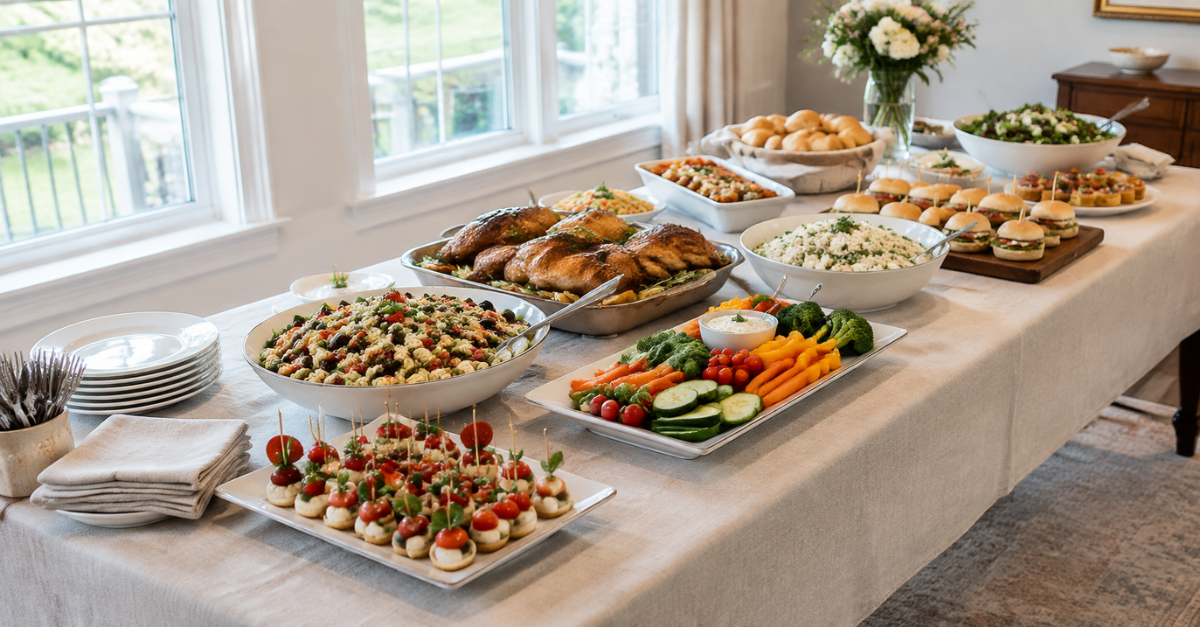
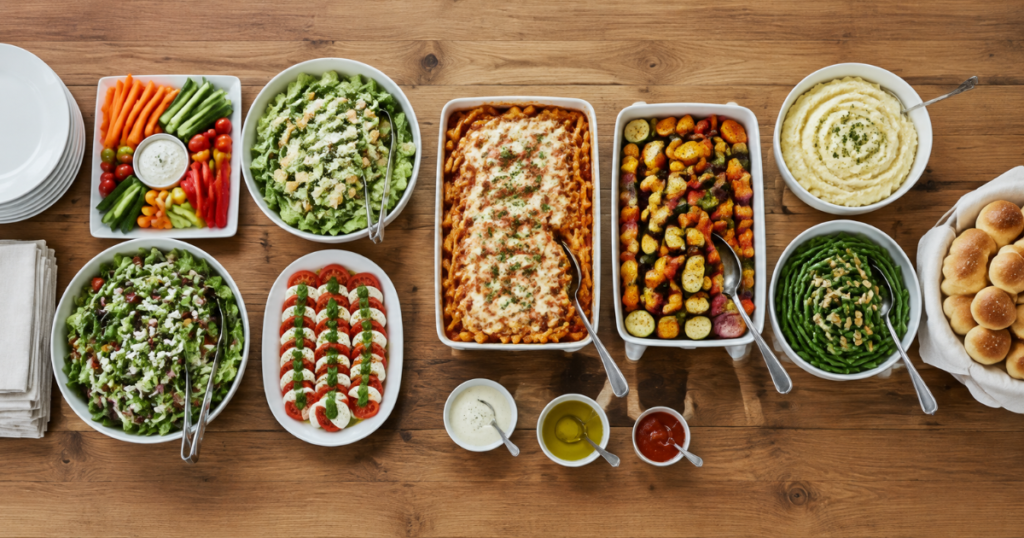
Place items in the order guests will need them: plates and napkins first, then appetizers and salads, main dishes, and sides. Sauces and serving utensils go beside the dishes they belong to, and drinks and desserts can have their own stations. A clear order lets guests move along the table without confusion.
Step 1: Place Plates and Napkins at the Beginning
Put clean plates and napkins at the start of the line. If you have several food stations, provide plates at each one. Plates at the end force guests to reach back across the food.
Step 2: Arrange Appetizers and Salads
Place appetizers and salads right after the plates so guests start with lighter items.
- Vegetable platters
- Cheese and crackers
- Fresh fruit
- Pasta salad
- Green salad
- Small sandwiches and finger foods
Step 3: Place Main Dishes in the Middle
Main dishes need the most space because their containers and utensils are larger.
- Roasted chicken
- Baked pasta
- Grilled vegetables
- Rice dishes
- Casseroles
- Vegetarian entrees
Give each dish its own serving utensil. If a dish has a sauce or topping, put it in a separate container beside it.
Step 4: Arrange Side Dishes
Place sides next to the main courses.
- Mashed potatoes
- Roasted vegetables
- Dinner rolls
- Coleslaw
- Potato salad
- Corn dishes
Keep similar foods together. Bread belongs beside butter or spreads, and vegetable sides sit together.
Step 5: Add Sauces and Condiments
Put each sauce next to the food it goes with:
- Gravy near roasted meat
- Salad dressing near salads
- Butter near dinner rolls
- Salsa near appetizers
- Ketchup and mustard near sandwiches
Small bowls or sauce containers prevent spills.
Step 6: Place Serving Utensils Near Each Dish
Give every shared dish its own utensil, and set them out before the food goes down so nobody has to search.
- Tongs for bread and larger pieces of food
- Serving spoons for rice and side dishes
- Ladles for soups and sauces
- Salad servers for leafy salads
- Small spoons for dips and condiments
Step 7: Set Up Drinks and Desserts Separately
When space allows, give drinks and desserts their own stations. Drinks can include water, lemonade, and iced tea. Desserts might be cookies, brownies, cupcakes, fruit platters, mini pastries, or cake slices.
Separate drinks keep guests from juggling full plates and glasses at the main table, and a dessert table makes the main buffet less crowded.
Buffet Table Layout Ideas
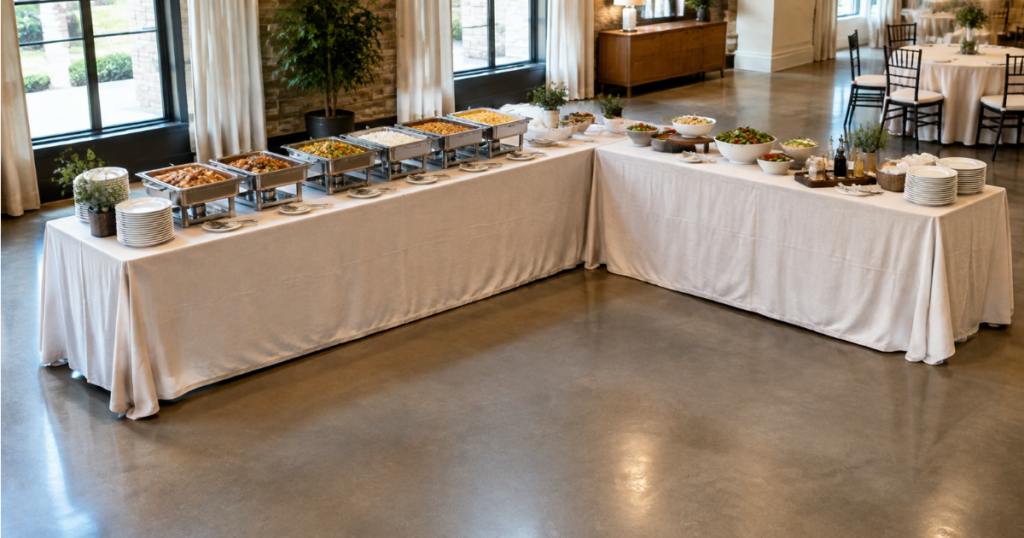
The right layout depends on your space, guest count, and menu. A small home gathering may need only one table, while a larger event benefits from separate stations. Here are four practical options.
Single-Line Buffet Layout
All the food sits in one continuous row. Plates and napkins come first, then appetizers, mains, and sides, with sauces beside their dishes and desserts and drinks placed apart.
- Strengths: Easy to organize, fits narrow spaces, and gives a clear serving order.
- Limits: Guests form a line, one crowded section slows everyone, and it struggles with very large groups.
It suits small family parties and casual home events.
Double-Sided Buffet Layout
Guests reach the food from both sides of the table. Mirror the dishes on both sides, with plates at each starting point, so guests on either side see every dish and nobody has to reach across.
- Strengths: More access, less crowding, and a good fit for larger groups.
- Limits: It needs room around the whole table, plus a duplicate set of dishes and utensils.
It works well in larger dining rooms, event spaces, and open areas.
L-Shaped Buffet Layout
Two tables meet at a right angle. Use one side for plates, appetizers, and main dishes, and the other for sides, condiments, or desserts.
- Strengths: It uses corner space and creates separate food sections.
- Limits: The corner can get crowded, narrow rooms make movement difficult, and food and utensils need careful placement.
It is useful at home when a single long table is not practical.
Separate Food Station Layout
The buffet is divided into a main food station, a salad and appetizer station, a drink station, and a dessert station.
- Strengths: It keeps categories organized, reduces crowding, and lets guests visit each station separately.
- Limits: It needs extra tables or counter space, guests walk between stations, and every station needs its own serving equipment.
It works for larger gatherings with a wide menu.
How to Choose the Right Serving Trays
Pick trays that fit your layout. Keep these points in mind:
- Match the tray to your layout: Long flat platters save space in a single-line setup, while separate stations each need their own set of trays.
- Choose by the food first. Shallow platters suit sandwiches and finger foods, while deep trays or bowls suit saucy dishes, pasta, and salads.
- Keep the look consistent: Matched serving platter sets keep the table coordinated across stations.
- Make sure it is stable: A tray that wobbles or tips is a spill risk on a crowded table.
- Choose easy-to-clean trays: Clean trays are easier to refill and swap during the party.
- Use the right shape for the food: The tray should hold the food neatly and let guests serve themselves easily.
Do not pick trays on looks alone.
How to Decorate a Buffet Table
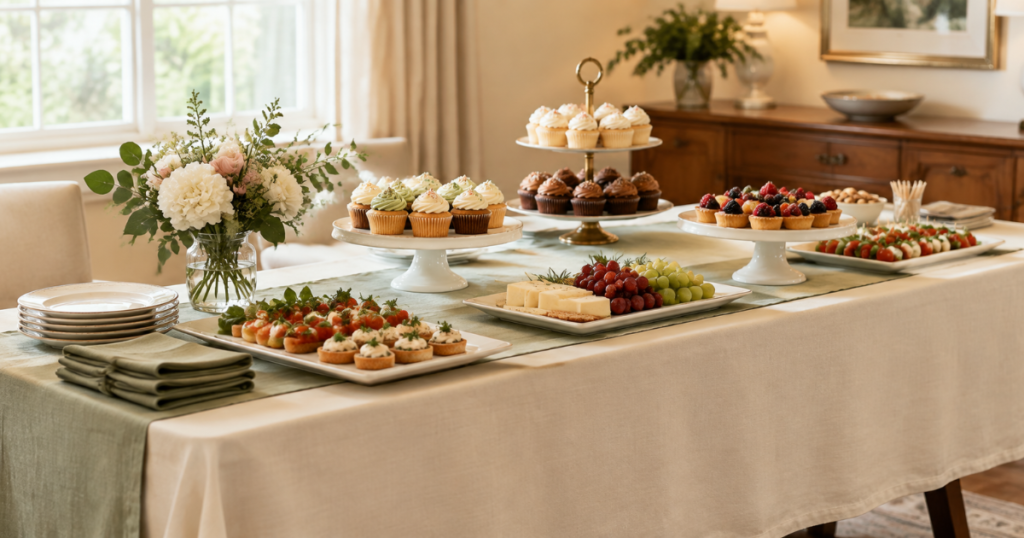
Good buffet table decoration ideas improve the look of the table without taking space needed for food. Keep decorations simple, coordinated, and out of the guests’ way.
Choose a Simple Color Theme
Start with two or three colors:
- White and green for a fresh look
- Gold and cream for an elegant gathering
- Red and white for a festive celebration
- Blue and silver for a winter event
Use them in the tablecloth, napkins, labels, and small decorations. A consistent scheme is enough, and not every item has to match.
Use Tablecloths and Runners
A tablecloth gives the food a clean background. A runner marks the center of the table and leaves room for dishes. Choose fabrics that are easy to clean.
Add Small Centerpieces
Small flower arrangements, decorative bowls, seasonal greenery, small signs, and candles placed safely away from food all work. Avoid large centerpieces that block the view of the dishes or the reach to them.
Use Different Heights
Varying heights make the buffet look organized. Use a tiered stand for cupcakes, small bowls on stable risers, and stands for bread and appetizers, and keep larger platters on the table surface. Make sure every raised item is stable.
Add Food Labels
Labels are both decorative and useful. Keep them simple and readable, and cover the main dishes, sides, vegetarian and gluten-free options, and common allergens.
Keep Decorations Away From Food
Keep loose decorative materials away from uncovered food. Use food-safe decorations, and keep non-food accessories out of the serving area.
Buffet Food Safety and Serving Tips
A safe buffet depends on food temperature, clean equipment, careful handling, and regular refilling.USDA guidance gives these limits:
- Keep hot foods at 140°F or above.
- Keep cold foods at 40°F (4°C) or below.
- Discard perishable food left at room temperature for more than two hours, or one hour when the air temperature is above 90°F (32°C).
Keep Hot Foods Hot
Use chafing dishes, electric warmers, insulated containers, or lidded warming dishes, and follow the equipment instructions. A covered dish will not stay hot indefinitely, and a food thermometer lets you check.
Keep Cold Foods Cold
Salads, dairy-based dips, cut fruit, and other perishable foods need to stay cold. Set them in ice-filled containers or keep backups in the refrigerator, and avoid leaving large amounts out for the whole event.
Use Separate Serving Utensils
One spoon, fork, or pair of tongs per dish limits cross-contamination. Replace any utensil that gets dirty or touches another food.
Replenish Food in Smaller Portions
Use smaller serving dishes and refill them as needed. This keeps food fresher, the table neater, and the food less exposed. Store backup portions at the safe temperatures listed above.
Follow Basic Hygiene Practices
Before serving:
- Wash hands properly.
- Clean preparation surfaces.
- Use clean serving dishes.
- Keep raw foods separate from ready-to-eat foods.
- Cover food that is not being served.
For more guidance, see the CDC’s food poisoning prevention tips.
Common Buffet Table Mistakes
A few common errors make a buffet hard to use. Most are easy to avoid.
Putting Too Much Food on One Table
Overcrowding makes food hard to reach and spills more likely. Fix: Move drinks, desserts, and appetizers to separate stations or tables.
Placing Plates at the Wrong End
Placing plates after the food forces guests to reach back across the dishes. Fix: Put plates and napkins at the start of the line.
Using the Wrong Serving Dishes
A shallow tray cannot hold a liquid-based dish, and a deep bowl makes small snacks hard to reach. Fix: Match each dish to the food’s shape and texture.
Forgetting Serving Utensils
Guests struggle when a dish has no utensil. Fix: Set out a spoon, fork, or tongs for every dish before the food goes down.
Adding Too Many Decorations
Large decorations take up space and block access to the food. Fix: Use small centerpieces, a simple runner, and compact labels.
Mixing Different Food Categories
Desserts, sauces, mains, and drinks placed at random make the buffet confusing. Fix: Create clear sections for appetizers, mains, sides, drinks, and desserts.
Ignoring Food Safety
Perishable food without temperature control creates risk. Fix: Use the temperature and time limits above, and refill dishes in small portions.
Frequently Asked Questions
1. What is the correct order for setting up a buffet table?
- Start with plates and napkins, then appetizers and salads, main dishes, and sides, with sauces and serving utensils beside the dishes they belong to. Drinks and desserts can go at separate stations when space allows.
2. How much space do I need for a buffet table?
- It depends on the guest count, the amount of food, and the layout. A useful check is to lay out every dish and utensil on the empty table before the party to confirm everything fits with room between dishes. Also leave enough room around the table for guests to move and serve themselves.
3. Should drinks be placed on the buffet table?
- They can be if space allows, but a separate drink station is usually more practical. It keeps glasses and bottles from crowding the food area.
4. How do I make a small buffet table look organized?
- Use compact serving dishes, group similar foods together, and keep decorations minimal. Follow a clear serving order, and move drinks or desserts to a separate counter if the main table gets crowded.
5. How do I keep food warm and cold on a buffet table?
- Keep hot food at 140°F or above with chafing dishes or electric warmers, and cold food at 40°F or below in ice-filled containers or refrigerated backups. Refill in small portions, and discard perishable food left out for more than two hours, or one hour above 90°F.
6. What decorations work well on a buffet table?
- Simple tablecloths, runners, small centerpieces, coordinated napkins, food labels, and stable serving stands improve the look. Avoid anything that blocks access to the food or gets in the way of safe serving.
Final Thought
A well-organized buffet table setup makes any home gathering or party easier to manage. By arranging plates, appetizers, main dishes, and sides in a logical order, with sauces and utensils next to their dishes, you can create a buffet that is both attractive and convenient for guests.
Start with a sturdy table and the right serving equipment. Then pick a layout that fits your space and the amount of food, add simple decorations and clear labels, and keep hot and cold dishes within the temperature limits.
Whether you are hosting a small family dinner, a holiday gathering, or a larger celebration, a practical arrangement helps guests enjoy the food without crowding or confusion.