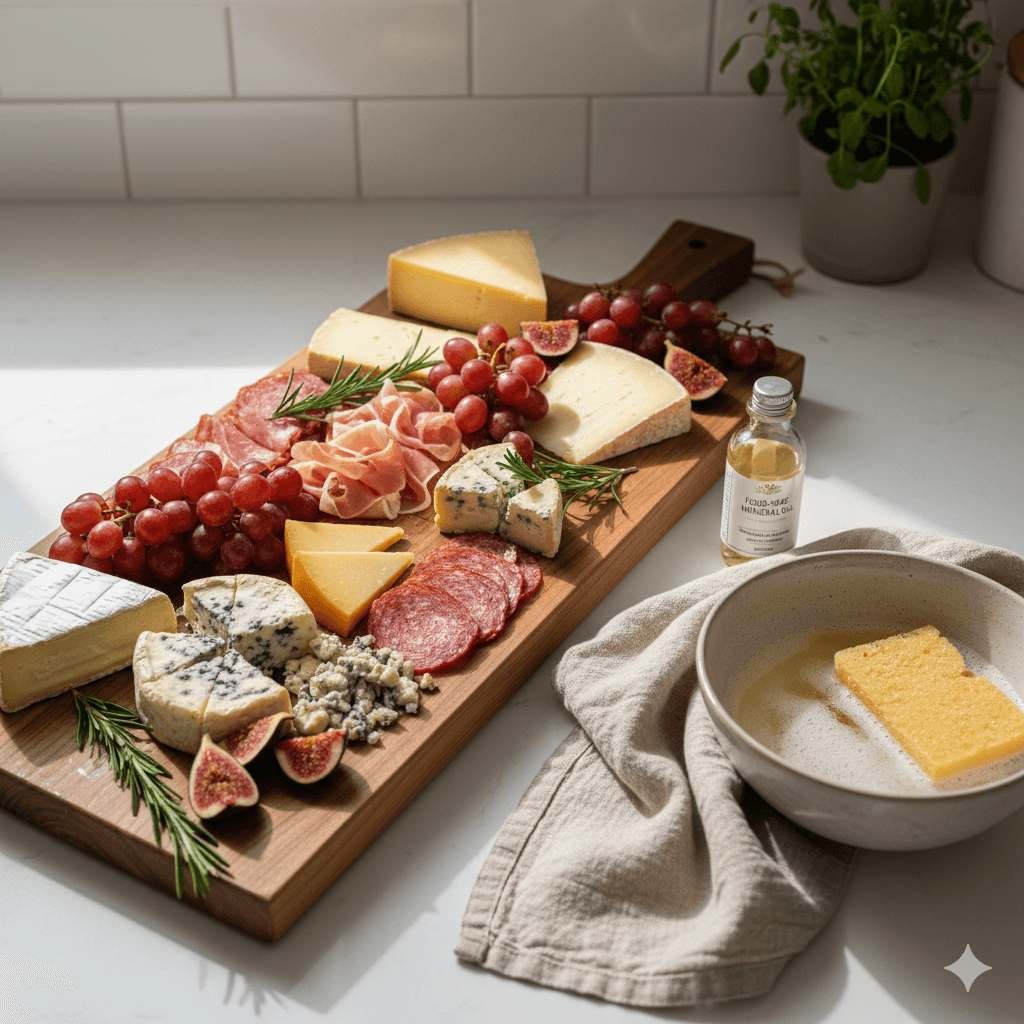
We’ve all been there. You’ve just hosted a wonderful gathering, the last guest has gone, and you’re left with the beautiful, messy aftermath on your charcuterie board. It’s tempting to leave it until morning, but knowing how to clean a charcuterie board correctly is the single most important secret to keeping it hygienic and making it last a lifetime.
Proper care isn’t just about wiping away crumbs. It’s about food safety, preventing bacteria, and protecting your investment. The steps you take to clean a porous wooden board are completely different from those for a non-porous marble slab. This guide will walk you through the expert, food-safe methods for every material, ensuring your board is always ready for its next delicious creation.
Know Your Board: Why One Cleaning Method Doesn’t Fit All
Before you reach for the soap, you must identify your board’s material. Using the wrong method can lead to warping, cracking, or permanent stains. The key difference lies in porosity how much liquid the material absorbs.
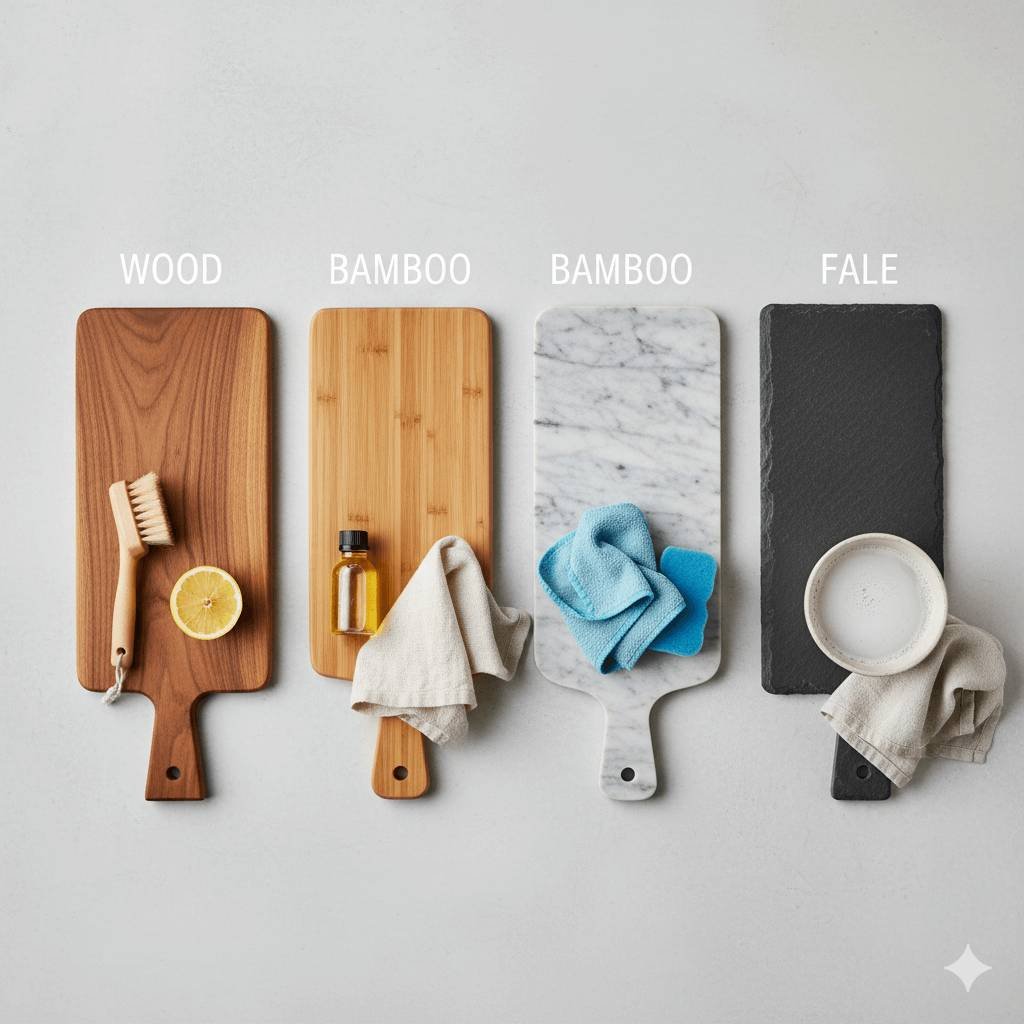
- Wood (Acacia, Olive, Walnut, Maple): These are the most popular and the most sensitive. Wood is porous, meaning it will soak up water (and bacteria) if left submerged. It can warp, crack, or split if washed incorrectly or allowed to dry out.
- Bamboo: Technically a grass, bamboo is harder and less porous than most woods. This makes it slightly more durable and water-resistant, but it still requires the same general care as a wooden board to prevent splitting.
- Marble: This material is non-porous, which is excellent for hygiene as bacteria can’t soak in. However, marble is soft and stains very easily, especially with acidic foods like wine, citrus, or tomatoes. It can also be easily scratched.
- Slate: Like marble, slate is non-porous and easy to clean. It’s also quite brittle and can chip. Its dark surface shows oils easily, so cleaning is more about removing streaks than preventing water damage.
The Golden Rule for All Boards: No matter the material, never, ever put your charcuterie board in the dishwasher. The intense heat, harsh detergents, and prolonged water exposure will destroy it. Soaking it in the sink is just as bad.
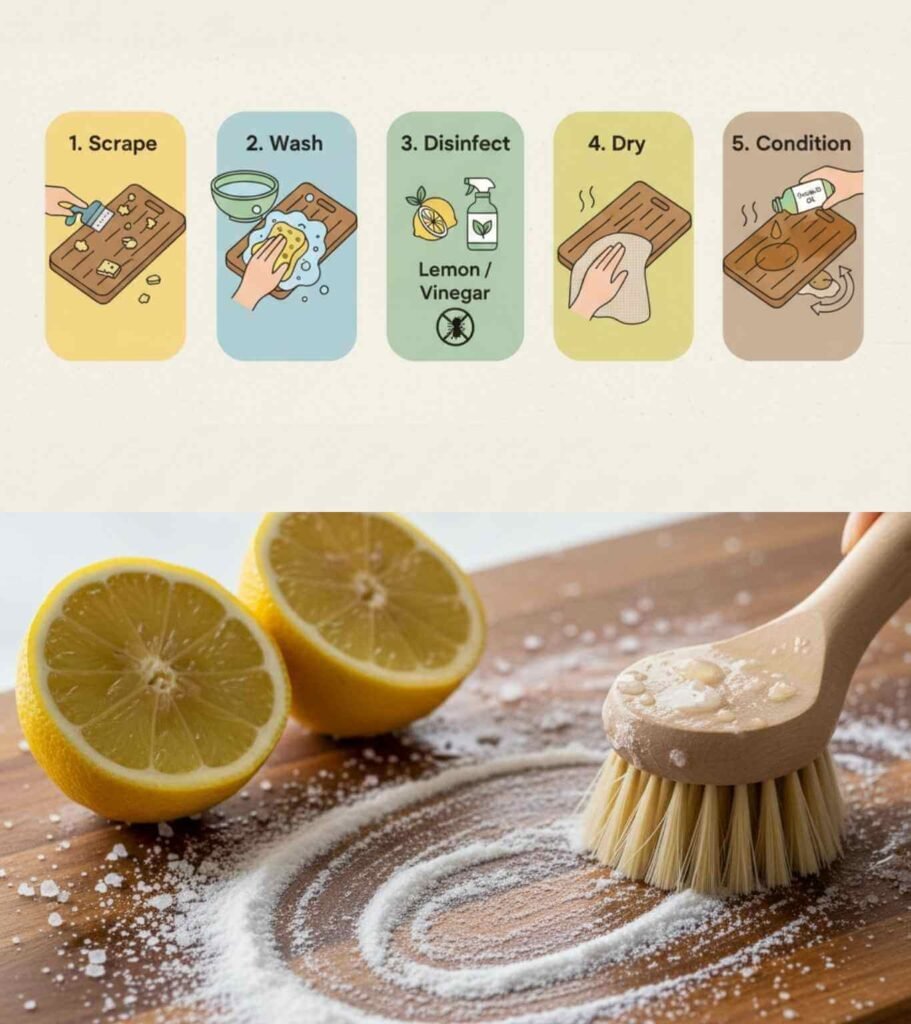
Your 5-Step Guide: How to Clean a Charcuterie Board Correctly
This is your go-to, everyday cleaning routine. For wooden and bamboo boards, the goal is to use as little water as possible and get it dry as quickly as possible.
1. Scrape and Remove Debris
First, remove all the food. Use a soft plastic scraper or a gentle spatula to lift off any stuck-on bits of cheese, meat, or fruit jam. Avoid using a sharp metal knife, as it can easily scratch your board’s surface, creating tiny crevices where bacteria can hide.
2. Wash Quickly and Gently
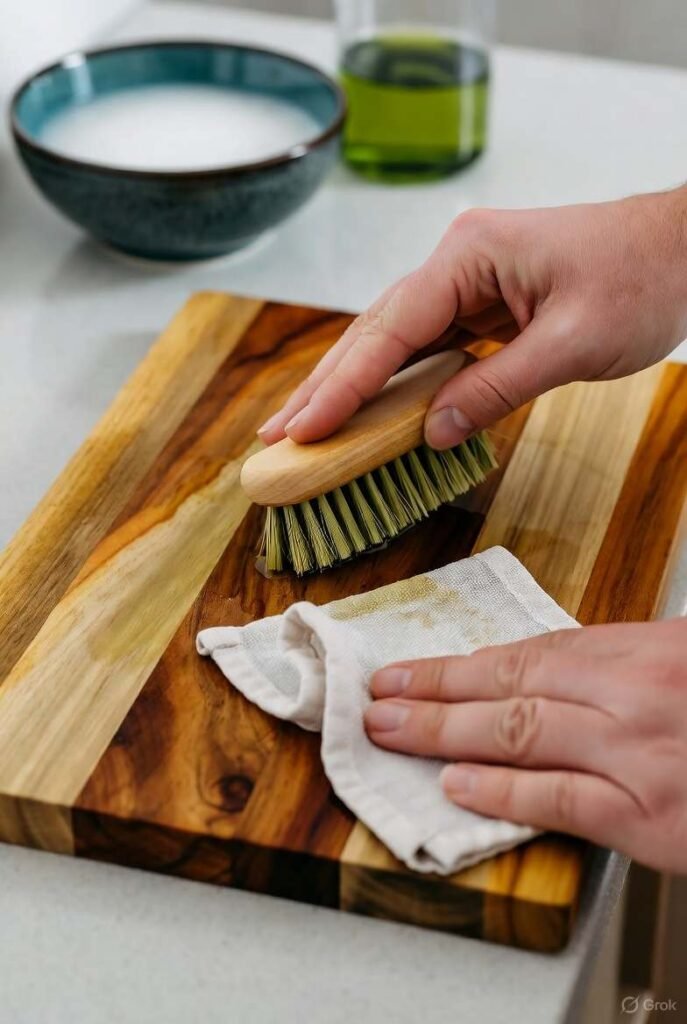
Dampen a soft sponge or cloth with warm water and a tiny drop of mild dish soap. Gently wash the board’s surface in a circular motion. Remember, this is a quick wash, not a scrub. You’re just removing surface oils and residues.
- For Marble/Slate: You can be a bit more liberal with the water and soap, but work quickly to prevent acidic stains from setting.
- For Wood/Bamboo: Be fast. Wipe the board, and don’t let water pool on the surface.
3. Rinse and Disinfect (Naturally)
Quickly rinse the board under a light stream of warm water, or use a clean, damp cloth to wipe away all soap residue.
To disinfect, especially after serving raw meats or soft cheeses, use a food-safe solution. A simple spray bottle with a 1:1 solution of white vinegar and water works perfectly for wood and bamboo. The acetic acid in vinegar is a natural disinfectant. Lightly mist the board, let it sit for a minute, and then wipe it clean. For marble or slate, stick to soap and water, as the acid in vinegar can etch the stone.
4. Dry Immediately and Thoroughly
This is the most critical step for any clean wooden charcuterie board. Use a clean, absorbent towel to pat the board completely dry. Don’t just wipe it; blot away all moisture.
Once it’s towel-dried, stand the board on its edge in a drying rack or lean it against a wall. This allows air to circulate around all sides, preventing it from warping as it dries. Never lay a damp wooden board flat to dry.
5. Condition (For Wood and Bamboo Only)
After your board is 100% dry, it’s time to “feed” it. Oiling is essential to maintain your serving board and keep it from drying out and cracking.
- Apply a generous amount of food-safe board oil (food-grade mineral oil is the standard) or a board cream (a mix of oil and beeswax).
- Using a clean, soft cloth, rub the oil into the wood on all sides, including the edges.
- Let the oil soak in for at least 20 minutes or even overnight for a deep conditioning.
- Wipe off any excess oil with a fresh cloth, and you’re done.
Tackling Tough Stains and Lingering Smells
Even with perfect care, you’ll eventually face a stubborn stain or a smell that just won’t quit. Here’s how to deep clean without resorting to harsh chemicals.
How to Remove Stains (Cheese, Berries, Wine)
For stubborn stains on wood or bamboo, especially from berries or cheese stains, make a simple paste.
- Mix one part baking soda with three parts water to form a thick paste.
- Apply the paste to the stain and let it sit for 5-10 minutes.
- Gently scrub the area with a soft sponge, then wipe it clean.
- Rinse and dry the board immediately, as you would with a normal wash.
For marble, be extremely careful. You can try a similar baking soda paste, but do not let it sit for long and never use anything acidic like lemon or vinegar on it.
How to Remove Odors (Garlic, Blue Cheese)
That lingering smell of garlic or blue cheese can be tough. The best solution is a classic:
- Sprinkle the surface of your wooden or bamboo board with coarse salt.
- Cut a lemon in half and use the cut side to scrub the salt into the board. The salt acts as an abrasive, and the lemon’s citric acid neutralizes the odor.
- Let it sit for 10-15 minutes, then scrape off the salt and lemon paste.
- Give the board a quick rinse and dry it thoroughly. You will likely need to re-oil the board after this, as the acid can dry out the wood.
Beyond Cleaning: How to Maintain Your Serving Board for Years
Proper care for your charcuterie board is an ongoing process. A well-maintained board is a safe board.
Oiling Frequency
How often should you oil your wooden or bamboo board? It depends on use.
- Heavy Use (Weekly): If you use your board several times a week, a light oiling every weekend is a good idea.
- Regular Use (Monthly): For most, a deep conditioning once a month is perfect.
- The “Thirsty” Test: The wood will tell you. If it starts to look dry, pale, or “thirsty,” it’s time to oil it.
Storage
Where you store your board matters.
- DO store your board in a dry, cool place where air can circulate. Storing it on its side or on a rack is ideal.
- DON’T store it in a damp cabinet, near a stove, or in direct sunlight. Extreme changes in temperature and humidity are what cause warping and cracking.
5 Common Cleaning Mistakes That Can Ruin Your Board
- The Mistake: Soaking the board in the sink.
- Why It’s Bad: This is the #1 way to warp and split a wooden board. Water soaks deep into the grain, and as it dries unevenly, the board twists and cracks.
- The Mistake: Using the dishwasher.
- Why It’s Bad: The high heat and harsh detergents will strip the wood of its natural oils, leading to a dry, brittle, and cracked board. It can also melt the glue holding some boards together.
- The Mistake: Using the wrong oil (like olive or vegetable oil).
- Why It’s Bad: Cooking oils will go rancid. This will make your board sticky, smell terrible, and transfer that bad flavor to your food. Always stick to food-safe board oil (mineral oil) or a beeswax blend.
- The Mistake: Using steel wool or abrasive green scrubbies.
- Why It’s Bad: These create micro-scratches on the surface of wood, marble, and slate. These scratches are not only ugly but also become perfect hiding places for bacteria.
- The Mistake: Storing it while still damp.
- Why It’s Bad: Trapped moisture is a recipe for mildew, mold, and warping. Always, always, always dry it thoroughly and let it air-dry on its edge.
Keep Your Board Ready for Your Next Creation
Your charcuterie board is often the centerpiece of your table. It’s an investment in your home and your hospitality. Giving it the proper care for your charcuterie board might seem like a lot, but it quickly becomes a simple, 5-minute routine. By following these steps, you ensure your board remains beautiful, food-safe, and ready to impress for years to come.