How to Clean a Charcuterie Board for Long-Lasting Beauty?
A beautiful charcuterie board can instantly elevate any gathering, whether you’re serving artisan cheeses, fresh fruits, cured meats, or elegant desserts. But after the party ends, proper cleaning becomes essential. Learning how to clean a charcuterie board correctly not only protects the board’s appearance but also prevents bacteria buildup, odors, stains, and long-term damage.
Different serving board materials require different care methods. A wooden charcuterie board reacts very differently to water compared to marble or slate. Some boards absorb moisture quickly, while others stain from acidic foods like berries, wine, or citrus.
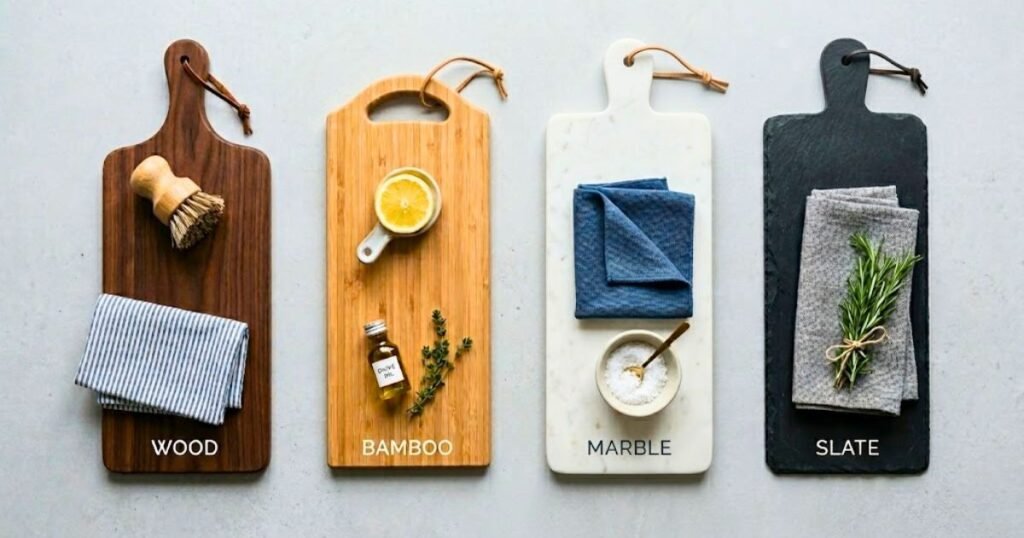
This complete guide explains how to safely clean, disinfect, deodorize, and maintain every type of charcuterie board. Whether you own an acacia wood serving tray, bamboo grazing board, marble cheese platter, or slate serving slab, these expert cleaning methods will help extend its lifespan and keep it looking beautiful for years.
Table of Contents
Know Your Board: Why One Cleaning Method Doesn’t Fit All
Before cleaning any serving board, you must first understand the material. Each type reacts differently to moisture, soap, oils, heat, and acidic foods.
Wood (Acacia, Olive, Walnut, Maple)
Wooden charcuterie boards are among the most popular because they are durable, elegant, and naturally antibacterial when maintained properly. However, wood is porous, meaning it absorbs moisture and oils if exposed for too long.
Common problems caused by improper cleaning include:
- Warping
- Cracking
- Dryness
- Mold growth
- Food stains
- Odor absorption
Acacia Wood
Acacia is dense, naturally water-resistant, and highly durable. It handles moisture better than many softer woods but still requires regular oiling.
Walnut
Walnut offers rich dark tones and a premium appearance. It is slightly softer than acacia and benefits from gentle cleaning methods.
Olive Wood
Olive wood is extremely beautiful with dramatic grain patterns. However, it can dry out quickly without conditioning.
Maple
Maple is widely used for cutting boards because it is hard, durable, and resistant to knife marks.
Bamboo
Although commonly grouped with wood boards, bamboo is technically a grass. It is harder and less porous than many hardwoods, making it more resistant to water absorption.
Benefits of bamboo boards include:
- Lightweight construction
- Eco-friendly material
- Lower water absorption
- Good stain resistance
However, bamboo can still split or crack if soaked or exposed to high heat.
Marble
Marble charcuterie boards offer a luxurious appearance and naturally cool surface, making them excellent for serving cheese.
Advantages:
- Non-porous
- Naturally cool
- Elegant presentation
- Easy surface cleaning
However, marble is vulnerable to:
- Acid etching
- Wine stains
- Oil marks
- Scratches
Foods like lemons, vinegar, berries, and tomatoes should never sit on marble for extended periods.
Slate
Slate serving boards create a modern restaurant-style presentation. They are naturally non-porous and resistant to bacteria.
Benefits include:
- Easy to sanitize
- Excellent for food presentation
- Stylish dark appearance
But slate can:
- Chip at edges
- Scratch easily
- Show fingerprints and oils
Proper cleaning keeps slate boards looking matte and elegant.
The Golden Rule for All Boards
No matter the material:
- Never place your charcuterie board in the dishwasher
- Never soak wooden or bamboo boards
- Avoid harsh chemical cleaners
- Always dry boards immediately after cleaning
Dishwashers expose boards to:
- Excessive heat
- Long moisture exposure
- Strong detergents
- Rapid temperature changes
These conditions destroy wood fibers and weaken adhesives.
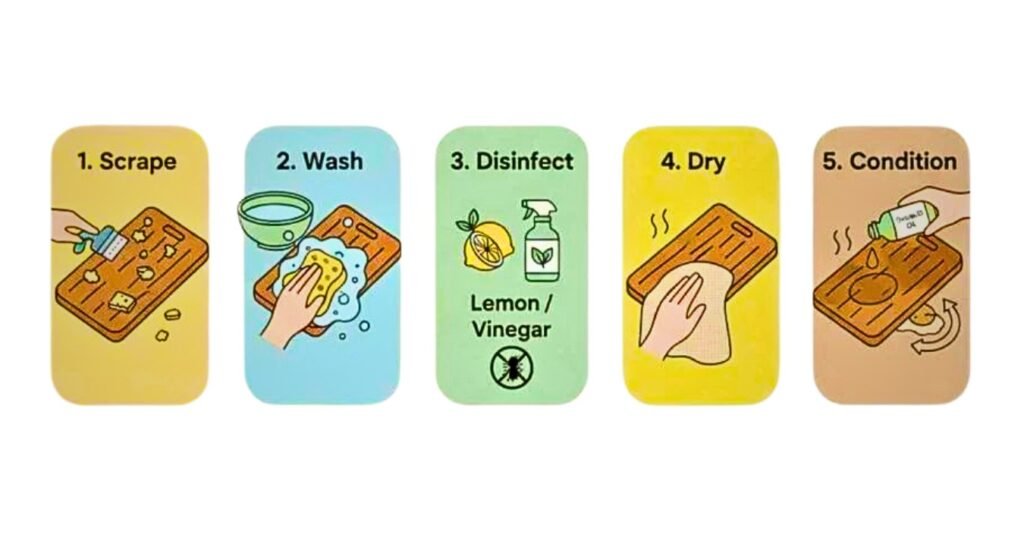
Your 5-Step Guide: How to Clean a Charcuterie Board Correctly
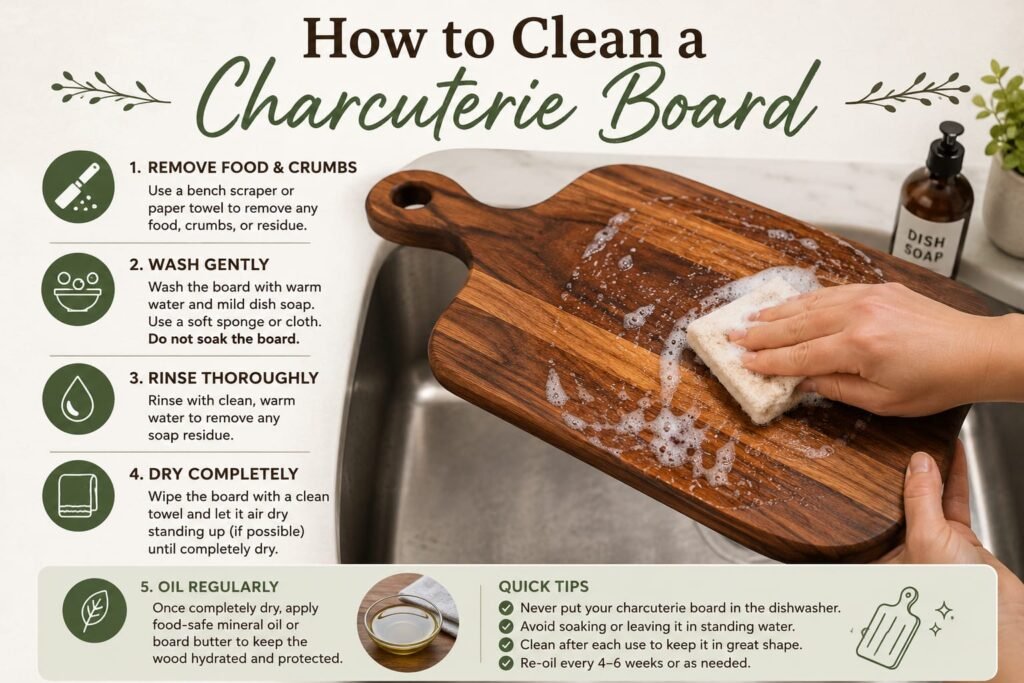
Following a consistent cleaning routine keeps your serving board hygienic, odor-free, and visually appealing.
1. Scrape and Remove Debris
Start by removing leftover food particles immediately after use.
Use:
- A silicone scraper
- Soft spatula
- Plastic bench scraper
Avoid:
- Sharp metal tools
- Steel wool
- Aggressive scraping
These can scratch surfaces and create tiny grooves where bacteria can collect.
For sticky foods like:
- Brie residue
- Fruit jam
- Honey
- Soft cheese
Allow warm water to loosen debris before wiping.
2. Wash Quickly and Gently
Use:
- Warm water
- Mild dish soap
- Soft sponge or microfiber cloth
For Wooden & Bamboo Boards: Quickly wipe the surface without saturating it. Excess water is the enemy.
For Marble & Slate: You may use slightly more water, but avoid acidic cleaners.
Never:
- Leave the soap sitting on the surface
- Use bleach
- Use abrasive scrubbing pads
3. Rinse and Disinfect (Naturally)
After washing, remove soap residue using:
- A damp cloth
- Quick warm-water rinse
Natural Disinfecting for Wood & Bamboo
Create a simple sanitizing solution:
- 1 part white vinegar
- 1 part water
Lightly spray the surface and wipe clean.
Other natural sanitizing options:
- Hydrogen peroxide
- Food-safe cutting board sprays
Important: Avoid vinegar on marble because acid damages natural stone surfaces.
4. Dry Immediately and Thoroughly
Drying is the most important step in charcuterie board maintenance.
Use:
- Absorbent towels
- Clean microfiber cloths
Then allow the board to air dry vertically.
Why Vertical Drying Matters
Standing the board upright allows:
- Air circulation
- Even moisture evaporation
- Reduced warping risk
Never store a damp board flat inside cabinets.
5. Condition (For Wood and Bamboo Only)
Wooden boards require regular conditioning to prevent:
- Cracks
- Dryness
- Splitting
- Rough texture
Best Oils for Charcuterie Boards
Use:
- Food-grade mineral oil
- Beeswax board cream
- Specialized cutting board conditioner
Never use:
- Olive oil
- Coconut oil
- Vegetable oil
Cooking oils eventually turn rancid.
How to Oil Your Board
- Ensure the board is completely dry
- Apply generous oil
- Rub evenly using a soft cloth
- Let absorb overnight
- Buff away excess oil
Conditioning enhances both durability and appearance.
Tackling Tough Stains and Lingering Smells: Even well-maintained boards occasionally develop stains or odors.
How to Remove Stains (Cheese, Berries, Wine)
Baking Soda Paste Method
Mix:
- Baking soda
- A small amount of water
Apply to the stained area and gently scrub.
Works well for:
- Berry stains
- Oil marks
- Cheese discoloration
- Wine residue
For Wooden Boards: Always re-oil afterward because baking soda can dry the wood.
For Marble: Use caution and avoid aggressive scrubbing.
How to Remove Odors (Garlic, Blue Cheese)
Strong-smelling foods often linger inside porous surfaces.
Lemon & Salt Method
- Sprinkle coarse salt
- Cut a lemon in half
- Scrub gently
- Let’s sit briefly
- Rinse and dry
This method neutralizes:
- Garlic odors
- Onion smells
- Fish residue
- Blue cheese aroma
For extra freshness, follow with mineral oil treatment.
Beyond Cleaning: How to Maintain Your Serving Board for Years
Proper care for your charcuterie board is an ongoing process. A well-maintained board is a safe board.
Oiling Frequency
Heavy Use: Oil once weekly.
Moderate Use: Oil every 3–4 weeks.
Occasional Use: Oil whenever the surface appears dull or dry.
A healthy board should feel:
- Smooth
- Hydrated
- Slightly rich in color
Storage
Correct storage dramatically extends lifespan.
Best Storage Conditions
- Dry environments
- Upright position
- Away from sunlight
- Away from heat sources
Avoid
- Damp cabinets
- Stoves
- Dishwashers
- Direct sun exposure
Rapid humidity changes cause expansion and contraction in wood fibers.
Deep Cleaning Methods for Heavily Used Boards
If your board sees frequent entertaining or heavy food prep, occasional deep cleaning helps maintain hygiene.
Hydrogen Peroxide Sanitizing
For stubborn bacteria concerns:
- Pour a small amount of hydrogen peroxide
- Let’s sit for several minutes
- Wipe clean thoroughly
Excellent after:
- Seafood platters
- Large gatherings
Sanding a Worn Wooden Board
Over time, knife marks and scratches appear.
Use fine-grit sandpaper:
- Sand lightly with a grain
- Remove dust completely
- Reapply mineral oil
This can restore old boards beautifully.
Best Products for Charcuterie Board Care
Recommended essentials include:
- Food-grade mineral oil
- Beeswax board cream
- Soft microfiber cloths
- Silicone scraper
- Non-abrasive sponge
- Fine sandpaper
Quality maintenance products dramatically increase board longevity.
5 Common Cleaning Mistakes That Can Ruin Your Board
The Mistake: Soaking the board in water
Causes:
- Warping
- Cracking
- Splitting
The Mistake: Using the dishwasher
Results in:
- Extreme drying
- Glue damage
- Surface cracking
The Mistake: Using cooking oils
Leads to:
- Sticky residue
- Rancid smells
- Food contamination
The Mistake: Scrubbing with steel wool
Creates:
- Scratches
- Surface damage
- Bacteria traps
The Mistake: Storing while damp
Encourages:
- Mold growth
- Mildew
- Warping
Eco-Friendly Cleaning Tips for Charcuterie Boards
If you prefer natural cleaning methods, several eco-friendly options work extremely well.
Natural Cleaning Ingredients
- White vinegar
- Baking soda
- Lemon
- Coarse salt
These ingredients effectively clean without harsh chemicals.
Sustainable Maintenance
Choose reusable:
- Cloth towels
- Bamboo brushes
- Refillable spray bottles
Eco-conscious care protects both your board and the environment.
Keep Your Board Ready for Your Next Creation
A charcuterie board is more than a serving surface — it’s part of the dining experience. Whether you use rustic acacia wood, sleek marble, elegant walnut, or modern slate, proper maintenance ensures it remains safe, beautiful, and durable.
Learning how to clean a charcuterie board correctly protects your investment while preserving the natural beauty of the material. With regular washing, proper drying, occasional conditioning, and careful storage, your board can last for many years of gatherings, celebrations, and unforgettable food presentations.
The best boards age beautifully when cared for properly. A few minutes of maintenance after each use keeps your serving tray fresh, hygienic, and always ready for your next charcuterie masterpiece.
Frequently Asked Questions For How to Clean a Charcuterie Board?
Q. How often should I oil a wooden charcuterie board?
- Most wooden charcuterie boards should be oiled every 2–4 weeks, depending on how often you use them. If the wood looks dry, faded, or rough, it’s time to condition it with food-grade mineral oil.
Q. Can I wash a charcuterie board with soap and water?
- Yes, but use only mild dish soap and warm water. Avoid soaking the board, especially if it’s made from wood or bamboo. Always dry it immediately after washing.
Q. What is the best oil for charcuterie boards?
- Food-grade mineral oil is the safest and most recommended option. Beeswax board creams also work well for extra protection and moisture sealing.
Q. Can I put a charcuterie board in the dishwasher?
- No. Dishwashers expose boards to extreme heat and moisture, which can cause cracking, warping, splitting, and surface damage.
Q. How do I remove smells from a wooden serving board?
- Sprinkle coarse salt over the surface and scrub gently with half a lemon. This natural method helps remove odors from garlic, onions, fish, and strong cheeses.
Q. How do I remove stains from a charcuterie board?
- Use a baking soda paste made with water and gently scrub the stained area using a soft cloth or sponge. For wooden boards, reapply mineral oil afterward to restore moisture.
Q. Is vinegar safe for cleaning all charcuterie boards?
- Vinegar works well for wood and bamboo boards as a natural disinfectant. However, avoid using vinegar on marble because the acid can damage and etch the stone surface.
Q. What’s the safest way to dry a charcuterie board?
- Pat the board dry with a clean towel and then stand it upright to air dry completely. Vertical drying prevents trapped moisture and reduces warping risk.
Q. How long do charcuterie boards last?
- With proper care and regular maintenance, a high-quality charcuterie board can last for many years. Hardwood boards like acacia, walnut, and maple are especially durable.
Q. Can I use my charcuterie board as a cutting board?
- Yes, many wooden charcuterie boards can handle light cutting tasks. However, heavy chopping may leave knife marks and shorten the board’s lifespan.
Conclusion
Proper charcuterie board care is essential for keeping your serving surface clean, safe, and visually stunning. Whether your board is made from acacia wood, bamboo, walnut, marble, or slate, understanding the correct cleaning method helps prevent stains, odors, bacteria buildup, and long-term damage.
The key to maintaining any charcuterie board is simple:
- Clean it gently
- Dry it immediately
- Oil wooden surfaces regularly
- Store it properly
Avoiding common mistakes like soaking, dishwashing, or using harsh chemicals can dramatically extend the life of your serving board. Regular conditioning also keeps wood hydrated, smooth, and resistant to cracking.
A well-maintained charcuterie board does more than serve food — it becomes a centerpiece for gatherings, celebrations, and memorable dining experiences. With consistent care, your board will remain beautiful, durable, and ready for every cheese platter, grazing table, and entertaining occasion for years to come.