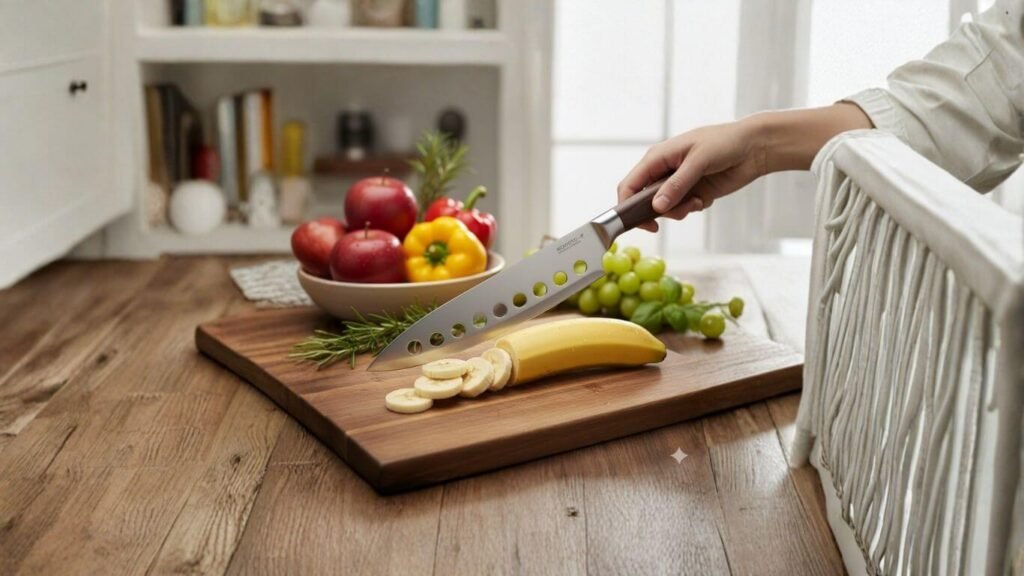
Why Kitchen Knife Blades Have Holes: Benefits, Uses & Expert Insights
Have you ever sliced potatoes, cheese, or crisp cucumbers, only to have every slice stick to the blade? It’s common kitchen frustrations that slow you down. Or perhaps you’ve seen a large butcher’s cleaver with a big, mysterious hole near the spine.
It turns out those holes aren’t just for show. A knife with holes in the blade is a specialized tool designed with strategic cutouts to solve specific problems. From reducing friction and food sticking to improving balance and even allowing for one-handed opening, these holes are an excellent example of form following function.
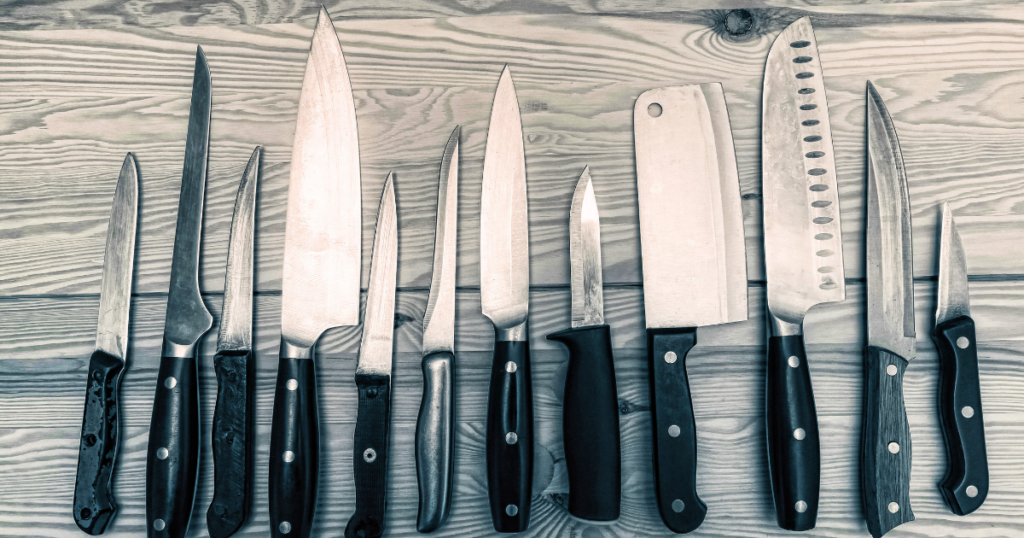
This design appeals to both home cooks looking for a smoother slicing experience and professionals who demand efficiency and performance. Let’s dive into why these holes exist, what they do, and whether a holed blade is right for you.
Table of Contents
Types of Knives With Holes
- Knife holes appear in different forms depending on the purpose of the blade. Each type serves a unique function based on food type, handling needs, or storage requirements.
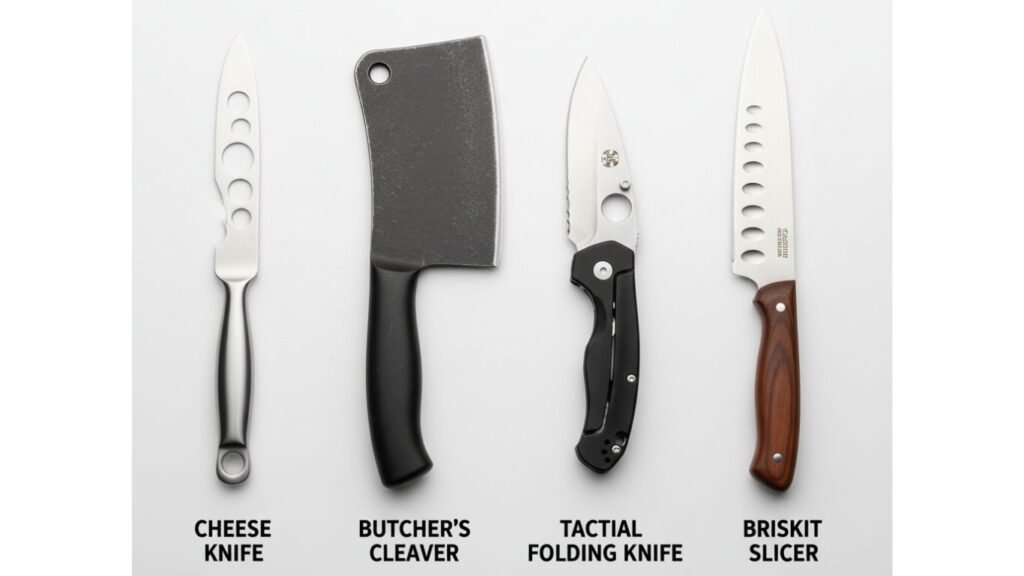
Cheese Knives
- Cheese knives often include multiple cut-out holes in the blade. These prevent soft cheeses such as Brie, Camembert, and fresh mozzarella from sticking while slicing.
Santoku and Chef’s Knives
- Some modern Santoku and chef’s knives feature hollow sections or cutouts along the blade. These improve food release when slicing potatoes, cucumbers, or sticky vegetables.
Cleavers and Butcher Knives
- Heavy-duty cleavers usually feature a single large hole near the top corner. This is mainly used for hanging storage and safety in butcher shops.
Folding and Tactical Knives
- Certain pocket knives include a thumb hole in the blade. This allows fast, one-handed opening without the need for external studs or levers.
Main Reasons For Holes in Knife Blades
The purpose of blade holes goes far beyond aesthetics. They are designed to solve real cooking and handling challenges.
Reduced Food Sticking and Friction
One of the biggest problems in slicing is food adhesion. Moist, sticky, or starchy foods create suction against a flat blade surface.
Holes break this suction by introducing air pockets. This allows food to slide off smoothly instead of sticking, tearing, or slowing down prep work.
This is especially useful for:
- Potatoes
- Cucumbers
- Apples
- Soft cheeses
- Cooked meats
Better Weight Distribution and Balance
Removing material from the blade reduces weight and can improve knife balance.
A well-balanced knife reduces wrist strain and improves precision during long cutting sessions. In professional kitchens, even small improvements in balance can significantly increase speed and comfort.
Hanging Storage and Safety
The most traditional use of a blade hole is storage.
Large cleavers are heavy and unsafe in drawers. The hole allows chefs and butchers to hang the knife securely on hooks, keeping it accessible yet safe.
One-Handed Opening Function
In folding knives, the hole acts as a mechanical advantage point. It allows users to open the blade quickly using a thumb motion, improving speed and usability.
The Science and Engineering Behind Blade Holes
It’s easy to see the hole in a container and understand its purpose. But how does a small hole really stop food from sticking?
The magic is all about the surface, about the surface area. Food sticks because of moisture adhesion and suction. The smooth, uninterrupted surface of a standard knife blade provides a large area for this to happen.
Each hole introduces an “edge” and an “air pocket.” When the blade cuts, the food’s surface can’t create an ideal seal against the metal. Air is maintained in the cutout, effectively pushing the food off. This is the same principle behind a knife that has a Granton edge, but holes provide a more extreme version of the effect.
Engineering-wise, there’s a trade-off. Removing material technically creates structural weakness. However, for any reputable knife maker, this is calculated into the design. The blade is forged and heat-treated to ensure its integrity remains far beyond its intended use. For a kitchen knife, you will never put enough stress on it for this to be a problem.
Pros and Cons: Should You Choose a Knife With Holes?
Like any kitchen tool, knives with holes have advantages and limitations.
Advantages
- Significantly reduced food sticking
- Faster slicing and cleaner cuts
- Improved handling comfort due to lighter weight
- Easier storage for large blades
- Better efficiency in professional cooking environments
Disadvantages
- Food can get trapped inside holes
- Requires extra cleaning effort
- Not ideal for heavy-duty chopping tasks
- Slightly reduced blade surface for some cutting styles
Overall, the benefits outweigh the drawbacks for most culinary users.
History and Evolution
The earliest and most straightforward example of a holed blade is the traditional butcher’s cleaver. This design is centuries old and was born from the simple, practical need to hang a large, dangerous tool safely in a busy butcher shop or kitchen.
The use of holes for food release is a much more modern culinary innovation, likely an evolution of the Granton edge. As material science and manufacturing processes (like laser cutting) became more precise and affordable, designers could experiment with more complex cutouts to perfect the “non-stick” effect.
In the tactical world, the single-handed opening hole was a game-changer. Sal Glesser, Spyderco’s founder, introduced it in 1981. It was so effective and original that it was granted a U.S. utility patent. It has since become the brand’s most recognisable feature, widely imitated across the industry.

Expert & Chef Insights
Professional chefs often prefer knives with food-release features for high-volume kitchens.
Culinary testing shows that:
- Knives with holes or dimples outperform flat blades on sticky foods
- Cheese specialists strongly prefer holed blades for soft cheese slicing
- Prep cooks value reduced sticking for faster workflow and less waste
Knife enthusiasts also appreciate folding knives with thumb holes for reliability and ease of use in everyday tasks.
Maintenance, Cleaning, and Safety Tips
Knives with holes require slightly more maintenance to stay hygienic and effective.
Cleaning Tips
- Rinse immediately after use to prevent residue buildup
- Use a small brush to clean inside holes
- Avoid letting food dry inside cutouts
Drying and Storage
- Always hand-dry thoroughly
- Store in a dry environment
- Avoid moisture buildup to prevent rust
Sharpening Safety
- Holes do not affect sharpening.
- The cutting edge remains fully accessible and should be maintained like any standard knife.

Frequently Asked Questions: Why Kitchen Knife Blades Have Holes?
Q. Why do kitchen knife blades have holes in them?
- Knife blades have holes to reduce food sticking, improve slicing efficiency, and sometimes help with balance or storage. They allow air to pass between the food and the blade.
Q. Do holes in a knife blade make cutting easier?
- Yes. Holes reduce friction and suction, especially when cutting sticky or moist foods like potatoes, cheese, and cucumbers, making slicing smoother.
Q. Are knives with holes only used in professional kitchens?
- No. They are used in both home and professional kitchens. Home cooks benefit from easier slicing and reduced food sticking.
Q. What is the purpose of the large hole in a cleaver?
- The large hole in a cleaver is mainly for hanging storage. It helps keep the heavy knife safely stored and easily accessible.
Q. Do holes affect the strength of a kitchen knife?
- Slightly in theory, but in practice, reputable manufacturers design knives to maintain full strength for normal kitchen use. They are still very durable.
Q. Why do cheese knives have holes in the blade?
- Cheese knives have holes to prevent soft cheese from sticking to the blade, allowing clean and smooth slices without tearing.
Q. What is the hole in folding knives used for?
- In folding knives, the hole is used for one-handed opening. It allows quick thumb access without needing extra opening mechanisms.
Q. Are knives with holes harder to clean?
- Yes, slightly. Food particles can get trapped in the holes, so they require rinsing and brushing after use for proper hygiene.
Q. Do holes in knives improve balance?
- In some designs, yes. Removing material can slightly reduce weight and shift the balance point closer to the handle for better control.
Q. Should I buy a knife with holes in the blade?
- If you often slice sticky foods like cheese or potatoes, a knife with holes can improve performance and make prep faster and cleaner.
Conclusion
Knives with holes in the blade are not just a design choice—they are a practical innovation created to solve real kitchen problems. From reducing food sticking and improving slicing speed to assisting with storage and one-handed operation, these holes serve multiple functional purposes.
For everyday cooking, they can make food preparation smoother, faster, and more efficient, especially when working with soft or starchy ingredients. While they do require a bit more cleaning care, the benefits often outweigh the minor inconvenience. Ultimately, understanding why kitchen knife blades have holes helps you choose better tools and improve your cooking experience with smarter, more functional kitchen gear.