Best Nuts for Charcuterie Boards: 15 Delicious Choices & Pairings
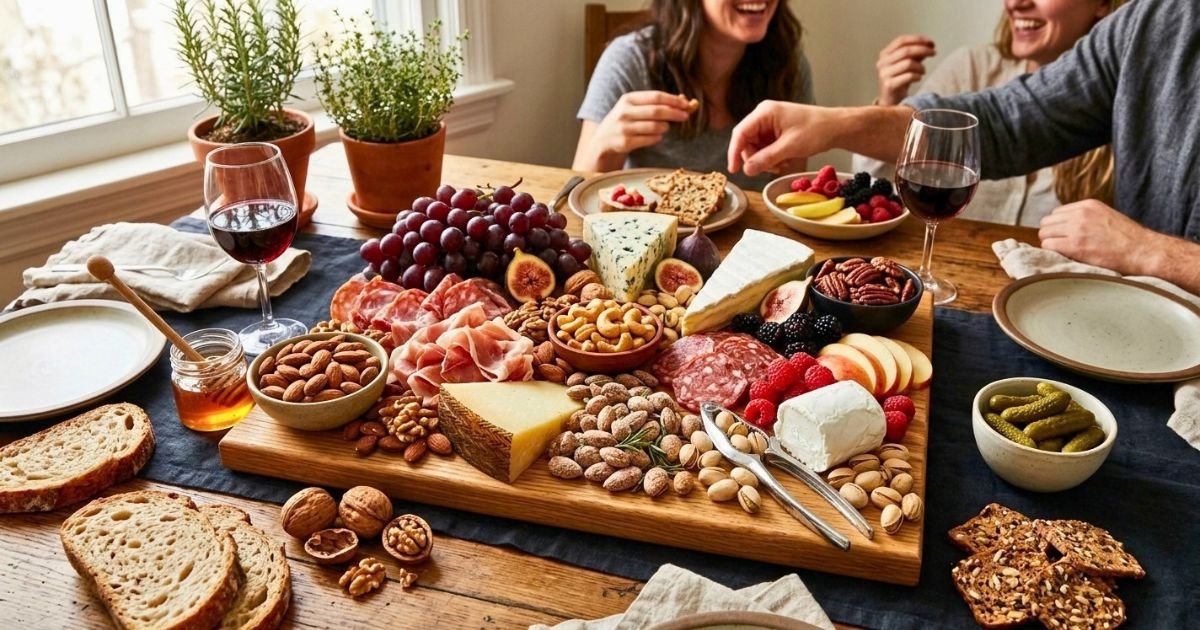
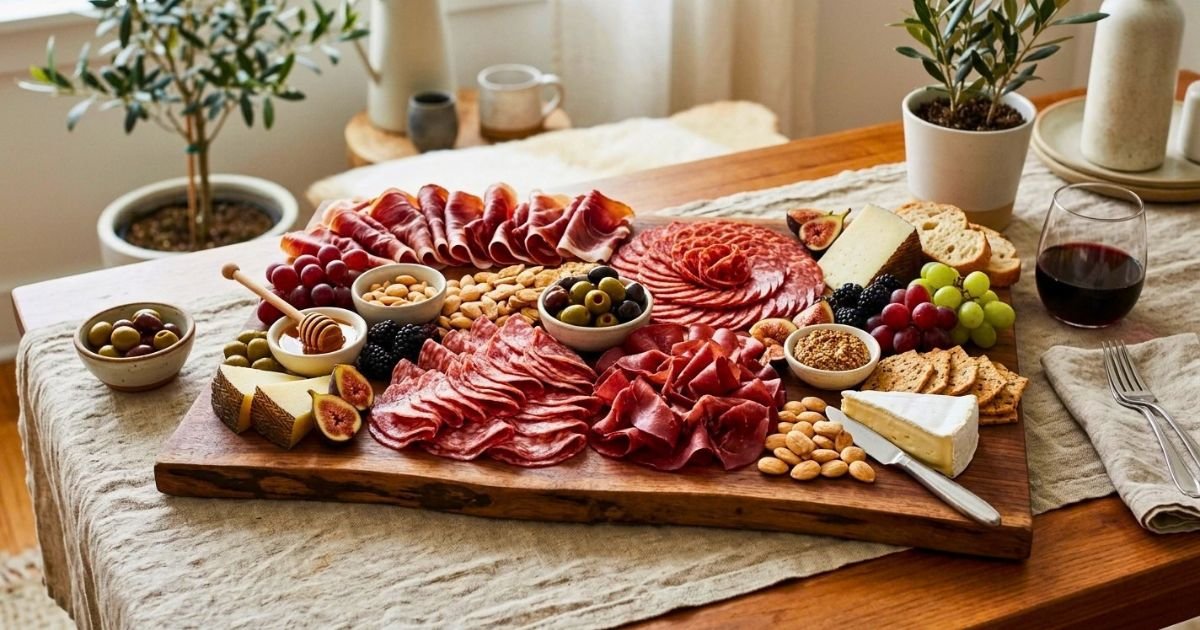
Nuts may be a small part of a charcuterie board, but they can make a surprisingly big difference. They add crunch, contrast soft cheeses and cured meats, fill empty spaces, and bring another layer of flavor to every bite.
But not every nut works equally well.
Some nuts are naturally sweet and pair beautifully with Brie or goat cheese. Others are salty and savory, making them ideal with aged cheddar, Gouda, or cured meats—a few work especially well with dried fruit, honey, chocolate, and fresh fruit.
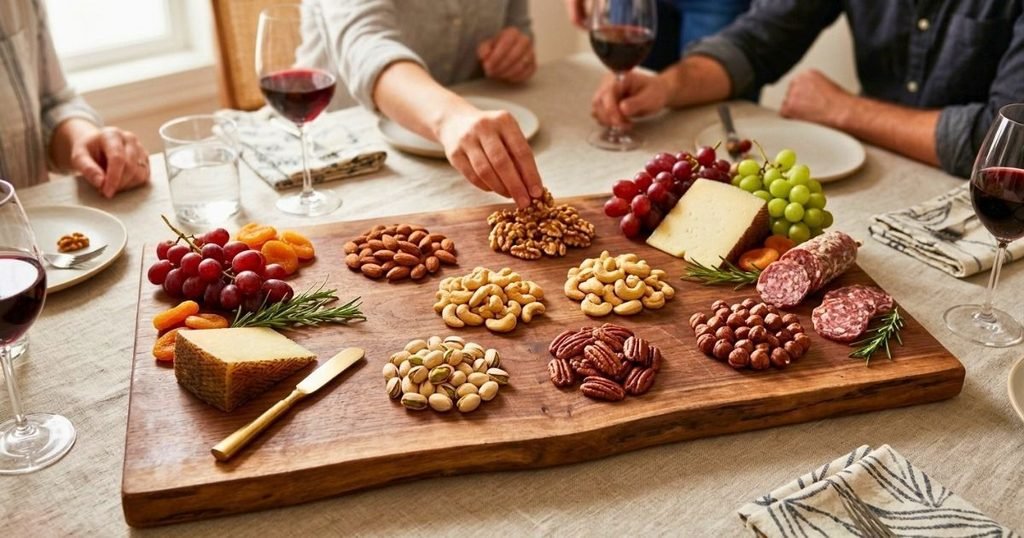
If you’re wondering about the best nuts for charcuterie boards, this guide will help you choose the right varieties, understand which cheeses and meats they pair with, decide between roasted and raw nuts, and arrange them so your board looks as good as it tastes.
Table of Contents
Why Add Nuts to a Charcuterie Board?
Nuts do more than fill space.
A well-chosen nut can provide:
- Crunch against creamy or soft cheese.
- Texture alongside cured meats
- Natural richness that balances fruit
- Saltiness to contrast sweet ingredients.
- Visual variety through different shapes and colors
- Easy grazing without additional preparation
They are also useful when you’re arranging a large charcuterie board. Small nuts can fill the gaps between larger ingredients such as cheese wedges, folded meats, grapes, and crackers.
The key is choosing nuts that complement the rest of your board rather than simply adding every variety you have in the pantry.
What Are the Best Nuts for Charcuterie Boards?
If you want a quick answer, these are some of the best choices:
- Almonds
- Walnuts
- Pecans
- Pistachios
- Cashews
- Hazelnuts
- Macadamia nuts
- Brazil nuts
- Marcona almonds
- Peanuts
- Candied pecans
- Honey-roasted almonds
- Smoked almonds
- Spiced walnuts
- Mixed nuts
You don’t need all 15.
For most boards, two or three varieties are enough to create good flavor and texture variety.
1. Almonds
Almonds are one of the most versatile nuts for a charcuterie board.
They have a mild, slightly sweet flavor and a firm crunch that works with both savory and sweet ingredients.
Best with:
- Cheddar
- Gouda
- Brie
- Prosciutto
- Salami
- Grapes
- Dried apricots
- Honey
Best styles:
- Raw almonds
- Roasted almonds
- Salted almonds
- Smoked almonds
Smoked almonds are especially good when your board contains stronger cured meats.
2. Walnuts
Walnuts have a richer, slightly earthy flavor and a softer crunch than almonds.
They’re particularly good with creamy cheeses and sweet ingredients.
Pair walnuts with:
- Brie
- Goat cheese
- Blue cheese
- Gorgonzola
- Pears
- Apples
- Figs
- Honey
- Fig jam
Walnuts are an excellent choice for an autumn-inspired charcuterie board.
Their natural ridged shape also adds visual interest.
3. Pecans
Pecans bring a naturally buttery and slightly sweet flavor.
They are particularly effective when you’re creating a sweeter charcuterie board.
Try pecans with:
- Brie
- Camembert
- Goat cheese
- Apples
- Pears
- Dates
- Dried cranberries
- Maple syrup
- Honey
For a holiday board, candied pecans can add sweetness and crunch.
However, if you’re already serving several sweet foods, use plain or lightly salted pecans to keep the board balanced.
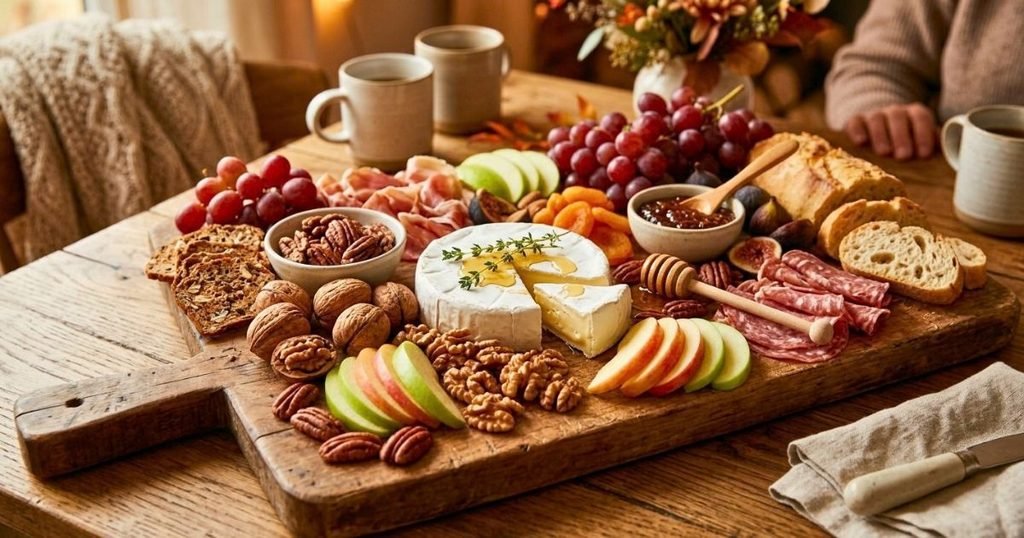
4. Pistachios
Pistachios are one of the most visually appealing nuts for charcuterie boards.
Their green color creates contrast against:
- White cheeses
- Red grapes
- Strawberries
- Dried cranberries
- Dark cured meats
Pistachios pair especially well with:
- Brie
- Goat cheese
- Manchego
- Prosciutto
- Salami
- Dried apricots
- Fresh berries
Shelled pistachios are easier for guests to grab.
If you use in-shell pistachios, provide a small bowl for shells so they don’t end up scattered around the board.
5. Cashews
Cashews have a mild, creamy flavor and softer crunch.
They’re a good choice when you don’t want the nuts to overpower delicate cheese.
Pair cashews with:
- Havarti
- Gouda
- Brie
- Cheddar
- Turkey
- Ham
- Grapes
- Pineapple
Roasted and lightly salted cashews work especially well for casual grazing boards.
6. Hazelnuts
Hazelnuts have a distinctive roasted flavor that works beautifully with rich cheeses and dried fruit.
Try them with:
- Brie
- Camembert
- Gruyère
- Dark chocolate
- Dried figs
- Pears
- Honey
They’re also a fantastic choice for a European-inspired cheese board.
Roasting brings out their natural aroma and makes them particularly appealing when paired with creamy cheeses.
7. Macadamia Nuts
Macadamia nuts are rich, buttery, and naturally luxurious.
They’re an excellent option for an upscale charcuterie board.
Pair them with:
- Brie
- Triple-cream cheese
- Goat cheese
- Prosciutto
- Dried pineapple
- Mango
- Dark chocolate
- Honey
Because macadamias are rich, you don’t need much.
A small bowl can be enough to lend the board a premium feel.
8. Brazil Nuts
Brazil nuts are large and have a substantial texture.
They can work particularly well when you want larger pieces on a board.
Pair them with:
- Aged cheddar
- Gouda
- Parmesan
- Dark chocolate
- Dried fruit
- Pears
Because they’re larger than many other nuts, consider placing them in a small cluster rather than scattering them throughout the board.
9. Marcona Almonds
Marcona almonds are often associated with Spanish-style cheese boards.
They have a softer texture and more delicate flavor than conventional almonds.
- Manchego
- Iberico cheese
- Prosciutto
- Serrano ham
- Olives
- Dried figs
- Grapes
For a Spanish-inspired charcuterie board, Marcona almonds are among the best choices.
10. Peanuts
Peanuts are casual, familiar, and affordable.
They’re especially useful for:
- Family gatherings
- Game-day boards
- Casual parties
- Budget-friendly boards
Try roasted peanuts with:
- Cheddar
- Colby
- Pepper jack
- Salami
- Pretzels
- Dried fruit
They aren’t the most traditional choice for an elegant charcuterie board, but they can work perfectly for a relaxed grazing spread.
Roasted vs. Raw Nuts for Charcuterie Boards
One of the easiest decisions to make is whether to use raw or roasted nuts.
| Nut Type | Best For | Flavor |
| Raw nuts | Delicate boards | Mild, natural |
| Roasted nuts | Savory boards | Richer, deeper |
| Salted nuts | Strong cheeses | Salty, crunchy |
| Unsalted nuts | Balanced boards | Natural |
| Smoked nuts | Meat-heavy boards | Smoky, savory |
| Candied nuts | Dessert-style boards | Sweet, crunchy |
| Spiced nuts | Holiday boards | Warm, savory |
Which should you choose?
For a traditional cheese-and-meat board, lightly roasted and lightly salted nuts are usually an easy choice.
For a fruit-focused board, try raw or lightly roasted nuts.
For a holiday board, consider spiced or candied varieties.
Best Nut and Cheese Pairings
The right pairing can make both the nut and cheese taste better.
| Nut | Cheese Pairing | Why It Works |
| Almonds | Cheddar | Mild crunch + sharp flavor |
| Walnuts | Brie | Earthy + creamy |
| Pecans | Goat cheese | Sweet + tangy |
| Pistachios | Manchego | Nutty + savory |
| Cashews | Gouda | Creamy + buttery |
| Hazelnuts | Gruyère | Rich + nutty |
| Macadamias | Triple cream | Rich + luxurious |
| Marcona almonds | Manchego | Classic Spanish combination |
| Brazil nuts | Aged cheddar | Bold + substantial |
You don’t need to follow these pairings rigidly. The best combination is the one that matches the overall flavor profile of your board.
Best Nuts for Brie Charcuterie Boards
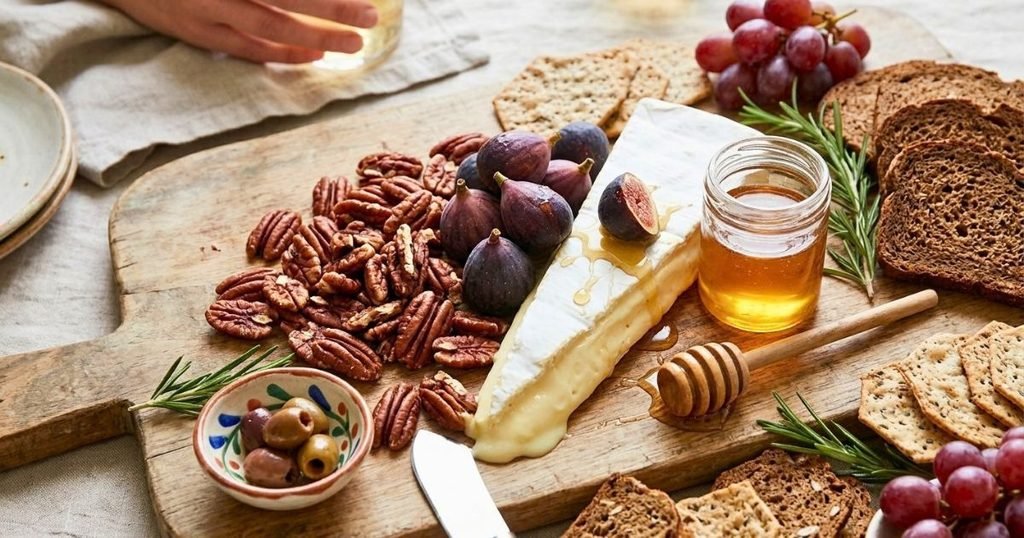
Brie is creamy, buttery, and relatively mild, so it pairs particularly well with nuts that provide contrast without overwhelming it.
Best choices:
- Walnuts
- Pecans
- Almonds
- Hazelnuts
- Macadamias
- Pistachios
Add:
- Honey
- Pears
- Apples
- Figs
- Grapes
- Dried apricots
For an especially simple combination, try:
Brie + walnuts + pear + honey
It’s difficult to go wrong with that combination.
Best Nuts for Goat Cheese
Goat cheese has a distinctive tangy flavor, so slightly sweet or rich nuts can balance it.
Try:
- Pecans
- Walnuts
- Pistachios
- Almonds
- Hazelnuts
Pair them with:
- Fresh figs
- Dried apricots
- Honey
- Grapes
- Strawberries
A goat cheese, pecan, fig, and honey combination makes a beautiful small grazing board.
Best Nuts for Cheddar
Sharp cheddar benefits from nuts with straightforward, savory flavors.
Best options:
- Almonds
- Cashews
- Pecans
- Walnuts
- Peanuts
Add:
- Apples
- Grapes
- Salami
- Crackers
- Mustard
- Dried cranberries
For a family-friendly board, cheddar + almonds + grapes + crackers is a simple winning combination.
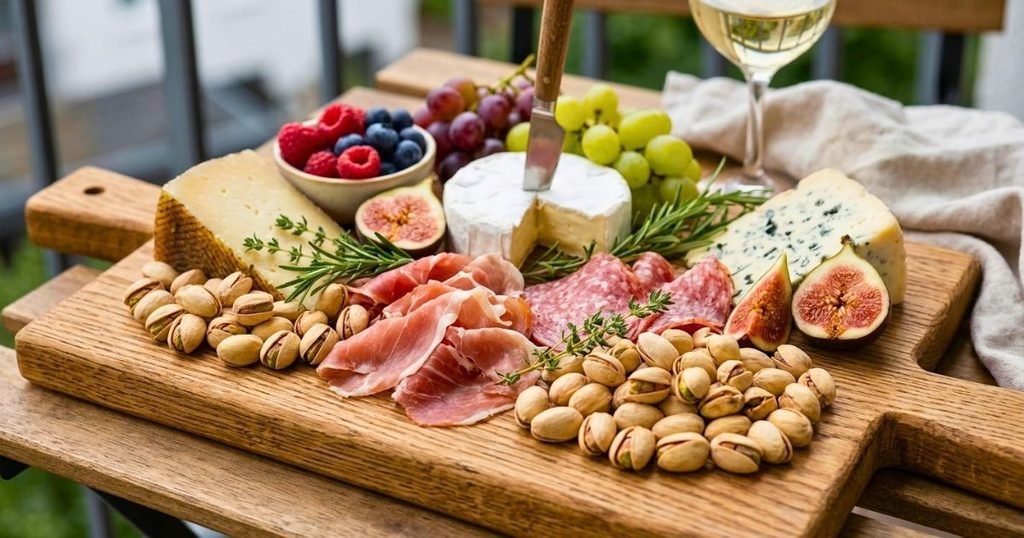
Best Nuts for Charcuterie Boards With Cured Meat
Nuts can help balance salty cured meats.
For salami:
Try:
- Almonds
- Pistachios
- Cashews
For prosciutto:
Try:
- Pistachios
- Marcona almonds
- Hazelnuts
For spicy meats:
Try:
- Cashews
- Pecans
- Almonds
If the meat is already very salty, consider unsalted or lightly salted nuts.
Best Nuts for a Sweet Charcuterie Board
If you’re building a dessert-inspired board, choose nuts that complement chocolate, fruit, and sweet spreads.
Try:
- Pecans
- Hazelnuts
- Walnuts
- Macadamias
- Pistachios
- Candied almonds
Pair them with:
- Dark chocolate
- Milk chocolate
- Strawberries
- Dates
- Dried figs
- Honey
- Caramel
- Chocolate-covered fruit
A small amount of candied pecans can make a dessert board feel much more indulgent.
Best Nuts for a Fall Charcuterie Board
Fall is perfect for earthy and warm flavors.
Use:
- Walnuts
- Pecans
- Hazelnuts
- Almonds
Add:
- Apples
- Pears
- Figs
- Dried cranberries
- Brie
- Cheddar
- Honey
- Cinnamon-spiced nuts
For a cozy fall board, try:
Brie + walnuts + apple slices + dried cranberries + honey.

Best Nuts for a Christmas Charcuterie Board
Holiday boards benefit from a combination of color, texture, and seasonal flavors.
Great choices:
- Pistachios
- Pecans
- Walnuts
- Almonds
- Hazelnuts
Use red and green ingredients around them:
- Cranberries
- Strawberries
- Green grapes
- Rosemary
- Red grapes
- Dried cherries
Candied or spiced pecans can also add a festive element.
Best Nuts for a Summer Charcuterie Board
Summer boards usually benefit from lighter flavors.
Try:
- Almonds
- Pistachios
- Cashews
- Macadamias
Pair them with:
- Strawberries
- Peaches
- Blueberries
- Grapes
- Melon
- Goat cheese
- Brie
Keep heavily spiced or extremely salty items to a minimum if the rest of the board is light and fresh.
How Many Nuts Should You Put on a Charcuterie Board?
You don’t need a huge quantity.
For a board serving approximately 6–8 people, 1–2 cups of nuts combined can be a practical starting point when nuts are one component of a larger spread.
Adjust based on the rest of your menu and whether guests are expected to eat the nuts as a major component.
Small board
- Choose 1 nut variety.
Medium board
- Choose 2 varieties.
Large board
- Choose 2–3 varieties.
Using too wide a variety can make the board feel busy.
Should Nuts Go in a Bowl or Directly on the Board?
Both options work.
Place Nuts Directly on the Board When:
- They’re dry
- They’re easy to grab
- You’re using a small amount.
- They won’t mix with other foods.
Use a Bowl When:
- They’re heavily salted.
- They’re flavored or spiced.
- They’re small pieces.
- You want to keep them contained.
- You have allergy considerations.
- You want a cleaner presentation.
Small bowls can also help create visual structure.
How to Arrange Nuts on a Charcuterie Board
Nuts are excellent gap fillers.
But don’t scatter them randomly over the entire board.
Instead, create small clusters.
Step 1: Add Large Items
Start with:
- Cheese
- Bowls
- Meat
- Large fruit
Step 2: Add Crackers
Create small stacks or rows.
Step 3: Add Nuts
Place small clusters near cheese and fruit.
Step 4: Fill Empty Spaces
Use nuts to fill small gaps.
Step 5: Add Final Details
Finish with dried fruit, herbs, or other small ingredients.
The goal is to make the board feel abundant without looking cluttered.
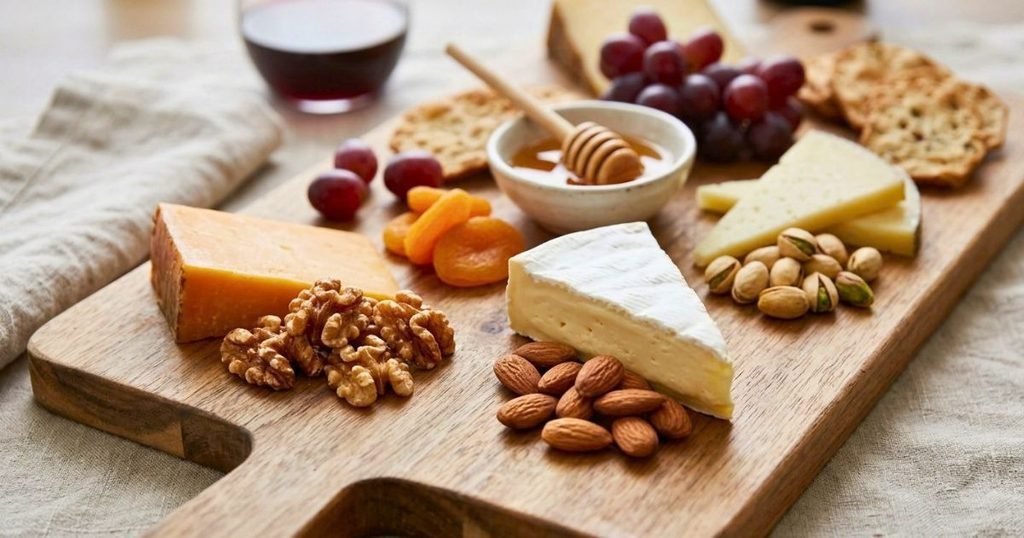
A Simple 3-Nut Charcuterie Board Formula
If you want a reliable combination, use:
1. Almonds
For familiar crunch.
2. Walnuts
For earthy richness.
3. Pistachios
For color and a slightly different texture.
Then add:
- Brie
- Cheddar
- Prosciutto
- Grapes
- Dried apricots
- Crackers
- Honey
This creates a balanced board with very little planning.
How to Make a Nut-Friendly Charcuterie Board
Here’s an easy step-by-step formula.
Step 1: Choose Two Cheeses
Pick one creamy cheese and one firm cheese.
Step 2: Choose One or Two Meats
Use prosciutto, salami, ham, or another suitable option.
Step 3: Choose Two Nuts
Select nuts with contrasting flavors.
For Example:
Pecans + pistachios
Step 4: Add Fresh Fruit
Use grapes, berries, apples, or pears.
Step 5: Add Dried Fruit
Try figs, apricots, dates, or cranberries.
Step 6: Add Crackers
Choose two textures.
Step 7: Add Something Sweet
Honey, jam, or fruit preserves.
Step 8: Fill the Gaps
Use nuts and small pieces of dried fruit.
How to Keep Nuts Fresh on a Charcuterie Board
Nuts are relatively easy to manage compared with many other charcuterie ingredients, but they still benefit from proper storage.
Before serving:
Store nuts in an airtight container in a cool, dry place, following the product’s storage guidance.
During serving:
Keep them away from wet ingredients.
After serving:
If they have been safely handled and remain suitable for storage, return unused portions to an airtight container rather than leaving them exposed.
Moisture can cause nuts to lose their crunch.
Should You Use Salted or Unsalted Nuts?
It depends on the rest of the board.
Choose salted nuts when:
- Cheese is mild
- Fruit is sweet
- The board needs more savory flavor.
Choose unsalted nuts when:
- You already have salty meats.
- You are serving strong cheeses.
- You want a more balanced flavor
Choose lightly salted nuts when:
- You’re unsure.
- They provide flavor without dominating the board.
Are Candied Nuts Good for Charcuterie Boards?
Yes—but use them strategically.
Candied pecans, walnuts, or almonds are excellent for:
- Holiday boards
- Dessert boards
- Fall boards
- Sweet-and-savoury boards
Pair them with:
- Brie
- Goat cheese
- Apples
- Pears
- Dried fruit
- Dark chocolate
Avoid adding too many sweet ingredients at once.
If you already have chocolate, jam, honey, and dried fruit, plain roasted nuts may provide better balance.
Common Mistakes When Adding Nuts to Charcuterie Boards
Using Too Many Varieties
Three varieties are often enough.
Choosing Only Sweet Nuts
Candied nuts are delicious, but a board can become overly sweet.
Ignoring Salt Levels
Salty meats, salty cheese, and heavily salted nuts can overpower everything else.
Letting Nuts Touch Wet Foods
Moisture can reduce their crunch.
Scattering Nuts Everywhere
Clusters generally look more intentional.
Forgetting Allergies
When serving guests, clearly communicate when nuts are present and consider whether a separate nut-free serving area is appropriate.
FAQ of Best Nuts for Charcuterie Boards
1. What are the best nuts for charcuterie boards?
- Almonds, walnuts, pecans, pistachios, cashews, hazelnuts, macadamias, and Marcona almonds are excellent choices.
2. How many types of nuts should go on a charcuterie board?
- For most boards, two or three varieties provide enough flavor and visual variety.
3. Are almonds good for charcuterie boards?
- Yes. Almonds have a mild flavor and a firm crunch that pair well with cheese, cured meats, grapes, dried fruit, and honey.
4. Are walnuts good with Brie?
- Yes. Walnuts’ earthy flavor pairs particularly well with creamy Brie and sweet ingredients such as pears, figs, and honey.
5. What nuts go best with goat cheese?
- Pecans, walnuts, pistachios, almonds, and hazelnuts are all excellent choices.
6. Are pistachios good for charcuterie boards?
- Absolutely. Pistachios add crunch, a slightly savory flavor, and an attractive green color.
7. Should I use roasted or raw nuts?
- Roasted nuts generally provide deeper flavor, while raw nuts offer a milder taste. Choose based on the overall flavor profile of your board.
8. Should charcuterie nuts be salted?
- Lightly salted nuts are versatile, but unsalted nuts can be better when your board already contains salty meats and cheeses.
9. Are candied pecans good for a charcuterie board?
- Yes. Candied pecans work especially well with Brie, goat cheese, apples, pears, dried fruit, and holiday boards.
10. How do you arrange nuts on a charcuterie board?
- Place nuts in small clusters near cheese, fruit, or crackers. They can also be used to fill small gaps between larger ingredients.
11. How many nuts do I need for a charcuterie board?
- For a medium board serving around 6–8 people, 1–2 cups of nuts combined can be a reasonable starting point, depending on how much other food you’re serving.
12. Can I mix different nuts?
- Yes. Almonds, walnuts, pecans, pistachios, and cashews can be mixed, although separate small clusters often make the board easier to navigate and visually cleaner.
13. What nuts go with cheddar cheese?
- Almonds, cashews, pecans, walnuts, and peanuts can all pair well with cheddar.
14. What nuts go with prosciutto?
- Pistachios, Marcona almonds, hazelnuts, and almonds pair particularly well with prosciutto.
15. How do I keep nuts crunchy on a charcuterie board?
- Keep nuts dry, store them properly before serving, and place them away from juicy fruit, dips, and other wet ingredients.
Final Thoughts
The best nuts for charcuterie boards aren’t necessarily the most expensive or unusual varieties.
The best choices are the ones that complement everything else on the board.
- For an easy starting point, choose: Almonds + walnuts + pistachios.
- For a sweeter board: Pecans + hazelnuts + macadamias.
- For a Spanish-inspired board: Marcona almonds + pistachios.
- For a holiday board: Pecans + walnuts + pistachios.
- And for a simple family-friendly board: Almonds + cashews.
Remember to think about the entire bite—not just the nut.
A creamy Brie, a crisp pear, a crunchy walnut, and a drizzle of honey can be far more memorable than any single ingredient by itself.