How to Arrange a Large Charcuterie Board: A Step-by-Step Guide for Stunning Results
Whether you’re hosting a holiday gathering, family celebration, wedding shower, corporate event, or casual weekend party, learning how to arrange a large charcuterie board can instantly elevate your hosting game. A well-designed charcuterie board isn’t just a collection of meats and cheeses—it’s a centerpiece that encourages conversation, creates a memorable experience, and makes guests feel welcome.
The challenge with large charcuterie boards is scale. What looks beautiful on a small board can quickly appear empty, cluttered, or unbalanced when you’re serving 15, 20, or even 50 guests. The good news? With the right planning and arrangement techniques, you can create a visually stunning board that looks professional while remaining practical and easy for guests to enjoy.
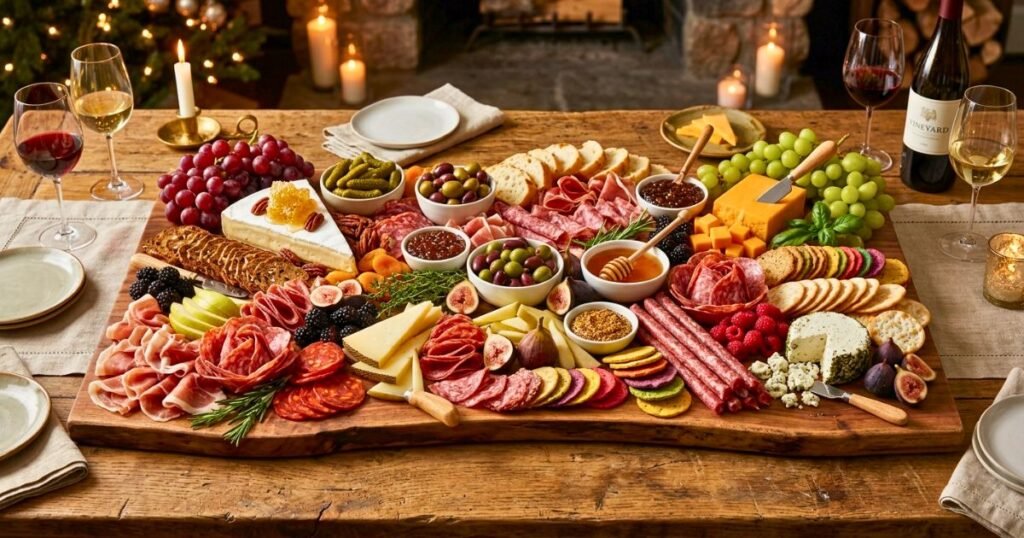
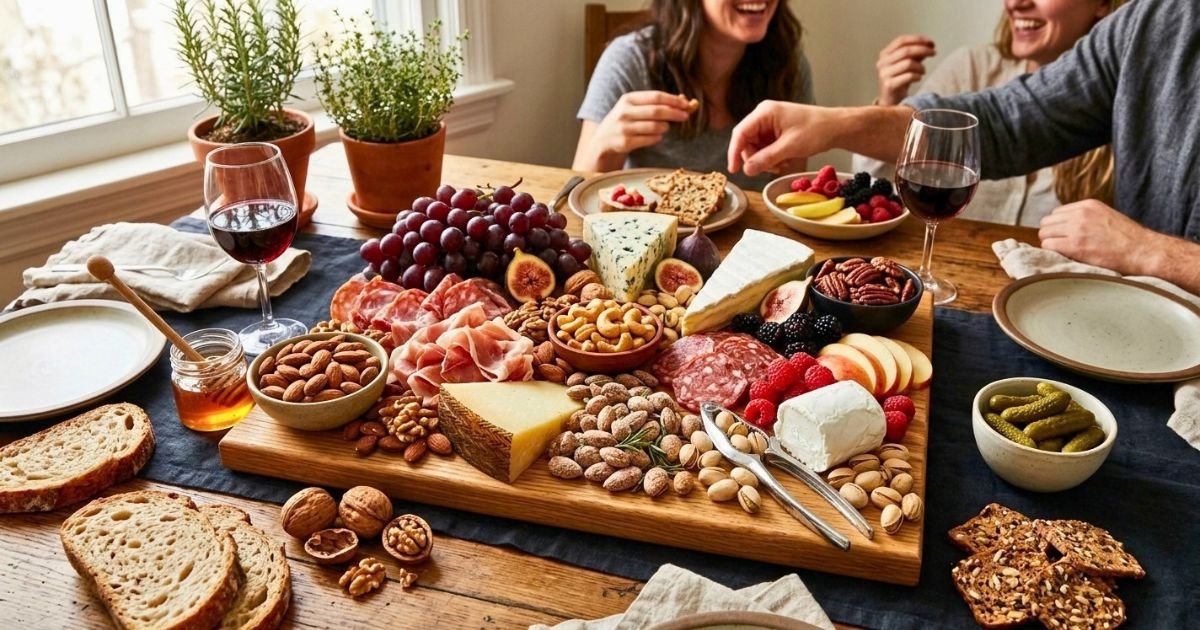
In this guide, you’ll learn exactly how to arrange a large charcuterie board, including ingredient selection, serving quantities, layout strategies, and expert styling tips that make a big impact.
Table of Contents
Why Large Charcuterie Boards Are So Popular
Large charcuterie boards have become a favorite entertaining option because they combine convenience, variety, and visual appeal.
Unlike traditional appetizers that require constant preparation and serving, a charcuterie board allows guests to graze at their own pace. It accommodates different tastes and dietary preferences while creating an impressive presentation with minimal cooking.
Benefits of a Large Charcuterie Board
| Benefit | Why It Matters |
| Easy Entertaining | Less cooking and preparation time |
| Visually Impressive | Creates a beautiful focal point |
| Customizable | Suitable for various dietary needs |
| Social Experience | Encourages guests to gather and interact |
| Flexible Budget | Can be scaled up or down easily |
A thoughtfully arranged board can transform even a simple gathering into a memorable event.
What Makes a Large Charcuterie Board Different?
Many people assume a large charcuterie board is simply a bigger version of a regular board. In reality, arranging a board for a crowd requires a completely different approach.
With larger boards, you need to focus on:
- Visual balance
- Food distribution
- Accessibility for guests
- Variety of ingredients
- Maintaining freshness
- Preventing overcrowding
A successful large board should look abundant without appearing chaotic.
Essential Supplies You’ll Need Before Arranging a Large Charcuterie Board
Before selecting ingredients, it’s important to choose the right serving surface and accessories.
Best Board Options
Large gatherings often require more space than a traditional wooden board provides.
Popular options include:
- Extra-large wooden serving boards
- Marble charcuterie boards
- Slate serving trays
- Food-safe butcher paper on a table
- Large serving platters
- Tiered serving displays
Helpful Accessories
Keep these items nearby:
- Cheese knives
- Small serving tongs
- Mini spoons
- Toothpicks
- Small bowls
- Label cards
- Napkins
Having the proper tools makes the board easier to navigate and more enjoyable for guests.
How Much Food Do You Need for a Large Charcuterie Board?
One of the biggest mistakes hosts make is underestimating the amount of food needed.
The ideal quantity depends on whether the board is being served as an appetizer or the main food offering.
Charcuterie Serving Size Guide
| Number of Guests | Cheese | Meat | Crackers/Bread | Fruits & Extras |
| 10 Guests | 2–3 lbs | 1.5–2 lbs | 1 large box | 3–4 cups |
| 20 Guests | 4–5 lbs | 3–4 lbs | 2 large boxes | 6–8 cups |
| 30 Guests | 6–8 lbs | 5–6 lbs | 3 large boxes | 10–12 cups |
| 50 Guests | 10–12 lbs | 8–10 lbs | 5 large boxes | 18–20 cups |
Quick Rule of Thumb
For appetizer portions:
- 2–3 ounces of cheese per person
- 2 ounces of meat per person
- A handful of crackers per person
- Fresh fruits and accompaniments for balance
If the board serves as the primary meal, increase quantities by approximately 50%.
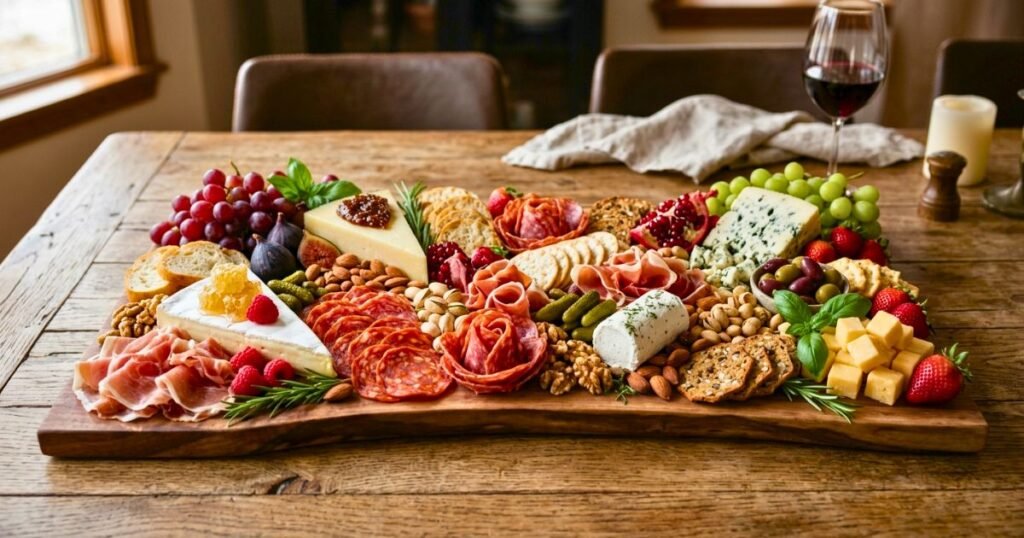
Best Ingredients for a Large Charcuterie Board
The secret to a visually appealing board is variety.
You want a mix of colors, textures, flavors, and shapes that complement each other.
1. Cheese Selection
Choose a variety of cheeses to satisfy different preferences.
Aim for at least three to five different types.
Soft Cheeses
- Brie
- Camembert
- Goat cheese
Semi-Soft Cheeses
- Havarti
- Fontina
- Gouda
Hard Cheeses
- Aged Cheddar
- Parmesan
- Manchego
Blue Cheeses
- Gorgonzola
- Roquefort
Recommended Cheese Combination
| Cheese Type | Example |
| Soft | Brie |
| Hard | Aged Cheddar |
| Nutty | Manchego |
| Creamy | Havarti |
| Bold | Gorgonzola |
This combination provides excellent flavor variety and visual interest.
2. Cured Meats
Cured meats add texture and richness to your board.
Popular choices include:
- Prosciutto
- Salami
- Soppressata
- Capicola
- Chorizo
For visual appeal, avoid placing meats flat on the board.
Instead, create:
- Salami rivers
- Prosciutto ribbons
- Folded meat rosettes
- Layered meat fans
These techniques instantly make the board look professionally styled.
3. Fresh Fruits
Fresh fruit adds color, sweetness, and freshness while balancing salty meats and cheeses.
Excellent choices include:
- Grapes
- Strawberries
- Blueberries
- Blackberries
- Raspberries
- Apple slices
- Pear slices
- Figs
- Cherries
Best Fruit Pairings
| Fruit | Cheese Pairing |
| Grapes | Brie |
| Pears | Blue Cheese |
| Strawberries | Goat Cheese |
| Apples | Cheddar |
| Figs | Manchego |
Fresh fruit is one of the easiest ways to make a large board feel vibrant and inviting.
4. Crackers and Bread
Crackers create structure and provide the perfect base for meats and cheeses.
Include a mix of:
- Water crackers
- Multigrain crackers
- Artisan crackers
- Breadsticks
- Crostini
- Sliced baguette
Varying shapes and textures keeps the board visually interesting.
5. Nuts and Savory Extras
Small additions help fill empty spaces while enhancing flavor.
Popular options:
- Almonds
- Pistachios
- Cashews
- Candied pecans
- Marcona almonds
These ingredients also add texture and create a more abundant appearance.
6. Sweet Accompaniments
Adding sweetness creates balance throughout the board.
Try including:
- Honey
- Fig jam
- Apricot preserves
- Fruit spreads
- Chocolate pieces
- Dried fruits
These items pair beautifully with both cheeses and meats.
Creating a Balanced Color Palette
One of the biggest differences between an average board and an exceptional one is color distribution.
Professional-looking charcuterie boards include multiple color zones.
Aim for These Colors
- Red (strawberries, salami)
- Green (grapes, herbs)
- White (brie, crackers)
- Yellow (cheddar, apricots)
- Purple (figs, grapes)
- Brown (nuts, bread)
A balanced palette makes the board look full, vibrant, and highly shareable on social media.
Planning Your Layout Before You Start
Before placing any ingredients, take a moment to visualize the arrangement.
Professional charcuterie stylists rarely build a board randomly.
Instead, they create a rough plan by:
- Identifying focal points
- Positioning bowls first
- Spacing larger items evenly
- Leaving room for fillers
- Balancing colors across the board
This simple planning step prevents overcrowding and helps achieve a polished final result.
Pro Tip from Experienced Hosts: When arranging a large charcuterie board, step back every few minutes and view it from a guest’s perspective. This helps identify empty spots, color imbalances, and areas that need additional texture or variety.
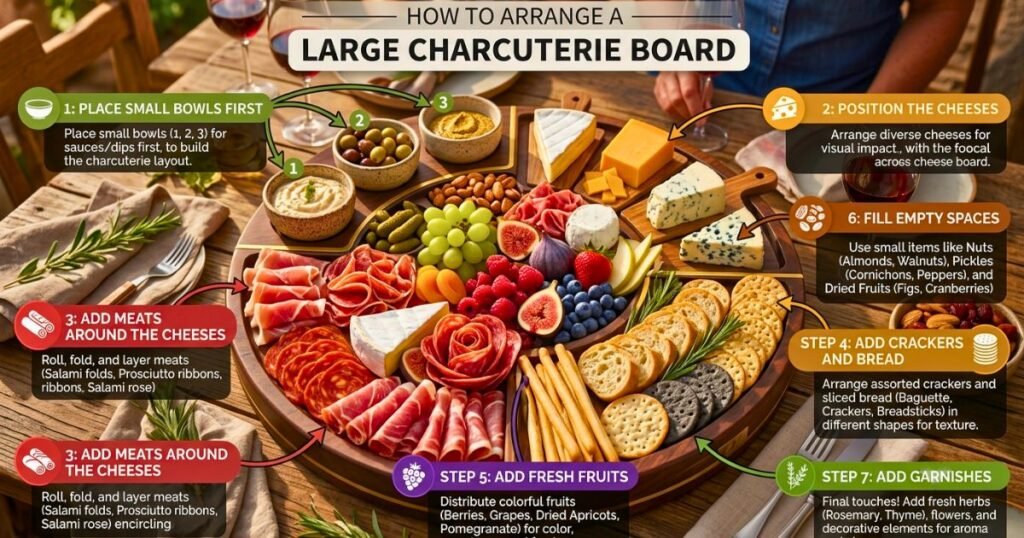
Step-by-Step: How to Arrange a Large Charcuterie Board?
Now that you’ve selected your ingredients and planned your layout, it’s time to build the board. The order in which you place items matters more than most people realize.
Following a professional arrangement process helps create balance, prevents overcrowding, and ensures every section of the board feels intentional.
Step 1: Place Small Bowls First
Professional charcuterie stylists almost always begin with bowls.
Why?
Because bowls act as visual anchors that help guide the arrangement of everything else.
Use bowls for:
- Honey
- Olives
- Fig jam
- Mustard
- Dips
- Nuts
Placement Tip
- Avoid clustering bowls together.
- Instead, spread them evenly across the board to create natural focal points.
For example:
- One bowl near the top left
- One bowl in the center
- One bowl toward the bottom right
This creates balance and encourages guests to explore the entire board.
Step 2: Position the Cheeses
Cheese is typically the star of the board, so it should be distributed strategically.
Place larger cheese pieces first.
Examples:
- Whole Brie wheel
- Cheddar wedge
- Manchego slice
- Goat cheese log
Cheese Placement Rule
- Imagine your board divided into sections.
- Place cheeses in different areas rather than grouping them together.
- This helps guests access cheese from multiple sides and prevents traffic jams around the board.
Step 3: Add Meats Around the Cheeses
Next, arrange cured meats near complementary cheeses.
This naturally encourages pairing.
Easy Meat Styling Techniques
Folded Salami
- Fold slices in half and overlap slightly.
Meat Rosettes
- Create flower-like shapes using salami or pepperoni.
Prosciutto Ribbons
- Loosely drape prosciutto for an elegant appearance.
Salami Rivers
- Arrange overlapping slices in a winding line across the board.
- These styling methods instantly elevate the presentation.
Step 4: Add Crackers and Bread
Crackers should not be placed in one giant pile.
Instead:
- Create several smaller clusters
- Spread them throughout the board
- Mix different shapes and sizes
This improves accessibility and visual appeal.
Pro Tip
- Leave some crackers in reserve.
- Guests often eat crackers faster than any other item, and it’s easier to refill than rebuild the entire board.
Step 5: Add Fresh Fruits
Fresh fruit brings energy and color to the arrangement.
Use fruits to soften the transition between meats, cheeses, and crackers.
Great Placement Ideas
- Grapes cascading off the edge
- Strawberry clusters between cheese wedges
- Blueberries filling small gaps
- Fig halves near soft cheeses
Fruit helps prevent the board from looking too heavy or monochromatic.
Step 6: Fill Empty Spaces
At this stage, your board should be approximately 80% complete.
Now focus on filling visible gaps.
Perfect fillers include:
- Almonds
- Pistachios
- Dried apricots
- Chocolate pieces
- Candied pecans
- Cornichons
- Olives
The goal is abundance—not clutter.
Every section should feel full while still allowing guests to identify individual ingredients.
Step 7: Add Garnishes
The final layer is decoration.
Fresh herbs create a professional finishing touch.
Popular choices include:
- Rosemary
- Thyme
- Sage
- Mint
A few sprigs strategically placed throughout the board can dramatically improve the presentation.
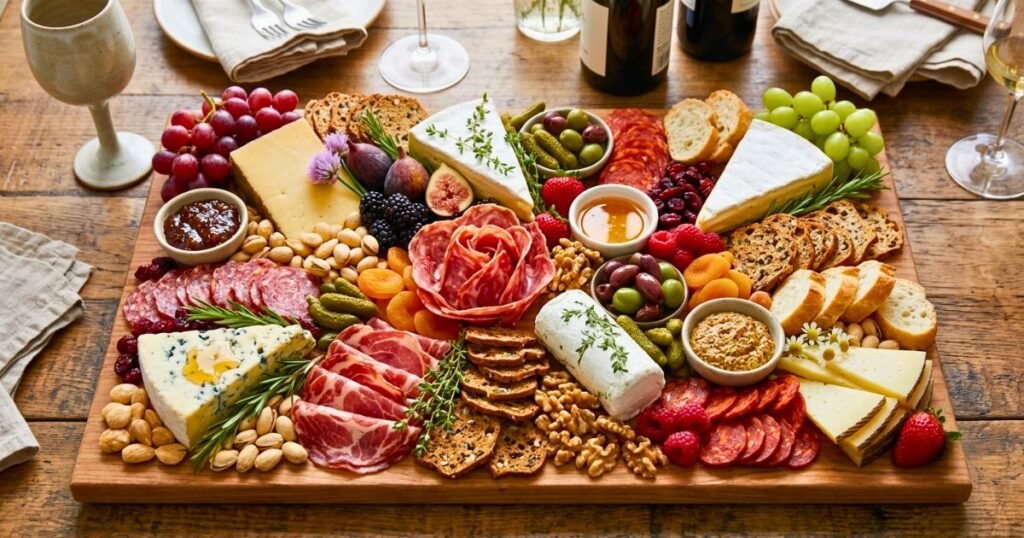
Large Charcuterie Board Layout Ideas
Different events call for different layouts.
Classic Balanced Layout
Best For:
- Family gatherings
- Holiday parties
- General entertaining
Features:
- Even ingredient distribution
- Multiple focal points
- Balanced color placement
Circular Layout
Best For:
- Round serving boards
Features:
- Bowls in the center
- Ingredients radiating outward
- Easy guest access
Grazing-Style Layout
Best For:
- Large celebrations
- Weddings
- Corporate events
Features:
- Ingredients flowing naturally
- Minimal empty space
- Abundant appearance
Seasonal Layout
Best For:
- Fall gatherings
- Christmas parties
- Summer events
Features:
- Seasonal fruits
- Holiday colors
- Themed garnishes
Common Mistakes to Avoid
Even experienced hosts make mistakes that affect the appearance and functionality of a charcuterie board.
Charcuterie Board Mistakes Table:
| Mistake | Better Approach |
| Using only one cheese type | Offer multiple textures and flavors |
| Overcrowding the board | Leave room for visual separation |
| Too many crackers together | Create smaller clusters |
| Ignoring color balance | Distribute colors evenly |
| Forgetting serving tools | Include knives, spoons, and tongs |
| Adding fruit too early | Add delicate fruit last |
| Using only beige foods | Include vibrant fruits and garnishes |
| No focal points | Use bowls and cheese wheels strategically |
Avoiding these mistakes instantly improves both appearance and guest experience.
Professional Styling Tips for a Stunning Large Charcuterie Board
Use Odd Numbers
Groups of three or five often look more natural than even-numbered arrangements.
Create Height
Layer ingredients whenever possible.
Examples:
- Stack crackers
- Fan cheese slices
- Build grape clusters
Height creates visual interest.
Mix Textures
Combine:
- Smooth cheeses
- Crunchy crackers
- Soft fruits
- Crisp nuts
Texture variety makes the board feel more dynamic.
Repeat Colors
If strawberries appear on one side, add another red element elsewhere.
This helps create visual harmony.
Think Like a Photographer
Ask yourself:
“If someone takes a picture right now, does every section look appealing?”
Pinterest-worthy boards often perform best because they are visually balanced from every angle.
Large Charcuterie Board Arrangement Checklist
Use this checklist before guests arrive.
Preparation Checklist:
| Task | Complete |
| Board cleaned and prepared | ☑ |
| Bowls positioned first | ☑ |
| Cheese distributed evenly | ☑ |
| Meats styled attractively | ☑ |
| Crackers placed in clusters | ☑ |
| Fruits added throughout | ☑ |
| Empty spaces filled | ☑ |
| Garnishes added | ☑ |
| Serving utensils included | ☑ |
| Final visual check completed | ☑ |

Frequently Asked Questions: How to Arrange a Large Charcuterie Board?
1. How far in advance can I arrange a large charcuterie board?
- Most boards can be assembled 1–2 hours before serving. Add delicate fruits and crackers closer to serving time for the best freshness.
2. What size board is best for 20 guests?
- A board measuring approximately 24–36 inches provides enough space for a balanced arrangement.
3. How much cheese should I buy per person?
- Plan on 2–3 ounces of cheese per guest for appetizer portions.
4. What is the best cheese for a large charcuterie board?
- Brie, cheddar, Manchego, Havarti, and goat cheese provide excellent variety.
5. How do I keep fruit fresh on a charcuterie board?
- Store prepared fruit in the refrigerator and add it shortly before serving.
6. Can I make a charcuterie board the night before?
- You can prepare many ingredients ahead of time, but final assembly is best completed on the day of the event.
7. What crackers work best on a charcuterie board?
- A mix of plain, seeded, artisan, and multigrain crackers offers variety.
8. How many meat varieties should I include?
- Three to five different cured meats typically provide enough diversity.
9. What fruits pair best with cheese?
- Grapes, strawberries, pears, apples, figs, and berries pair exceptionally well with most cheeses.
10. Should I use garnish on a charcuterie board?
- Yes. Fresh herbs such as rosemary and thyme enhance both appearance and aroma.
11. How do I prevent the board from looking empty?
- Use fillers like nuts, dried fruit, olives, and small crackers to fill gaps.
12. What is the easiest way to style salami?
- Folded salami and simple salami rivers are beginner-friendly and visually appealing.
13. How many bowls should a large charcuterie board have?
- Typically three to five bowls work well, depending on the board size.
14. Can I create a vegetarian charcuterie board?
- Absolutely. Focus on cheeses, fruits, vegetables, nuts, dips, and artisan crackers.
15. What is the biggest mistake when arranging a large charcuterie board?
- Overcrowding. Guests should be able to see and access each ingredient easily.
Conclusion
Learning how to arrange a large charcuterie board is about more than placing food on a serving tray. The most impressive boards combine thoughtful planning, balanced ingredients, strategic placement, and beautiful presentation.
Start by placing bowls and cheeses first, then build around them with meats, crackers, fruits, and fillers. Focus on color, texture, and variety while leaving enough space for guests to serve themselves comfortably.
Whether you’re hosting a small family celebration or a large holiday gathering, these techniques will help you create a charcuterie board that looks professionally styled, photographs beautifully, and keeps guests coming back for more.