The Bread Knife Guide: The Secret to Perfect Slicing Every Time
A bread knife is one of the most underestimated tools in the kitchen. While many people associate it only with slicing bread, its serrated edge makes it incredibly effective for a wide range of foods that are difficult to cut with a standard straight-edge knife. From delicate sponge cakes to juicy tomatoes and thick sandwiches, a quality bread knife delivers cleaner cuts with less pressure and less damage to food. Its unique design allows it to glide through tough exteriors while protecting soft interiors, making it one of the most versatile knives in a modern kitchen.
Many home cooks overlook the value of a bread knife because they assume a chef’s knife can do everything. However, even a razor-sharp chef’s knife struggles with crusty bread, slippery produce, and soft baked goods. That is where a serrated blade becomes essential.
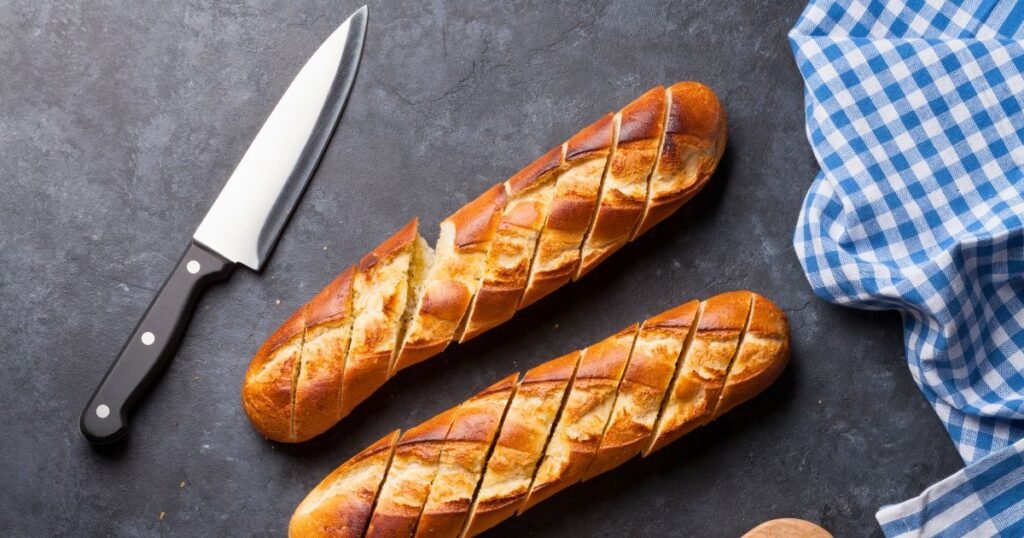
This guide explores everything you need to know about bread knives, including how serrated edges work, the foods they handle best, how to choose the right size and style, maintenance tips, and why every kitchen benefits from owning one.
Table of Contents
What Is a Bread Knife?
A bread knife is a long slicing knife with a serrated or toothed edge that cuts using a gentle sawing motion rather than downward force.
Most bread knives range from 8 to 10 inches, giving them enough reach to slice through large loaves, cakes, and oversized fruits in one smooth motion. The long blade creates stability during slicing, while the serrations grip surfaces that would otherwise cause a straight blade to slip.
Unlike chef’s knives, which are built for chopping and precision prep work, bread knives are specialized for foods with contrasting textures — typically a hard outer layer and a soft interior.
Key Characteristics of a Bread Knife
- Long, narrow blade for smooth slicing
- Serrated edge that grips surfaces easily
- Lightweight design for controlled movements
- Optimized for sawing motions rather than chopping
- Minimal downward pressure required
- Excellent control when slicing delicate foods
Because of these features, bread knives are particularly forgiving for beginners and highly efficient for experienced cooks.
Why Serrated Edges Work So Well?
The secret behind a bread knife’s performance lies in its serrated edge. Instead of relying on one continuous, sharp surface, serrations create multiple contact points that bite into food surfaces immediately.
This design dramatically improves traction, especially on foods that are slippery, crusty, or delicate.
How Serrations Improve Cutting Performance?
- Grip hard crusts instantly
- Prevent slipping on smooth produce skins
- Slice delicate interiors without crushing
- Require less force than straight-edge blades
- Stay functional longer because less blade surface touches the board
A serrated knife essentially combines cutting and gripping into one motion. This makes it extremely efficient when working with foods that challenge smooth blades. Another advantage is durability. Since the recessed portions of the serrations rarely contact the cutting board, the edge wears down much more slowly than traditional straight knives.
Food’s a Bread Knife Handles Best
A bread knife excels whenever a food combines a firm outer surface with a soft center. These mixed-texture foods often compress or tear when cut with standard kitchen knives.
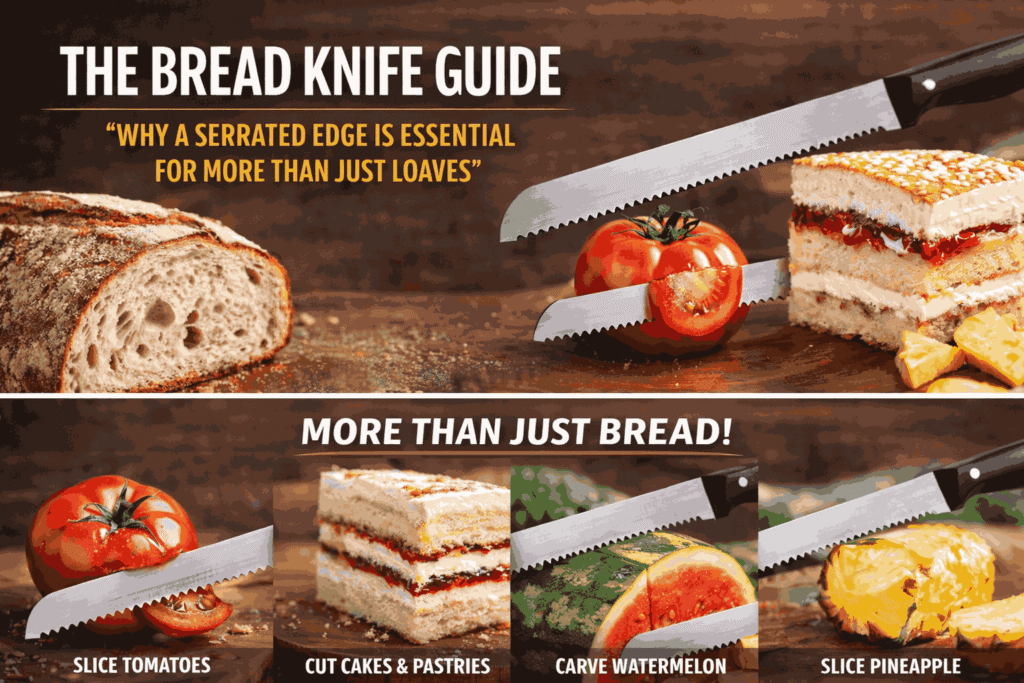
Common Uses Beyond Bread
- Artisan and Crusty Bread: The classic use. Serrations break through crispy crusts without flattening soft interiors.
- Tomatoes: Bread knives slice through tomato skins effortlessly without squeezing out juice or damaging the flesh.
- Cakes and Pastries: Perfect for leveling cakes, slicing sponge layers, and cutting pastries neatly without tearing.
- Melons and Large Fruits: The long blade makes it easier to cut watermelon, cantaloupe, and pineapple cleanly and safely.
- Sandwiches and Burgers: A bread knife creates clean sandwich cuts without pushing fillings out the sides.
- Soft Cheeses: Soft cheeses like brie and camembert can stick to straight blades, but serrations reduce drag and tearing.
- Roasts with Crispy Exteriors: Some cooks even use bread knives for slicing roasts with crusted exteriors because the serrations handle texture transitions so well.
If you often struggle with crushed bread, messy tomatoes, or uneven cake slices, a bread knife can solve these problems immediately.
Bread Knife vs Chef’s Knife: When to Use Each
Bread knives and chef’s knives serve different purposes, and understanding those differences improves both efficiency and safety in the kitchen.
| Task | Bread Knife | Chef’s Knife |
|---|---|---|
| Crusty bread | Best choice | Often slips |
| Tomatoes | Excellent | Needs extreme sharpness |
| Cakes & pastries | Clean slices | Can tear |
| Herbs & garlic | Not suitable | Excellent |
| Meat preparation | Limited use | Ideal |
| Precision chopping | Not designed for it | Best tool |
Simple Rule
- Use a bread knife for slicing foods with tough exteriors and delicate interiors.
- Use a chef’s knife for chopping, mincing, dicing, and general prep work.
A well-equipped kitchen benefits from both tools because they complement each other rather than compete.
Choosing the Right Bread Knife Length
Blade length affects cutting control, efficiency, and versatility.
Common Bread Knife Sizes
8-Inch Bread Knife
- Compact and easy to store
- Suitable for smaller kitchens
- Good for sandwich bread and smaller loaves
9–10 Inch Bread Knife
- Best all-around option
- Handles artisan loaves and large fruits
- Provides smoother slicing with fewer strokes
12-Inch Bread Knife
- Often used by professionals
- Ideal for commercial baking and oversized breads
- Requires more storage space and handling experience
For most households, a 9–10-inch bread knife offers the best balance between versatility and comfort.
Straight vs Offset Bread Knives
Bread knives are available in both straight and offset styles.
| Feature | Straight Bread Knife | Offset Bread Knife |
|---|---|---|
| Hand clearance | Moderate | Excellent |
| Control | Good | Very high |
| Best for | General use | Large loaves & cakes |
| Comfort during long use | Moderate | Better |
Straight Bread Knives: These are traditional and commonly found in home kitchens. They work well for general slicing tasks.
Offset Bread Knives: Offset handles lift your hand above the cutting surface, preventing knuckle contact with the board. This design improves comfort and leverage, especially during repetitive slicing.
Professional bakers and pastry chefs often prefer offset bread knives because they provide cleaner, longer cuts with better ergonomics.
How to Use a Bread Knife Properly?
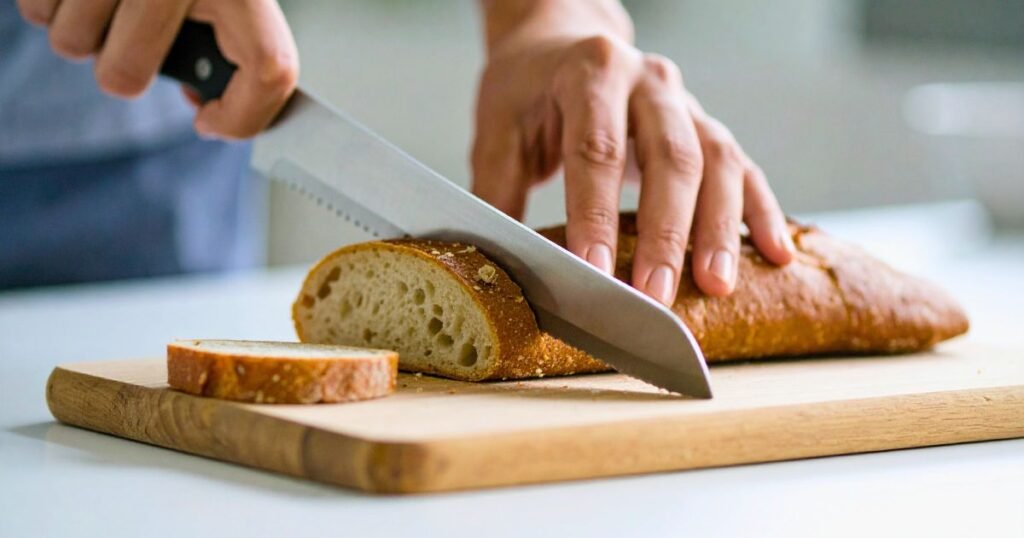
Using the correct technique improves both safety and cutting performance.
Step-by-Step Technique
- Place food securely on a stable cutting board
- Grip the handle firmly but comfortably
- Begin slicing near the heel of the blade
- Use gentle back-and-forth motions
- Let the serrations create traction naturally
- Avoid pressing down aggressively
- Use the full blade length for smoother cuts
The key is patience and rhythm. Serrated knives work best when allowed to saw naturally rather than forcefully.
Extra Tips for Cleaner Slices
- Chill cakes before slicing for sharper edges
- Use long strokes instead of short sawing bursts
- Wipe the blade between cake cuts
- Stabilize round fruits before cutting
Small adjustments in technique can dramatically improve results.
Common Bread Knife Mistakes to Avoid
Even durable bread knives can lose effectiveness when misused.
Avoid These Common Errors
- Pressing Down Too Hard: Excess pressure crushes bread and damages delicate foods.
- Using Hard Cutting Surfaces: Glass, marble, granite, and ceramic boards dull serrations quickly.
- Dishwasher Cleaning: Dishwashers expose knives to moisture, heat, and impact damage.
- Improper Storage: Loose storage in drawers damages both serrations and nearby utensils.
- Using Electric Sharpeners: Most electric sharpeners are not designed for serrated edges.
- Scraping Food with the Blade: This damages the cutting teeth over time.
Avoiding these habits can significantly extend your knife’s lifespan.
How to Care for and Sharpen a Bread Knife?
Bread knives require less maintenance than chef’s knives, but proper care still matters.
Care Tips
- Wash by hand with warm water and mild soap
- Dry immediately after cleaning
- Store in a blade guard, knife block, or magnetic strip
- Oil wooden handles occasionally
- Avoid prolonged moisture exposure
Sharpening a Bread Knife: Serrated knives sharpen differently from straight blades.
Best Sharpening Methods
- Use a tapered serrated sharpening rod
- Sharpen each serration individually if needed
- Sharpen infrequently
- Consider professional sharpening services
Most home cooks only need to sharpen a bread knife every few years because serrations naturally retain effectiveness longer.
Is a Bread Knife Really Necessary?
Many people assume a chef’s knife can replace a bread knife, but certain foods reveal the limitations of straight-edge blades quickly.
A bread knife becomes invaluable if you regularly prepare:
- Artisan bread
- Sandwiches
- Cakes and pastries
- Tomatoes
- Large fruits
- Delicate baked goods
The versatility surprises many cooks. Once people begin using a bread knife properly, it often becomes one of the most frequently used knives in the kitchen. For bakers, entertainers, and home cooks who value presentation, it is especially important.
Additional Features to Look for in a Quality Bread Knife
Not all bread knives perform equally. Blade design and construction quality make a major difference.
Important Buying Features
- High-Carbon Stainless Steel: Provides better corrosion resistance and edge retention.
- Comfortable Handle Design: Look for ergonomic handles that reduce wrist fatigue.
- Full Tang Construction: Improves balance and durability.
- Serration Pattern: Some knives use deep, aggressive serrations, while others use fine, scalloped edges for smoother cuts.
- Weight Balance: A properly balanced knife improves slicing precision and comfort.
Choosing a well-made bread knife improves long-term performance and safety.
Best Foods to Practice With as a Beginner
If you are new to bread knives, these foods are excellent practice options:
- French bread
- Tomatoes
- Bagels
- Sponge cake
- Pineapple
These foods help develop proper slicing rhythm and pressure control.
Frequently Asked Questions for The Bread Knife Guide
Q. What is a bread knife used for?
- A bread knife is used for slicing foods with hard exteriors and soft interiors, including bread, cakes, tomatoes, melons, and sandwiches.
Q. Can a bread knife replace a chef’s knife?
- No. Bread knives are designed for slicing, while chef’s knives handle chopping, dicing, and precision prep work.
Q. Why does a bread knife stay sharp longer?
- Because only the serration tips touch the cutting board, the edge experiences less overall wear.
Q. Can I sharpen a bread knife at home?
- Yes. Use a serrated sharpening rod or hire a professional sharpening service for the best results.
Q. What cutting board is best for a bread knife?
- Wood and rubber cutting boards are safest because they reduce wear on serrated edges.
Q. Are offset bread knives better?
- Offset bread knives provide better hand clearance and are often more comfortable for slicing large loaves and cakes.
Q. Can a bread knife cut meat?
- It can slice some meats with crusted exteriors, but it is not ideal for trimming or precision meat prep.
Q. How long should a bread knife last?
- With proper care, a quality bread knife can remain effective for many years.
Final Thoughts
A bread knife is far more versatile than most people realize. Its serrated edge allows it to tackle foods that challenge even the sharpest straight-edge knives, delivering cleaner slices, better control, and improved presentation.
From crusty sourdough and delicate cakes to juicy tomatoes and oversized sandwiches, a bread knife performs tasks that other knives struggle to handle efficiently.
When chosen carefully, maintained properly, and used with the correct technique, a bread knife becomes one of the most dependable tools in the kitchen. For anyone who cooks regularly, bakes often, or values precision food presentation, it is not simply helpful — it is essential.