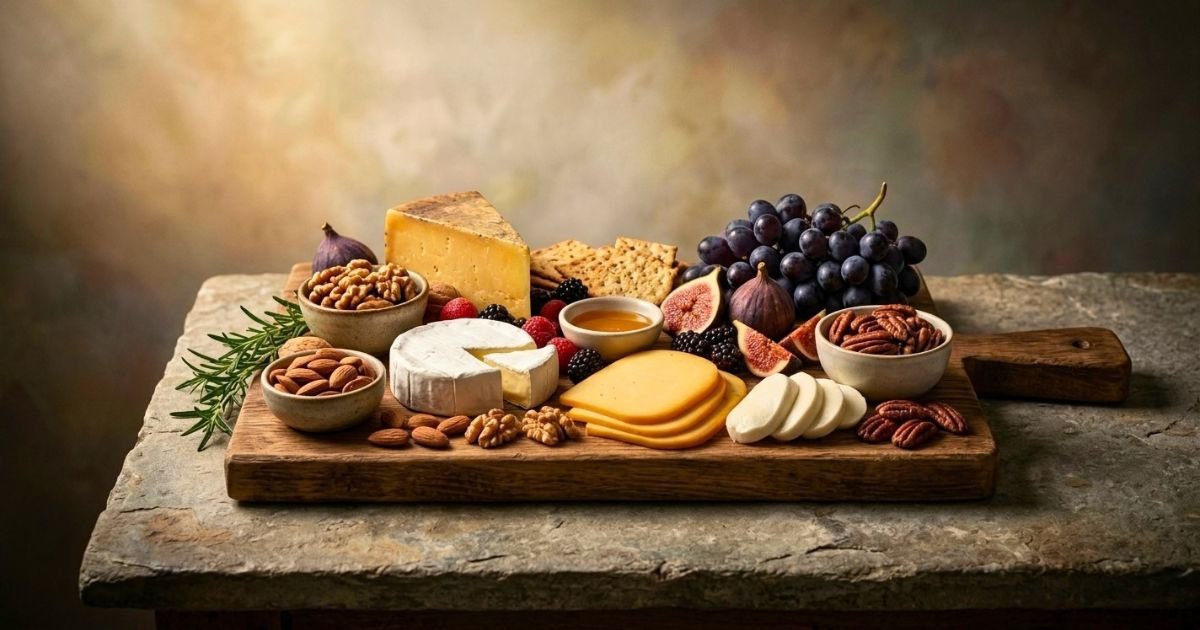
How to Clean Wooden Serving Trays the Right Way?
Wooden serving trays are timeless kitchen and home essentials that combine natural beauty with practical functionality. They are widely used for serving meals, presenting appetizers, organizing countertops, and enhancing home décor. However, unlike plastic or metal alternatives, wooden trays require special care to maintain their appearance, hygiene, and durability.
Because wood is a living, porous material, it reacts to moisture, heat, oils, and cleaning agents differently than synthetic surfaces. Without proper care, it can warp, crack, absorb odors, or even harbor bacteria. This is why understanding how to properly clean and maintain wooden serving trays is essential for anyone who values both hygiene and longevity.
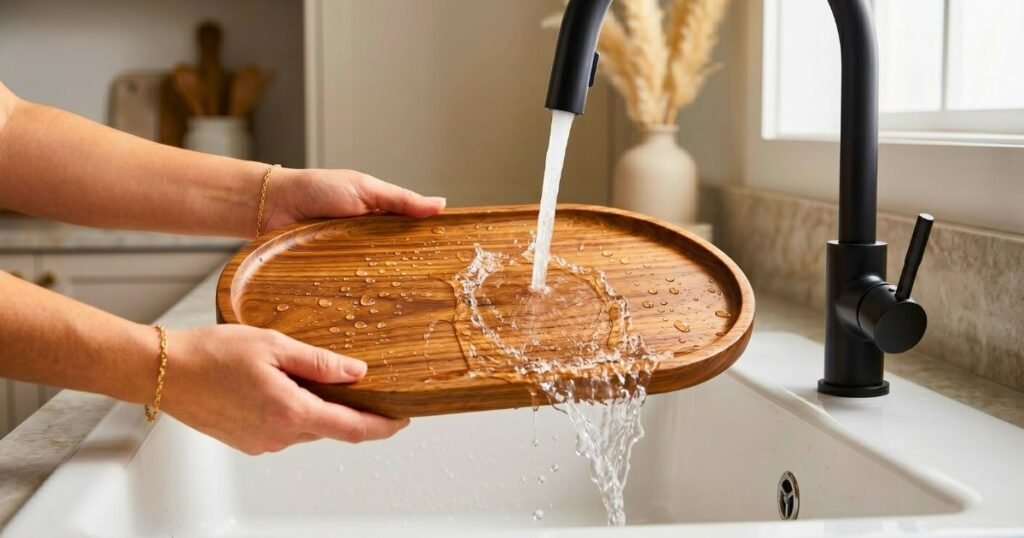
This guide provides a complete, in-depth breakdown of cleaning methods, maintenance routines, stain removal techniques, sanitization steps, oiling practices, and long-term care strategies. Whether you use your tray daily or occasionally for entertaining guests, these methods will ensure it remains in excellent condition for years.
Table of Contents
Why Proper Cleaning Matters for Wooden Trays?
Cleaning wooden trays is not just about appearance—it directly affects hygiene, durability, and food safety. Unlike glass or stainless steel, wood behaves differently when exposed to moisture and food particles.
Hygiene, Food Safety, and Preservation
Wood has natural antimicrobial properties to some extent, but it is still porous enough to trap moisture and organic residue if not cleaned properly. Over time, this can lead to hygiene issues.
Key concerns include:
- Bacterial accumulation: Food particles trapped in wood fibers can encourage microbial growth if left uncleaned.
- Cross-contamination risks: Using the same tray for different food types without proper cleaning can transfer bacteria.
- Moisture absorption: Excess water can penetrate deep into the grain, weakening the structure.
- Odor retention: Strong-smelling foods like garlic, spices, cheese, or fried items can leave lingering smells.
- Surface degradation: Repeated exposure to moisture and neglect can lead to dullness, cracks, and rough texture.
Proper cleaning ensures that your tray remains both visually appealing and safe for food use over time.
What NOT to Do: Cleaning Mistakes That Ruin Wooden Trays?
Many people unintentionally damage wooden serving trays by using incorrect cleaning methods. Avoiding these mistakes is just as important as following the right steps.
Major Don’ts
Dishwasher Damage
Never place wooden trays in a dishwasher. High heat, prolonged water exposure, and harsh detergents strip natural oils from the wood.
This leads to:
- Warping
- Splitting
- Cracking
- Permanent structural damage
Soaking in Water: Submerging wood in water causes it to swell unevenly. When it dries, it may shrink and crack. Even short soaking periods can weaken the material over time.
Harsh Chemicals and Abrasive Scrubbing
Avoid using:
- Bleach (regular use)
- Ammonia-based cleaners
- Strong degreasers
- Steel wool or rough scrubbing pads
These damage the wood’s protective surface layer and make it more vulnerable to stains and moisture.
Improper Drying Techniques: Leaving a tray flat while drying traps moisture underneath, encouraging mold growth and uneven drying. Always dry vertically or in a well-ventilated rack.
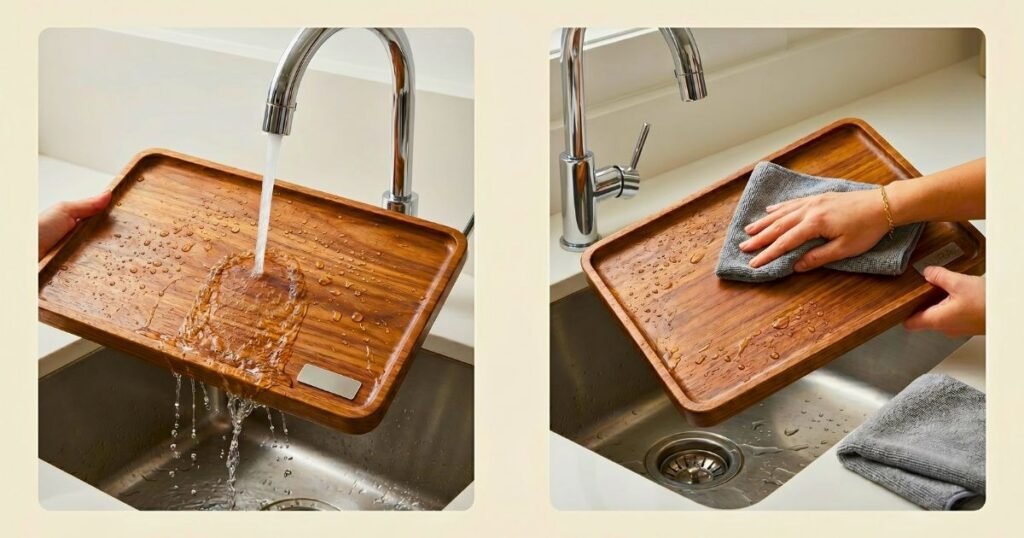
Quick Cleaning Routine (After Every Use)
Daily maintenance is the most important habit for extending the life of a wooden serving tray. A simple routine after each use prevents buildup and long-term damage.
Steps for Daily Cleaning
Remove Food Residue
- Scrape off crumbs or leftover food using a soft sponge or plastic scraper. Avoid metal tools that may scratch the surface.
Wash with Mild Soap Solution
- Use warm water with a few drops of mild dish soap. Dampen a soft cloth or sponge—never soak the tray.
Rinse Carefully
- Wipe again with a clean, damp cloth to remove soap residue completely.
Dry Immediately
- Use a microfiber or cotton towel to remove all moisture from the surface, edges, and corners.
Air Dry Upright
- Place the tray vertically to allow airflow. Ensure it is completely dry before storing it.
Deep Cleaning and Stubborn Stains
Even with regular cleaning, stains and odors may develop over time. Deep cleaning methods help restore the tray’s appearance and freshness.
Removing Stains and Odors
Baking Soda Paste Method
Baking soda acts as a gentle abrasive and natural deodorizer.
- Mix baking soda with a small amount of water
- Apply to stained areas
- Let’s sit for 10–20 minutes
- Gently scrub with a soft brush
- Rinse and dry thoroughly
Lemon and Salt Treatment
This is ideal for odor removal and light surface cleaning.
- Sprinkle coarse salt on the tray
- Rub half a lemon over the surface
- Let’s sit for a few minutes
- Rinse and dry completely
Vinegar Solution
White vinegar neutralizes bacteria and odors.
- Mix equal parts vinegar and water
- Lightly wipe the surface
- Allow to sit for a few minutes
- Wipe again with clean water
Always dry thoroughly after any deep cleaning method.
Oiling and Conditioning Your Wooden Tray
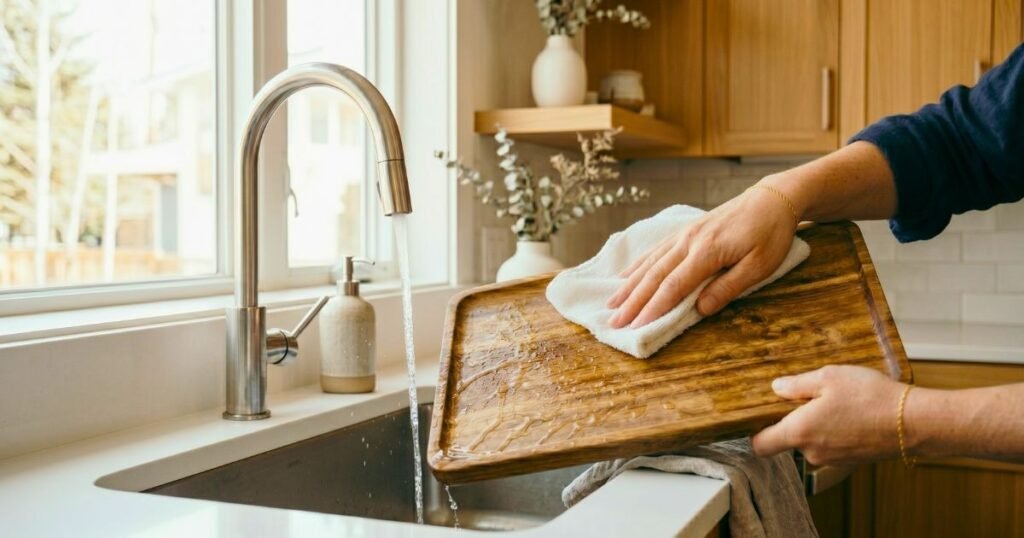
Oiling is a vital step in how to oil wooden serving tray surfaces, preventing dryness and maintaining their beauty.
Why and How to Oil?
- Oiling is essential for maintaining the strength, appearance, and longevity of wooden trays. Without it, wood becomes dry, brittle, and prone to cracking.
Types of Food-Safe Oils
Mineral Oil
- Most commonly used
- Odorless and tasteless
- Safe for food contact
Beeswax Blend
- Adds a protective coating
- Enhances shine
- Improves water resistance
Grapeseed or Walnut Oil
- Natural alternative options
- Absorbs well into wood
- Avoid if allergies are present
Oils to Avoid
Never use cooking oils like olive or vegetable oil.
As they can:
- Become rancid
- Produce unpleasant odors
- Leave sticky residue
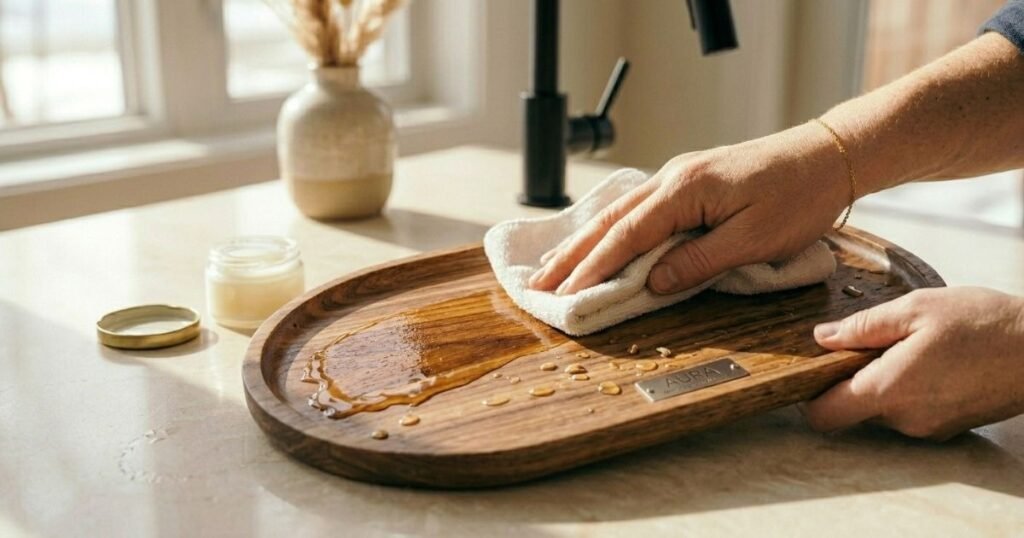
How to Apply Oil?
- Ensure the tray is clean and dry
- Apply a small amount of oil evenly
- Rub along the grain using a cloth
- Allow absorption for 30–60 minutes
- Wipe off excess thoroughly
- Buff gently for a smooth finish
Sanitizing Wooden Trays Safely
Sanitization is necessary when trays are used for raw foods or frequent guest service.
Safe Sanitizing Methods
- Vinegar Spray Solution: A natural disinfectant that is food-safe.
- Hydrogen Peroxide (3%): Kills bacteria effectively and breaks down into harmless oxygen and water.
Mild Bleach Solution (Rare Use Only):
Use only in extreme cases:
- Very diluted mixture
- Quick application
- Immediate rinsing required
When to Sanitize a Wooden Tray
- After raw meat or seafood
- After an illness in the household
- After heavy use or parties
- When odor or contamination is suspected
Troubleshooting: Common Problems and Solutions
Even well-maintained trays may develop issues over time.
Here’s how to fix them:
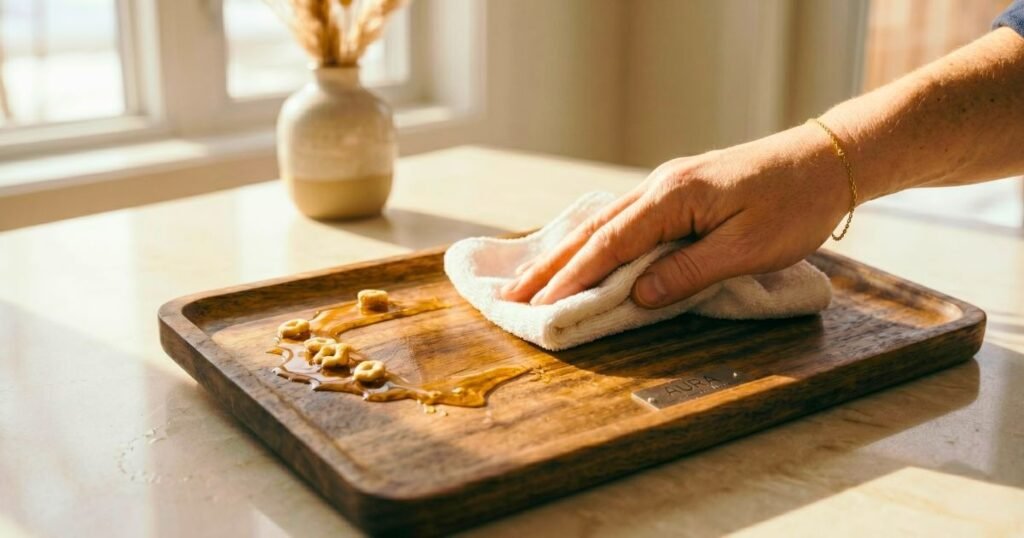
- Water Stains: Use baking soda paste or mild sanding to remove discoloration.
- Warping: Minor warping can sometimes be corrected by controlled moisture and weight application.
- Cracks: Small cracks can be filled with food-safe wood glue and lightly sanded.
- Persistent Odors: Use lemon, vinegar, or salt treatments repeatedly if needed.
- Rough Surface Texture: Light sanding followed by re-oiling restores smoothness.
Summary Care & Maintenance Tips
Maintaining your wooden serving trays doesn’t have to be a chore; it’s a simple routine that ensures their beauty and longevity.
Do’s
- Clean immediately after use
- Dry thoroughly every time
- Oil regularly with food-safe oil
- Store in dry, ventilated areas
Don’ts
- Never soak in water
- Never use the dishwasher
- Avoid harsh chemicals
- Do not use cooking oils
Frequently Asked Questions: How to Clean Wooden Serving Trays?
Q. How do I clean a wooden serving tray daily?
- Wipe it with a damp cloth, use mild soap if needed, then dry immediately to prevent moisture damage.
Q. Can I wash a wooden tray with water?
- Yes, but only lightly. Avoid soaking or running it under heavy water flow to prevent warping.
Q. Is it safe to put a wooden tray in the dishwasher?
- No, dishwashers damage wood due to heat, moisture, and strong detergents.
Q. How do I remove stains from a wooden tray?
- Use a baking soda paste or lemon and salt scrub for gentle stain removal.
Q. How often should I oil my wooden tray?
- Oil it once a month or whenever the surface looks dry or dull.
Q. What type of oil is best for wooden trays?
- Food-grade mineral oil is the safest and most commonly recommended option.
Q. Can I use olive oil to condition wood?
- No, olive oil can turn rancid and leave a sticky smell over time.
Q. How do I remove bad smells from a wooden tray?
- Use lemon, vinegar solution, or baking soda to neutralize odors naturally.
Q. Can wooden trays be used for hot food?
- Yes, but avoid direct contact with extremely hot dishes for long periods.
Q. How do I sanitize a wooden tray?
- Use a diluted vinegar solution or 3% hydrogen peroxide for safe sanitizing.
Q. Why is my wooden tray cracking?
- Cracks usually occur due to dryness, lack of oiling, or excessive water exposure.
Q. How do I fix a sticky wooden tray surface?
- Clean it with lemon and salt, wash gently, dry fully, and re-oil properly.
Q. How should I store a wooden tray?
- Store it in a dry, well-ventilated place away from direct sunlight and moisture.
Q. Can wooden trays grow mold?
- Yes, if they stay wet or are stored improperly. Always dry them completely after cleaning.
Conclusion
Wooden serving trays are more than just practical kitchen tools—they are a blend of functionality, craftsmanship, and natural beauty that enhance both everyday living and special occasions. However, their charm comes with responsibility. Because wood is a natural and porous material, it requires consistent and proper care to maintain its strength, hygiene, and elegant appearance.
By following the right cleaning routine—gentle washing after each use, proper drying, and avoiding harmful practices like soaking or dishwashing—you can significantly extend the life of your tray. Deep cleaning methods using natural ingredients like lemon, vinegar, and baking soda help tackle stains and odors effectively without damaging the wood.
Equally important is regular oiling, which restores moisture, prevents cracking, and keeps the surface smooth and protected. When combined with safe sanitizing practices and proper storage, these habits ensure your wooden tray remains both beautiful and safe for food use.