10 Small Kitchen Ideas on a Budget: Affordable Upgrades That Make a Big Impact
A small kitchen can often feel challenging to work with, especially when storage is limited, countertops are crowded, and every square foot matters. However, creating a functional, beautiful, and efficient kitchen does not require a large renovation budget. With thoughtful planning and a few strategic improvements, even the most compact kitchen can become a highly practical and inviting space.
Many homeowners assume that achieving a modern kitchen requires replacing cabinets, purchasing expensive appliances, or completely redesigning the layout. In reality, some of the most effective improvements are surprisingly affordable. Smart storage solutions, better lighting, efficient organization systems, and visual design techniques can dramatically improve how a kitchen looks and functions without major construction work.
This guide focuses on realistic, budget-conscious upgrades that deliver maximum value. Whether you own your home or rent an apartment, these ideas can help you maximize storage, improve workflow, reduce clutter, and create a kitchen that feels larger and more comfortable to use every day.
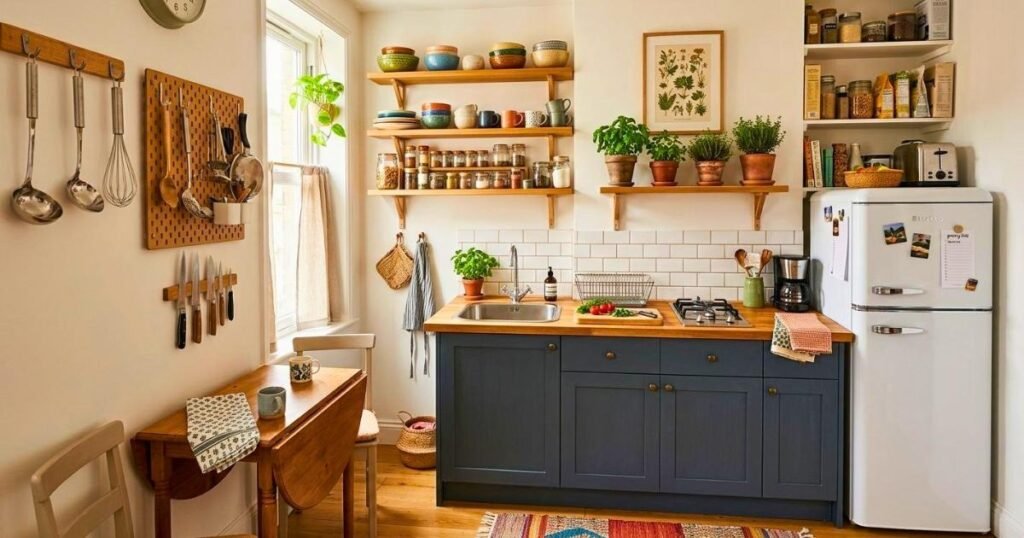
The goal is simple: transform a small kitchen into a space that works harder, looks better, and feels bigger without overspending.
Table of Contents
Why Small Kitchens Feel Bigger or Smaller (Key Insight)?
Before investing money into upgrades, it’s important to understand why some kitchens feel spacious while others feel cramped, even when they have similar dimensions. The perception of space is influenced by much more than square footage. A poorly organized kitchen with dark corners and crowded surfaces can feel significantly smaller than a well-organized kitchen of the same size.
Key factors that affect space perception:
- Natural and artificial lighting quality
- Countertop clutter and visual distractions
- Cabinet color and wall color choices
- Storage efficiency and organization systems
- Traffic flow and workspace accessibility
- Reflective surfaces and materials
- Furniture size and placement
- Ceiling height emphasis
When these elements work together, a kitchen naturally feels larger and more open.
For example, A bright kitchen with clear countertops and organized storage often feels significantly bigger than a darker kitchen filled with unnecessary items. This is because the human eye interprets clean lines and open surfaces as spaciousness.
Another important factor is visual continuity. When colors, finishes, and materials blend harmoniously, the room appears less fragmented and therefore larger. Understanding these principles helps you prioritize upgrades that create the greatest visual and functional impact.
Quick Budget Breakdown (What You Can Achieve)
One of the biggest mistakes homeowners make is spending money randomly instead of strategically. Creating a budget plan helps ensure every dollar contributes to improving the kitchen’s functionality and appearance.
| Budget Range | Possible Improvements | Expected Impact |
| $0–$50 | Decluttering, reorganizing cabinets, moving accessories, and improving lighting placement | High |
| $50–$200 | Storage bins, wall hooks, shelf risers, paint touch-ups, organizers | Very High |
| $200–$500 | Open shelving, rolling carts, backsplash upgrades, cabinet hardware | Major Transformation |
| $500–$1000 | Cabinet refinishing, new lighting fixtures, compact appliances | Semi-Renovation Effect |
| $1000+ | New countertops, custom storage systems, and layout modifications | Extensive Upgrade |
Budget Priority Strategy
If your budget is limited, focus on improvements that solve multiple problems simultaneously.
For example:
- Decluttering creates more space and improves appearance.
- Wall-mounted storage adds capacity without using floor space.
- Better lighting enhances visibility and visual openness.
- Cabinet updates improve the overall aesthetic.
These upgrades often provide more value than expensive decorative purchases.
10 Small Kitchen Ideas on a Budget (High-Impact Strategies)
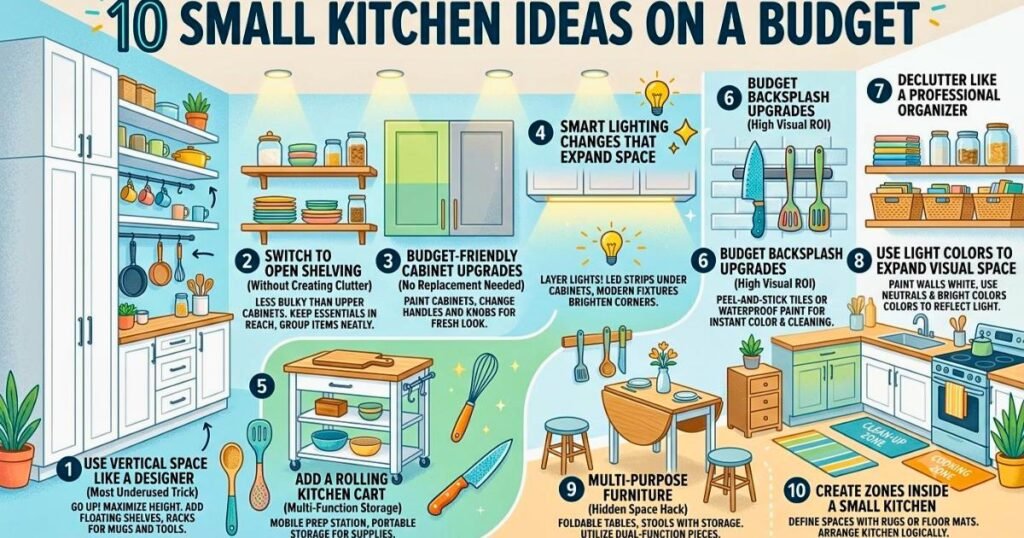
Creating a better kitchen isn’t about spending more money. It’s about making smarter design decisions that maximize every available inch.
The following strategies consistently deliver the best results in small kitchens.
1. Use Vertical Space Like a Designer (Most Underused Trick)
One of the most overlooked opportunities in small kitchens is vertical space. Many homeowners focus exclusively on cabinets and drawers while ignoring the large amount of storage available on walls and above existing furniture. Professional kitchen designers often treat walls as valuable storage zones because they increase capacity without reducing floor space.
Ways to maximize vertical storage:
- Install floating shelves above countertops
- Add wall-mounted spice racks
- Use hanging rails for cooking utensils
- Mount magnetic knife strips
- Install pegboards for flexible storage
- Add hooks beneath shelves
- Use stackable wall baskets
- Store seasonal items on higher shelves
Benefits of Vertical Storage
Vertical storage accomplishes several important goals simultaneously:
- Frees valuable countertop space
- Increases storage capacity
- Improves kitchen organization
- Creates visual height
- Enhances accessibility
When the eye naturally moves upward, the room feels taller and more spacious.
Best Items to Store Vertically
Not every kitchen item belongs in a cabinet.
Ideal candidates include:
- Pots and pans
- Frequently used utensils
- Measuring cups
- Coffee mugs
- Cutting boards
- Spice containers
- Kitchen towels
These everyday essentials become easier to access while reducing cabinet congestion.
Budget-Friendly Vertical Storage Options
Affordable solutions include:
- Adhesive wall hooks
- Wire shelving
- Pegboard systems
- Floating shelves
- Magnetic organizers
Many of these upgrades can be installed in less than an hour while significantly improving storage efficiency.
2. Switch to Open Shelving (Without Creating Clutter)
Open shelving remains one of the most effective ways to make a small kitchen appear larger. Unlike bulky upper cabinets, open shelves allow walls to remain visually lighter, creating a more open atmosphere.
However, successful open shelving requires discipline and intentional styling.
Why Open Shelving Works?
Traditional cabinets can sometimes make a small kitchen feel enclosed because they create large visual blocks.
Open shelves:
- Increase visual openness
- Allow light to travel more freely
- Display attractive kitchen essentials
- Reduce visual heaviness
- Encourage organization
Best Practice Rules
To avoid a cluttered appearance:
- Display only frequently used items
- Use matching containers whenever possible
- Keep color schemes consistent
- Leave space between objects
- Avoid overcrowding shelves
A useful guideline is: 70% practical storage + 30% decorative elements
This balance keeps shelves functional without looking messy.
Items That Work Best on Open Shelves
Consider displaying:
- Everyday dishes
- Glassware
- Coffee supplies
- Attractive storage jars
- Small plants
- Cookbooks
Avoid storing miscellaneous items that create visual noise.
Common Open Shelving Mistakes
Many homeowners accidentally make shelves look chaotic by:
- Mixing too many colors
- Storing excessive items
- Displaying rarely used products
- Ignoring symmetry
Keeping displays simple and organized is the key to success.
3. Budget-Friendly Cabinet Upgrades (No Replacement Needed)
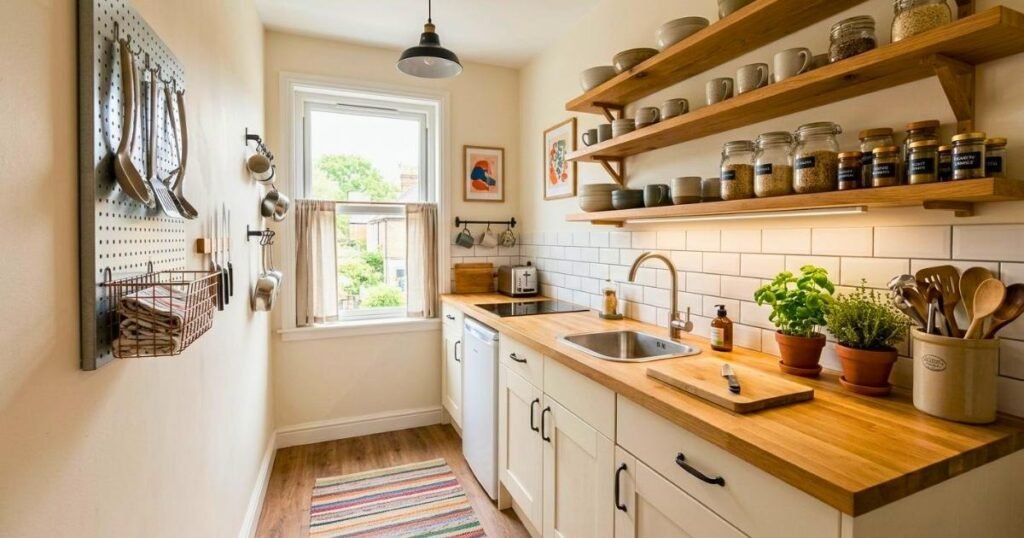
Cabinet replacement often consumes the largest portion of a renovation budget. Fortunately, replacing cabinets is rarely necessary when the cabinet structure remains functional. Simple updates can dramatically improve appearance at a fraction of the cost.
Paint Existing Cabinets
Fresh paint can completely transform outdated cabinets.
Popular choices include:
- White
- Warm cream
- Soft gray
- Sage green
- Light greige
Lighter colors reflect more light and help create a spacious appearance.
Upgrade Hardware
Replacing cabinet handles and knobs provides an immediate visual refresh.
Popular finishes include:
- Matte black
- Brushed nickel
- Champagne bronze
- Satin brass
Hardware upgrades are inexpensive but highly noticeable.
Apply Peel-and-Stick Finishes
Self-adhesive films can replicate:
- Marble
- Wood grain
- Concrete
- Matte finishes
These products provide a modern appearance without professional installation.
Organize Cabinet Interiors
Interior upgrades improve usability:
- Pull-out baskets
- Shelf risers
- Drawer dividers
- Lazy Susans
- Under-shelf storage racks
A kitchen feels larger when storage functions efficiently.
Why Cabinet Refreshes Offer High ROI: Instead of spending thousands on replacements, a few hundred dollars can make cabinets appear nearly new while improving functionality. This is one of the smartest budget-friendly kitchen improvements available.
4. Smart Lighting Changes That Expand Space
Lighting influences how spacious a kitchen feels more than many people realize. Poor lighting creates shadows, visual barriers, and dark corners that make rooms feel smaller. Improved lighting instantly creates a brighter and more open environment.
Layered Lighting Approach
Professional designers rely on three lighting layers:
Ambient Lighting
Provides overall illumination.
Examples:
- Ceiling fixtures
- Recessed lights
- Flush-mount fixtures
Task Lighting
Improves visibility for cooking and preparation.
Examples:
- Under-cabinet LED strips
- Pendant lights
- Directional fixtures
Accent Lighting
Adds depth and visual interest.
Examples:
- Shelf lighting
- Display lighting
- Toe-kick lighting
Affordable Lighting Upgrades
Budget-friendly improvements include:
- LED strip lights
- Battery-powered puck lights
- Brighter LED bulbs
- Reflective backsplash materials
These upgrades often cost less than expected while creating dramatic results.
Maximize Natural Light
If windows exist, allow them to work harder.
Tips include:
- Remove heavy curtains
- Use sheer window coverings
- Keep windows clean
- Avoid blocking sunlight with decorations
Natural light remains the most effective way to enlarge perceived space.
Color Temperature Matters: For kitchens, warm-white lighting between 2700K and 3500K typically provides the best balance of comfort and brightness. Avoid overly yellow or excessively blue lighting.
5. Add a Rolling Kitchen Cart (Multi-Function Storage)
When cabinet space is limited, a rolling kitchen cart can become one of the most valuable additions to a small kitchen. Unlike fixed furniture, rolling carts provide flexibility and can adapt to changing needs throughout the day.
Why Rolling Carts Work So Well
A kitchen cart adds:
- Storage
- Workspace
- Organization
- Mobility
Without requiring any permanent installation. This makes them ideal for renters and homeowners alike.
Ways to Use a Kitchen Cart
A cart can function as:
- Extra countertop space
- Coffee station
- Baking center
- Portable pantry
- Serving station
- Appliance storage area
Because the cart moves easily, it can be positioned wherever additional workspace is needed.
Features to Look For
The most useful carts typically include:
- Locking wheels
- Multiple shelves
- Storage drawers
- Towel bars
- Durable work surfaces
Budget Considerations: Many quality rolling carts cost significantly less than adding permanent cabinetry while providing similar storage benefits. For small kitchens, flexibility often delivers greater value than fixed installations.
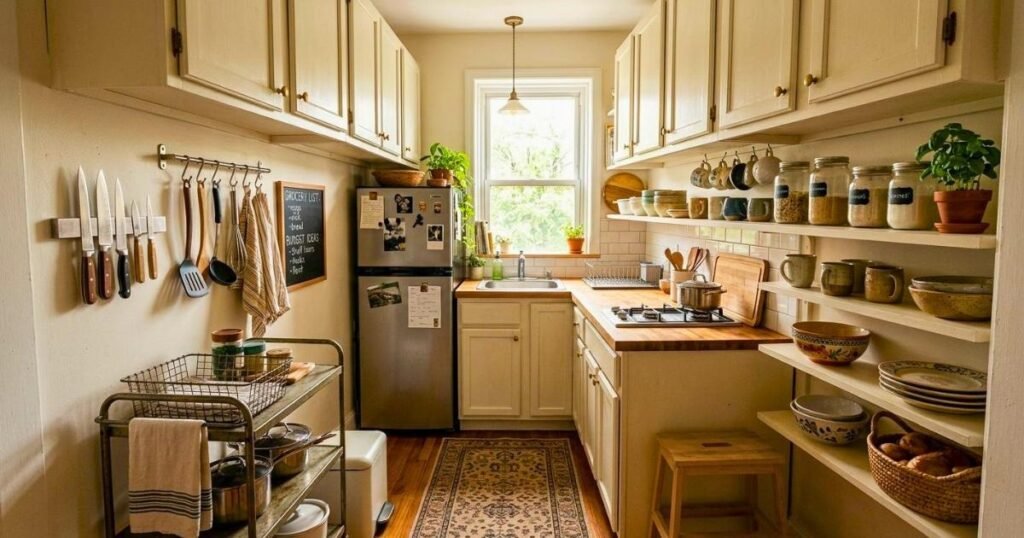
6. Budget Backsplash Upgrades (High Visual ROI)
When homeowners think about upgrading a kitchen, backsplashes are often overlooked. However, a backsplash occupies a significant portion of visual space, making it one of the most impactful upgrades for transforming a kitchen’s appearance. The good news is that modern budget-friendly materials allow you to achieve a high-end look without spending thousands of dollars.
Why a Backsplash Matters?
A backsplash serves both practical and aesthetic purposes.
Benefits include:
- Protecting walls from moisture and grease
- Making cleaning easier
- Adding personality and style
- Reflecting light throughout the room
- Creating a focal point
Even a simple backsplash update can make a kitchen feel newer, cleaner, and more polished.
Affordable Backsplash Options
Peel-and-Stick Tiles
One of the most popular budget solutions.
Available styles include:
- Subway tile
- Marble look
- Mosaic patterns
- Geometric designs
- Stone-inspired textures
These products are easy to install and ideal for renters because many can be removed without damaging walls.
Waterproof Wall Panels
Modern wall panels can mimic premium materials while offering durability and easy maintenance.
Advantages:
- Quick installation
- Moisture resistance
- Low maintenance
- Professional appearance
Painted Backsplash Areas
A painted backsplash can create a clean and minimalist aesthetic.
Use:
- Semi-gloss paint
- Washable finishes
- Moisture-resistant products
This is one of the lowest-cost improvements available.
Tile Accent Sections
Instead of tiling the entire kitchen, focus on key areas:
- Behind the stove
- Around the sink
- Coffee station walls
Targeted upgrades often provide the same visual impact at a fraction of the cost.
Choosing the Right Design
Small kitchens generally benefit from:
- Light-colored tiles
- Simple patterns
- Glossy finishes
- Reflective surfaces
Large, busy patterns can make compact kitchens feel visually crowded.
Budget vs. Impact Table:
| Upgrade Type | Typical Cost | Difficulty | Visual Impact |
| Paint | Very Low | Easy | Moderate |
| Peel-and-Stick Tiles | Low | Easy | High |
| Wall Panels | Moderate | Medium | High |
| Traditional Tile | Higher | Medium/High | Very High |
7. Declutter Like a Professional Organizer
Many people believe they need more storage when they actually need less clutter. Professional organizers frequently discover that homeowners use only a small percentage of their kitchen tools regularly. The rest occupies valuable space. Decluttering is often the highest-return improvement because it costs nothing.
Why Does Decluttering Work?
Clutter creates:
- Visual stress
- Reduced workspace
- Difficult cleaning routines
- Poor organization
- Limited storage efficiency
Removing unnecessary items immediately improves functionality.
The Weekly Use Rule
Ask yourself: Have I used this item within the last week?
If the answer is no:
- Store it elsewhere
- Relocate it to less accessible storage
- Donate it
- Discard it if broken
This simple rule helps prioritize valuable kitchen space.
Countertop Discipline Rule
Countertops should remain as open as possible.
Keep only:
- Coffee maker (if used daily)
- Knife block or magnetic strip
- Fruit bowl
- Essential cooking oil
- One decorative item
Everything else should have a designated storage location.
Common Items That Create Clutter
Many kitchens contain excessive:
- Water bottles
- Travel mugs
- Plastic containers
- Duplicate utensils
- Unused gadgets
- Expired pantry items
Regular audits prevent unnecessary accumulation.
Professional Decluttering Method
Follow these steps:
- Empty one cabinet completely.
- Sort items by category.
- Remove duplicates.
- Keep frequently used items accessible.
- Store occasional-use items higher up.
- Donate unnecessary items.
Repeat for each storage area.
The One-In, One-Out Rule
Whenever you purchase a new kitchen item:
- Remove one existing item.
- This prevents future clutter buildup and maintains balance.
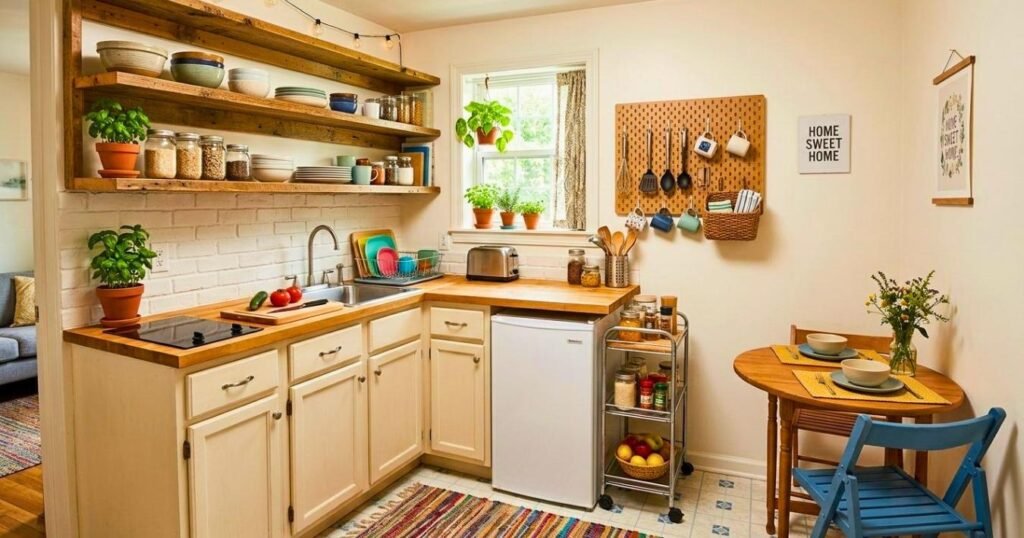
8. Use Light Colors to Expand Visual Space
Color has a powerful influence on how spacious a room feels. Even though color cannot physically increase square footage, it can dramatically alter visual perception.
Why Light Colors Work?
Light colors:
- Reflect more light
- Reduce visual weight
- Create openness
- Improve brightness
- Enhance cleanliness
Dark colors absorb light, making walls appear closer and rooms feel smaller.
Best Colors for Small Kitchens
White: A timeless option that maximizes brightness and openness.
Soft Beige: Adds warmth while maintaining a sense of spaciousness.
Light Gray: Modern and versatile without feeling overwhelming.
Greige: A blend of gray and beige that complements various design styles.
Natural Wood Tones: Adds warmth while preserving visual balance.
Effective Color Combinations:
| Main Color | Accent Color | Result |
| White | Natural Wood | Bright & Cozy |
| Light Gray | Matte Black | Modern & Clean |
| Beige | Brass Accents | Warm & Elegant |
| White | Soft Green | Fresh & Airy |
| Cream | Wood Finishes | Timeless & Inviting |
Painting Tips for Small Kitchens
To maximize openness:
- Use the same wall color throughout the space
- Paint ceilings a lighter shade
- Minimize sharp color transitions
- Coordinate cabinet and wall colors
Consistent color schemes create visual continuity.
Strategic Use of Dark Colors
Dark colors are not entirely forbidden.
Instead:
- Use them sparingly
- Limit them to lower cabinets
- Incorporate them through accessories
- Balance them with lighter surroundings
This creates contrast without overwhelming the room.
9. Multi-Purpose Furniture (Hidden Space Hack)
In a small kitchen, every item should earn its place. Multi-functional furniture provides more value because it serves multiple purposes while occupying minimal space.
Why Multi-Purpose Furniture Matters
Benefits include:
- Better space efficiency
- Reduced clutter
- Increased flexibility
- Improved organization
- Lower furniture costs
The fewer individual pieces you need, the more open the kitchen feels.
Best Multi-Functional Furniture Options
Foldable Dining Tables
Can expand during meals and fold away afterward.
Ideal for:
- Apartments
- Studio homes
- Compact kitchens
Stackable Stools
- Provide seating without consuming permanent floor space.
Expandable Prep Boards
- Create additional work surfaces over sinks or countertops.
Storage Benches
- Offer seating and hidden storage simultaneously.
Kitchen Islands with Storage
Combine:
- Workspace
- Storage
- Seating
- Organization
Smart Furniture Selection Tips
Before purchasing any furniture, ask:
- Does it serve multiple purposes?
- Can it be folded or stored?
- Does it include hidden storage?
- Is it appropriately sized?
Choosing versatile furniture prevents overcrowding.
Space-Saving Furniture Comparison:
| Furniture Type | Primary Benefit |
| Foldable Table | Flexible Dining Space |
| Storage Bench | Seating + Storage |
| Rolling Cart | Storage + Workspace |
| Stackable Stools | Compact Seating |
| Expandable Board | Additional Prep Area |
These solutions help maximize functionality without increasing the kitchen footprint.
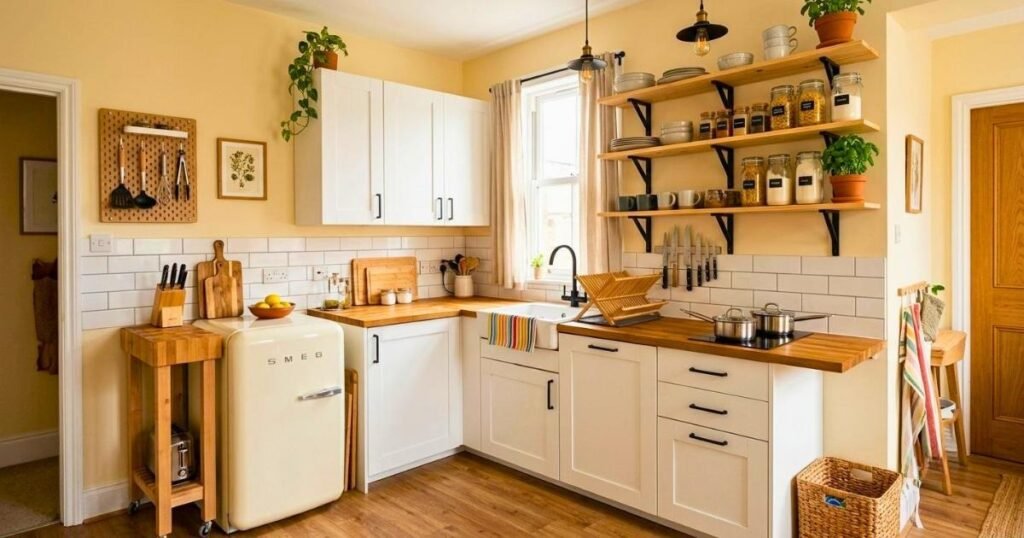
10. Create Zones Inside a Small Kitchen
One of the biggest differences between efficient and inefficient kitchens is organization. Professional kitchen designers often divide spaces into functional zones. Even the smallest kitchen benefits from this approach.
What Is Kitchen Zoning?
Kitchen zoning means organizing items according to the tasks performed in each area.
This reduces:
- Walking
- Searching
- Clutter
- Workflow interruptions
Essential Kitchen Zones
Cooking Zone
Includes:
- Stove
- Pots
- Pans
- Cooking utensils
- Oils and spices
Everything needed for cooking should remain nearby.
Prep Zone
Includes:
- Cutting boards
- Mixing bowls
- Measuring tools
Keeping prep tools together speeds up meal preparation.
Storage Zone
Includes:
- Pantry items
- Dry goods
- Containers
- Food storage supplies
Group similar items together for easy access.
Cleaning Zone
Includes:
- Sink
- Cleaning supplies
- Dish soap
- Trash bins
Organizing these items together improves efficiency.
Benefits of Kitchen Zoning
Well-defined zones:
- Reduce wasted movement
- Increase productivity
- Improve organization
- Make cleaning easier
- Create a more enjoyable cooking experience
Simple Zoning Example:
| Zone | Key Items |
| Cooking | Pots, pans, utensils |
| Prep | Knives, cutting boards |
| Storage | Food, containers |
| Cleaning | Soap, trash, dish supplies |
Even minor zoning improvements can dramatically enhance functionality.
Common Mistakes That Make Small Kitchens Worse
While many upgrades improve a kitchen, certain mistakes can make a compact space feel even smaller.
Using Too Many Colors
- Excessive color variation creates visual fragmentation.
- Stick to a cohesive palette.
Overcrowding Open Shelves
- Open shelving should feel airy, not overloaded.
- Leave visible breathing room.
Poor Lighting Placement
- Dark corners shrink visual space.
- Layer lighting throughout the room.
Leaving Appliances on Countertops
- Small appliances consume valuable workspace.
- Store infrequently used appliances when possible.
Ignoring Vertical Storage
- Failing to utilize walls often wastes the most valuable storage opportunity available.
Buying Oversized Furniture
- Large furniture can dominate a small room.
- Always scale furniture to the available space.
Lack of Organization Systems
- Storage without organization quickly becomes clutter.
- Use dividers, bins, and labeled containers.
5 Pro-Level Small Kitchen Upgrade Strategy (Low Budget)
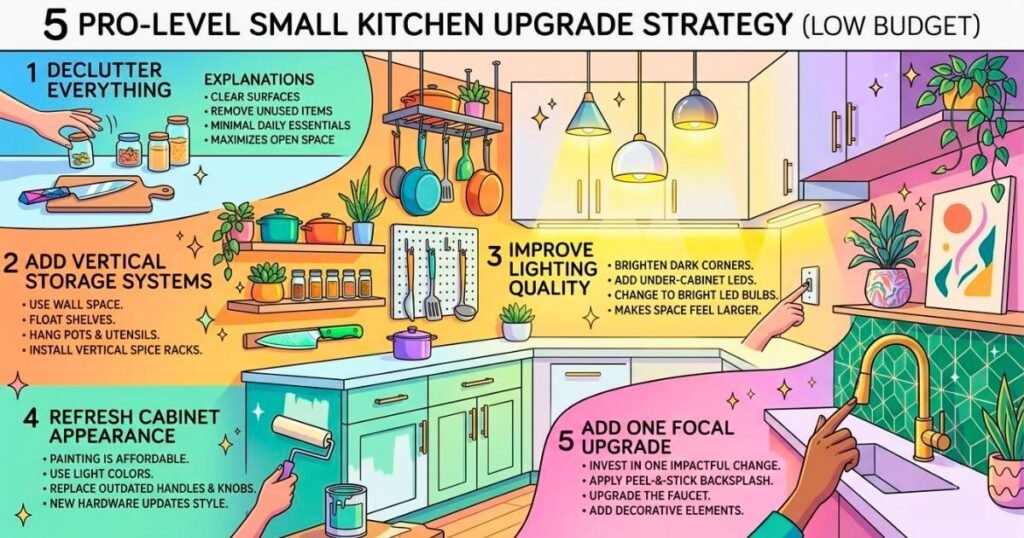
If your goal is maximum impact with minimum spending, follow a structured upgrade plan.
Step 1: Declutter Everything
Remove:
- Broken items
- Duplicates
- Rarely used gadgets
This creates immediate visual improvement.
Step 2: Add Vertical Storage Systems
Install:
- Shelves
- Hooks
- Magnetic strips
- Wall organizers
These upgrades provide long-term storage benefits.
Step 3: Improve Lighting Quality
Focus on:
- Brighter LED bulbs
- Shadow reduction
Better lighting instantly expands perceived space.
Step 4: Refresh Cabinet Appearance
Upgrade:
- Paint
- Hardware
- Interior organization
This provides a near-renovation effect at a fraction of the cost.
Step 5: Add One Focal Upgrade
Choose one standout improvement:
- Backsplash
- Rolling cart
- Open shelving feature wall
A focal point gives the kitchen personality and visual appeal.
Maximum ROI Upgrade Table:
| Upgrade | Cost | Impact |
| Decluttering | Very Low | Extremely High |
| Vertical Storage | Low | High |
| Lighting | Low | High |
| Cabinet Refresh | Moderate | Very High |
| Backsplash | Moderate | High |
Following this order ensures every dollar contributes meaningful value.
Frequently Asked Questions: Small Kitchen Ideas on a Budget
1. What are the best small kitchen ideas on a budget?
- The most effective budget-friendly upgrades include vertical wall storage, open shelving, improved lighting, cabinet painting, peel-and-stick backsplashes, and thorough decluttering. These changes improve both appearance and functionality without requiring major renovations.
2. How can I make a small kitchen look bigger on a budget?
- Use light paint colors, maximize natural light, install bright LED lighting, reduce countertop clutter, and add reflective surfaces. Maintaining visual simplicity helps the kitchen appear larger than it actually is.
3. What is the cheapest way to upgrade a small kitchen?
- Decluttering, reorganizing cabinets, adding wall hooks, repainting cabinets, and replacing cabinet hardware are among the most affordable improvements with the greatest impact.
4. How do I organize a small kitchen with limited space?
- Create dedicated zones for cooking, preparation, cleaning, and storage. Use drawer dividers, stackable containers, wall-mounted organizers, and under-sink storage systems to maximize efficiency.
5. Are open shelves good for small kitchens?
- Yes. Open shelves can make a small kitchen feel larger because they reduce visual bulk. However, they should remain organized and free from excessive decorative items.
6. What colors work best in a small kitchen?
- White, cream, light gray, beige, greige, and natural wood tones are excellent choices because they reflect light and create a spacious atmosphere.
7. What should I avoid in a small kitchen?
- Avoid cluttered countertops, oversized furniture, excessive decorative items, poor lighting, overcrowded shelves, and dark upper cabinets that can make the room feel smaller.
8. Is a rolling kitchen cart worth it?
- Absolutely. A rolling cart provides additional storage, prep space, and flexibility without requiring permanent installation, making it one of the most versatile small kitchen upgrades.
9. How can renters improve a small kitchen on a budget?
- Renters can use peel-and-stick backsplashes, removable shelves, adhesive hooks, portable storage carts, and battery-powered lighting to upgrade their kitchens without making permanent changes.
10. How often should I declutter my kitchen?
- A quick monthly review and a deeper seasonal decluttering session help maintain organization and prevent unnecessary accumulation.
Final Thoughts
Small kitchens often have more potential than people realize. While limited square footage presents challenges, it also encourages smarter design decisions and more efficient use of space. The key to success is focusing on improvements that enhance both functionality and visual openness. Instead of investing in expensive renovations immediately, start with high-impact changes such as decluttering, improving lighting, maximizing vertical storage, and refreshing existing cabinets.
These affordable upgrades can dramatically transform how a kitchen looks, feels, and performs. Remember that the most effective small kitchen is not necessarily the one with the most storage or the highest budget. It is the one that is organized, intentional, easy to use, and free from unnecessary clutter.
Winning Formula: Clarity + Light + Vertical Storage + Minimal Clutter + Smart Organization = Bigger-Looking Kitchen
By following these proven small kitchen ideas on a budget, you can create a stylish, efficient, and welcoming kitchen that feels far larger than its actual size—without spending a fortune.