How to Use Cheese Knives Effectively Like a Professional Cheesemonger?
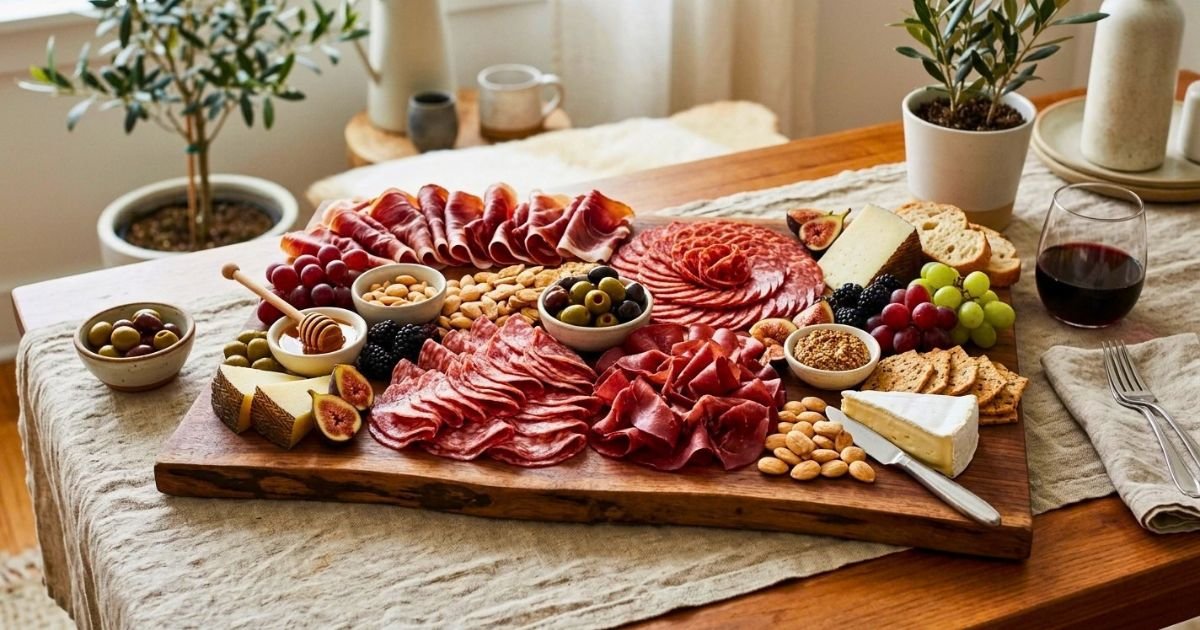
A thoughtfully curated cheese board is more than a collection of cheeses—it’s an experience that brings people together through flavor, texture, and presentation. Yet for many home entertainers, the moment arrives when confidence gives way to hesitation: which knife should you use, and how should each cheese be cut? From silky Brie and creamy Camembert to crumbly aged Gouda and robust Parmigiano-Reggiano, every cheese has its own structure, moisture content, and ideal serving method. Using the wrong knife can crush delicate cheeses, fracture hard varieties, and diminish the overall tasting experience.
Learning how to select and use the proper cheese knife transforms a simple serving task into an art form. With the right tools and techniques, you can preserve each cheese’s texture, enhance its flavor release, and create an elegant presentation that impresses your guests.
As cheese consumption continues to grow worldwide, mastering cheese service has become an increasingly valuable entertaining skill. Whether you’re assembling a casual grazing board for family or hosting a sophisticated wine-and-cheese evening, understanding the role of specialized cheese knives will help you cut with precision and serve with confidence.
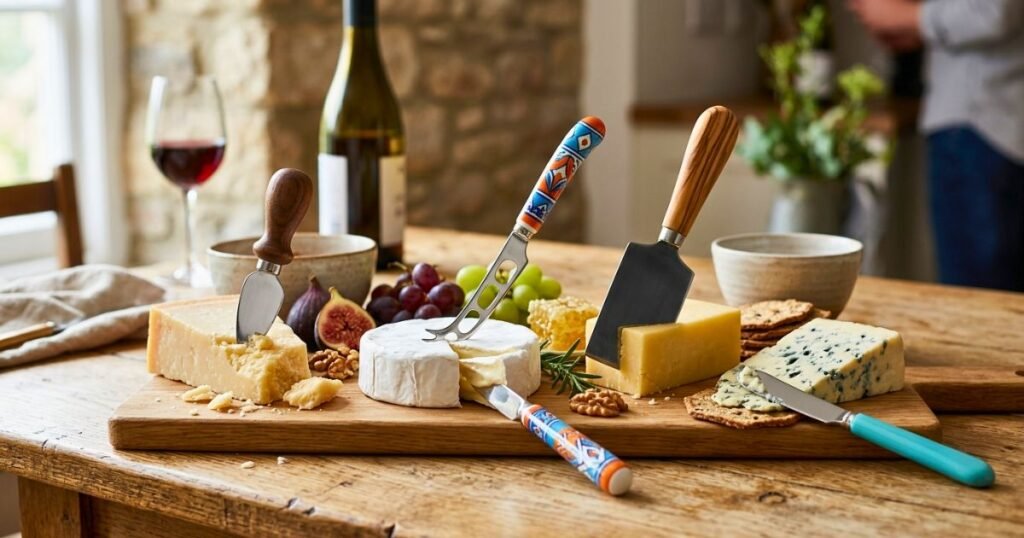
This guide explores everything you need to know about cheese knives—from identifying essential tools and mastering cutting techniques to creating visually stunning cheese boards that elevate every gathering.
Table of Contents
Beyond the Block: Why Specialized Knives Matter for the True Cheese Lover?
Cheese is remarkably diverse. Some varieties are soft and creamy, while others are dense, crumbly, or semi-firm. Because each cheese behaves differently when cut, a standard kitchen knife often falls short. Soft cheeses tend to stick to broad blades, causing smearing and loss of shape. Hard cheeses require additional leverage and strength, while crumbly cheeses need controlled pressure to prevent excessive breakage.
Specialized cheese knives are designed to address these challenges. Their unique shapes, blade styles, and features help preserve the cheese’s integrity while ensuring cleaner cuts and more attractive presentation.
The benefits of using the right cheese knife include:
- Maintaining the intended texture and structure
- Preventing crushing, sticking, and crumbling
- Preserving flavor and aroma
- Improving portion consistency
- Creating a more elegant serving experience
The right tool respects the craftsmanship behind each cheese, allowing guests to enjoy it exactly as the cheesemaker intended.
The Promise: Cultivating Confidence in Every Cut, Ensuring Elegance in Every Serve
Many people avoid serving specialty cheeses because they worry about cutting them incorrectly. Fortunately, mastering cheese knives is far easier than it appears.
This guide is designed to remove the guesswork and help you understand not only which knife to use, but also why it works best for a specific cheese style. By developing a basic understanding of cheese textures and cutting techniques.
You’ll gain the confidence to:
- Build beautiful cheese boards
- Portion cheeses correctly
- Prevent waste and breakage
- Improve guest interaction
- Create memorable, entertaining experiences
Whether you’re preparing a simple appetizer or an elaborate charcuterie spread, the skills you develop here will enhance every cheese occasion.
Decoding Your Arsenal: The Essential Cheese Knives & Their Mastery
Understanding the purpose of each knife is the foundation of successful cheese service.
Essential Cheese Knife Reference Table
| Different types of Knives | Best For | Key Features | Primary Purpose |
| Soft Cheese Knife | Brie, Camembert, Taleggio | Perforated blade, narrow profile | Adjustable blade |
| Cheese Spreader | Goat cheese, cream cheese | Wide, blunt blade | Spreading soft cheeses |
| Pronged-Tip Knife | Gouda, Havarti, Swiss | Forked tip, sharp edge | Slicing and serving |
| Spade Knife | Parmesan, aged Gouda | Short, pointed blade | Breaking hard cheeses |
| Chisel Knife | Aged Cheddar, Manchego | Thick, flat blade | Creating clean cuts |
| Cheese Wire | Blue cheese, fresh chèvre | Thin wire | Smooth cuts through delicate cheeses |
| Cheese Plane | Semi-hard cheeses | Adjustable blade | Produces thin slices |
A thoughtfully selected set of three to five knives can handle virtually every category of cheese.
The Soft Cheese Specialists: For Creamy Delights
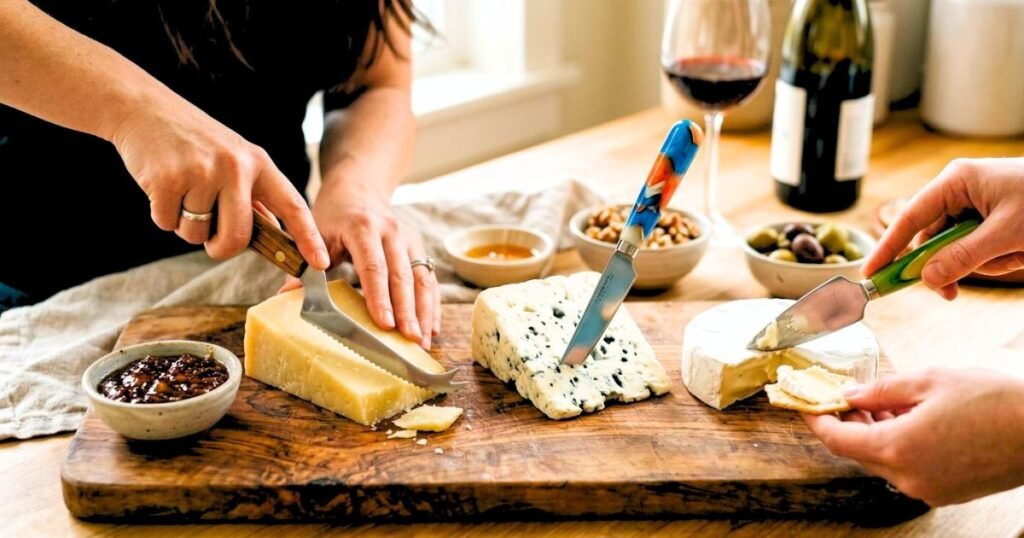
Soft cheeses require delicate handling because their high moisture content causes them to cling to traditional blades. Cheeses such as Brie, Camembert, triple-cream cheeses, Burrata, and fresh Mozzarella benefit from knives with narrow, perforated blades that minimize surface contact. The holes or cutouts reduce friction and prevent the cheese from sticking, allowing each slice to maintain its shape.
Many soft cheese knives feature pronged tips that let you serve slices directly without touching them by hand. For spreadable cheeses such as whipped goat cheese, cream cheese, or fromage blanc, a dedicated cheese spreader offers superior control.
Helpful tips for cutting soft cheeses:
- Chill the knife briefly before cutting
- Wipe the blade between slices
- Use gentle pressure rather than sawing motions
- Allow cheese to rest at room temperature before serving
These small adjustments help preserve texture while creating cleaner, more elegant portions.
Conquering Hard & Crumbly Cheeses: Power & Precision
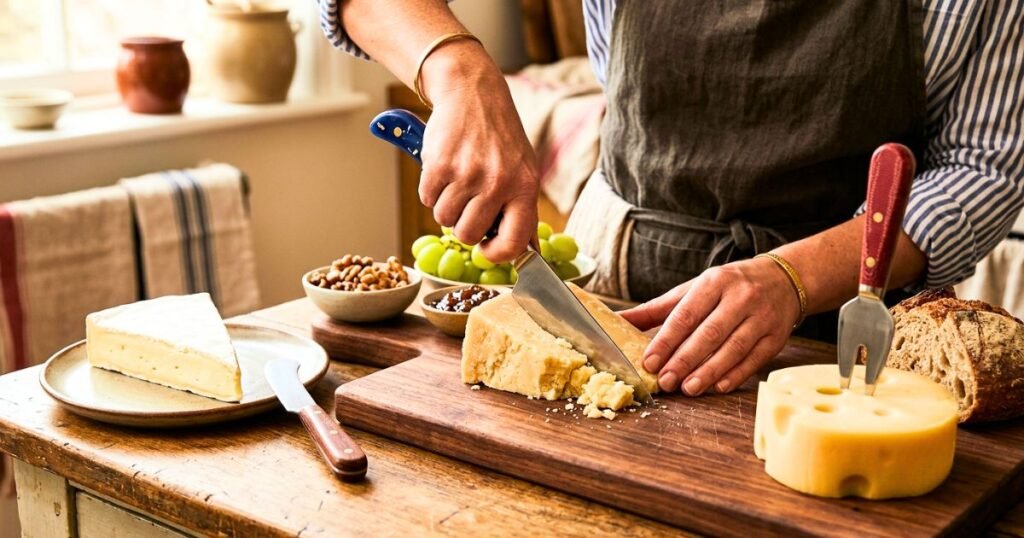
Hard cheeses demand strength, leverage, and precision. Dense cheeses such as Parmigiano-Reggiano, Pecorino Romano, aged Manchego, and extra-aged Gouda are not designed to be sliced into perfect pieces. Instead, they should be broken into natural fragments that showcase their crystalline texture.
A spade knife is specifically designed for this purpose. Its pointed blade allows you to score the cheese before gently prying it apart. For hard block cheeses like aged cheddar or Gruyère, a chisel knife provides better leverage and cleaner cuts.
Best practices for hard cheeses include:
- Score the rind before cutting
- Apply steady pressure rather than force
- Allow cold cheeses to warm slightly before serving
- Embrace rustic shapes instead of perfect slices
These techniques preserve texture while preventing unnecessary crumbling.
The Versatile All-Rounders & Specialized Tools: For Everyday & Extraordinary Elegance
Not every cheese requires a dedicated knife. Semi-hard cheeses such as Gouda, Havarti, Fontina, and Provolone work well with versatile pronged-tip knives. These multipurpose tools combine slicing functionality with convenient serving capabilities.
Additional specialty tools include:
- Cheese forks for stabilizing large pieces
- Cheese planes for paper-thin slices
- Two-handled knives for large wheels
- Cheese wires for sticky blue cheeses
Investing in a few specialty tools expands your capabilities and enhances your overall presentation.
The Art of Confident Cutting: Techniques for Flawless Presentation
Proper technique ensures every portion is visually appealing and enjoyable to eat. The goal is not simply to divide cheese into pieces—it’s to preserve its structure and ensure each guest experiences a balanced combination of rind and paste. Thoughtful cutting also improves accessibility, making guests feel more comfortable serving themselves.
Foundation First: Preparing Your Workspace for Success
A successful cheese presentation begins with preparation.
Before cutting:
- Use a stable wooden or bamboo board
- Allow cheeses to rest at room temperature for 30 to 60 minutes
- Gather the appropriate knives for each cheese
- Keep a clean cloth nearby for wiping blades
- Organize accompaniments in separate bowls
An organized workspace improves efficiency and presentation.
Mastering the Slice: Techniques for Every Texture & Cheese Structure
Different cheese shapes require different cutting methods.
- Wedges: Cut from the point outward to the rind.
- Rounds: Slice like a cake into equal portions.
- Blocks: Cut into rectangular slices or cubes.
- Logs: Use a wire for smooth, even rounds.
- Crumbly Cheeses: Break into natural pieces instead of slicing.
The goal is to provide balanced portions that include a mix of interior and exterior textures.
Troubleshooting Common Cheese Cutting Challenges
Even experienced hosts encounter challenges.
Common issues include:
- Cheese sticking to blades
- Excessive crumbling
- Uneven slices
- Difficulty cutting thick rinds
Solutions often involve adjusting temperature, selecting a different knife, or cleaning the blade more frequently. Patience and practice are essential.
The “Cheesemonger’s Secret” to a Clean Cut
Professional cheesemongers understand that a clean blade produces cleaner cuts.
Always wipe your knife between cheeses to:
- Prevent flavor transfer
- Avoid cross-contamination
- Preserve visual appeal
- Maintain smooth cutting performance
For particularly sticky cheeses, lightly dampening or oiling the blade can improve results.
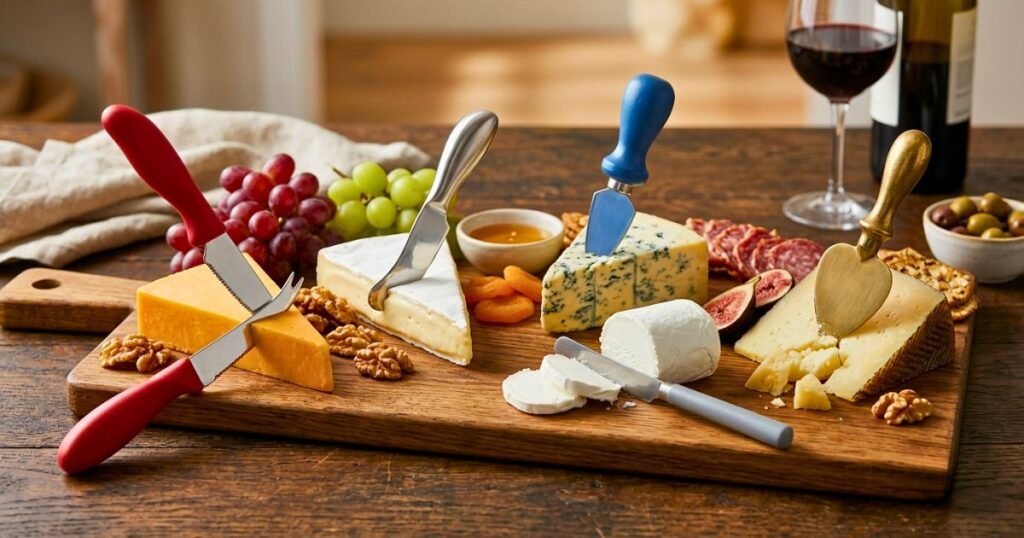
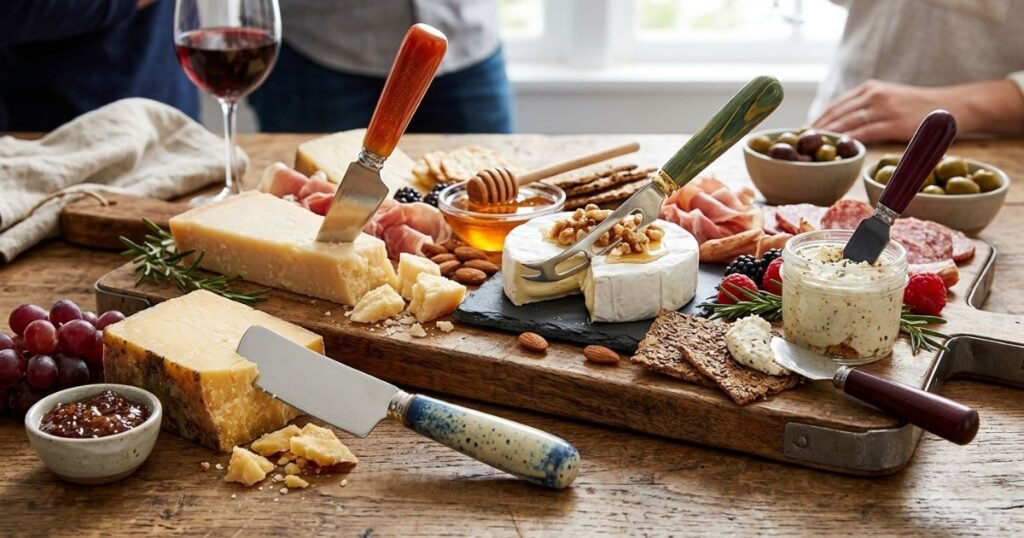
Elevating Your Serve: Crafting a Visually Stunning & Functional Cheese Board
A well-designed cheese board balances beauty and practicality.
Consider varying:
- Shapes
- Colors
- Textures
- Heights
- Accompaniments
Leave enough space for guests to access each cheese comfortably. Functionality is just as important as aesthetics.
Beyond the Cut: Why Presentation Matters
Presentation transforms a simple snack into a sophisticated experience. The way cheese is cut and arranged influences how it is perceived and enjoyed. Thoughtful arrangement invites guests to explore, making the board interactive and engaging. The growing interest in high-quality products, with the specialty cheese market projected to reach USD 53.89 billion by 2030, shows that consumers appreciate these elevated experiences.
Each knife, placed correctly, acts as a guide, signaling to guests how to best approach and serve each cheese.
Aesthetic Principles for an Elegant Arrangement
Create visual balance by combining:
- Soft and hard cheeses
- Round and angular shapes
- Bright fruits and neutral crackers
- Small bowls for spreads and nuts
Position each knife near its corresponding cheese for intuitive serving.
Seamless Serving: Guiding Guests to Enjoy
- Help guests feel comfortable by making the first cut.
- Pre-slice a few pieces from each cheese and provide dedicated utensils to prevent flavor transfer.
- Simple guidance encourages interaction and reduces uncertainty.
Pairing Perfection: How Knives Enhance the Cheese Tasting Journey?
- The right cut influences texture, aroma, and flavor perception.
- Thin slices melt quickly on the palate, while rustic chunks emphasize crystalline textures.
- Thoughtful knife selection ensures every cheese delivers its full sensory experience.
Curating Your Collection: Building the Essential Cheese Knife Set
- Building a practical collection doesn’t require dozens of tools.
- Focus on versatility, quality, and ease of use.
- Start with essentials and expand as your preferences evolve.
Your Starter Kit: Must-Have Knives for Every Occasion
A complete beginner’s set should include:
- Soft cheese knife
- Pronged-tip knife
- Spade or chisel knife
- Cheese spreader
These four tools cover most cheese-serving situations.
Expanding Your Arsenal: Specialty Tools for the Enthusiast
As your appreciation grows, consider adding:
- Cheese wire
- Cheese plane
- Cheese fork
- Two-handled knife
These specialty tools enhance precision and presentation.
Care and Maintenance for Lasting Elegance
Proper care extends the life of your cheese knives.
Always:
- Hand wash immediately after use
- Dry thoroughly
- Avoid dishwashers
- Store blades safely
- Sharpen when necessary
Well-maintained knives perform better and remain beautiful for years.
Frequently Asked Questions: How to Use Cheese Knives Effectively?
Q1. Why do I need specialized cheese knives?
- Specialized cheese knives are designed to handle different cheese textures, helping you cut cleanly without crushing, sticking, or crumbling the cheese.
Q2. What is the best knife for soft cheeses like Brie?
- A soft cheese knife with a thin, perforated blade works best because it reduces sticking and preserves the cheese’s shape.
Q3. How do you cut hard cheeses like Parmigiano-Reggiano?
- Use a spade or Parmesan knife to score the cheese and gently break off bite-sized chunks instead of making thin slices.
Q4. What is a pronged-tip cheese knife used for?
- A pronged-tip knife is ideal for semi-hard cheeses and allows you to slice and serve cheese with the same tool.
Q5. Can I use a regular kitchen knife for cheese?
- You can, but it may crush soft cheeses, cause hard cheeses to crumble, and affect presentation quality.
Q6. Why does cheese stick to the knife blade?
- High-moisture cheeses naturally cling to blades. Using a perforated knife or wiping the blade between cuts helps prevent sticking.
Q7. Should cheese be served cold or at room temperature?
- Most cheeses should sit at room temperature for 30 to 60 minutes before serving to enhance flavor and texture.
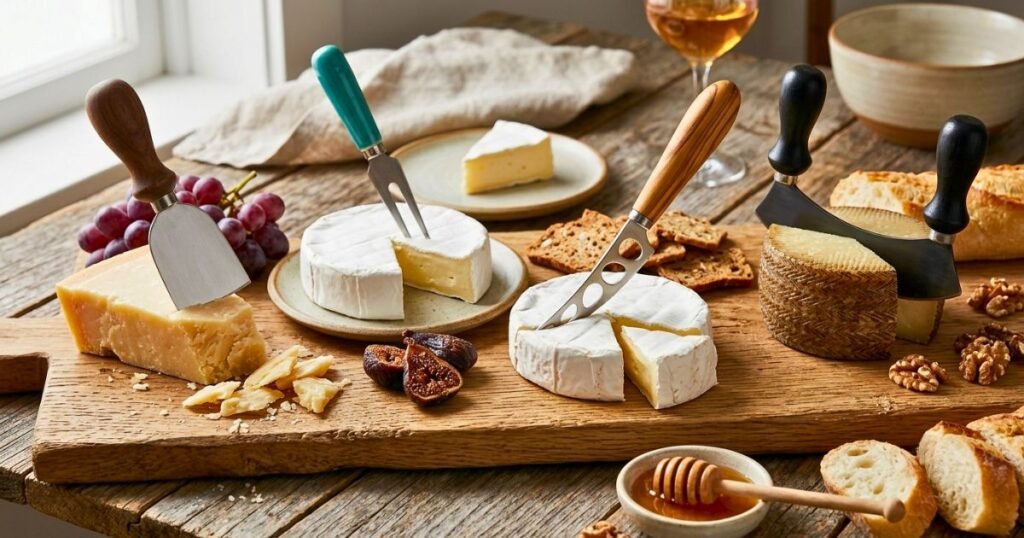
Q8. How do I cut a wheel of Brie or Camembert?
- Cut it like a cake by slicing from the center outward into equal wedges.
Q9. What is the best way to cut goat cheese logs?
- Use a cheese wire or unflavored dental floss for smooth, clean slices without crushing the cheese.
Q10. Do I need a separate knife for each cheese?
- Yes, especially when serving multiple cheeses, to prevent flavor transfer and cross-contamination.
Q11. What is a cheese plane used for?
- A cheese plane creates thin, uniform slices from semi-hard cheeses such as Gouda, Edam, and Jarlsberg.
Q12. How should I clean cheese knives?
- Wash them by hand with warm, soapy water and dry them immediately to protect the blades and handles.
Q13. Can cheese knives go in the dishwasher?
- No. Dishwashers can dull the blades, damage wooden handles, and shorten the lifespan of your knives.
Q14. What cheeses work best with a cheese wire?
- Cheese wires are ideal for soft, sticky, or crumbly cheeses, including blue cheese, fresh chèvre, and fresh mozzarella.
Q15. What are the essential cheese knives for beginners?
- A basic set should include a soft cheese knife, a pronged-tip knife, a spade knife, and a cheese spreader.
Conclusion: Your Journey to Cheese Knife Mastery
Mastering the art of using cheese knives goes far beyond learning the names of specialized tools—it’s about enhancing every aspect of the cheese experience. From selecting the right knife for a creamy Brie or an aged Parmigiano-Reggiano to understanding proper cutting techniques and presentation principles, each detail contributes to a more enjoyable and memorable serving experience.
The right cheese knife helps preserve texture, protect delicate structures, and showcase each cheese exactly as its maker intended. By pairing the appropriate tool with the correct cutting method, you can avoid common issues like sticking, crumbling, or uneven portions while creating a cheese board that looks as impressive as it tastes.
Remember that confidence comes with practice. Start with a few essential knives, experiment with different cheese styles, and pay attention to how factors like temperature, knife selection, and presentation influence the overall experience. Small improvements in technique can make a significant difference in both flavor and appearance.
Most importantly, embrace the joy of sharing cheese with others. A thoughtfully prepared cheese board encourages conversation, discovery, and connection, turning ordinary gatherings into memorable occasions. With the knowledge and skills you’ve gained, you’re ready to cut with confidence, serve with elegance, and elevate every cheese moment from simple snacking to a truly refined culinary experience.