What Goes on a Charcuterie Board for Beginners: The Complete Guide
If you’ve never made a charcuterie board before, the hardest part isn’t arranging the food—it’s knowing what actually goes on a charcuterie board.
Do you need three cheeses? How much meat should you buy? Which fruits work best? Do you need fancy crackers, nuts, olives, or spreads? And how do you make the finished board look full without spending a fortune?
The good news is that making the best charcuterie board is much easier than it looks.
A beginner-friendly board only needs a few basic categories: cheese, cured meat, crackers, fruit, something crunchy, something salty, and one or two spreads or extras. From there, you can build a board that feels personal, colorful, and easy to serve.
Whether you’re preparing your first board for a dinner party, birthday, holiday, date night, picnic, or casual gathering, this guide will show you exactly what goes on a charcuterie board for beginners, how much to buy, how to arrange it, common mistakes to avoid, and easy combinations you can copy.
Table of Contents
What Goes on a Charcuterie Board?
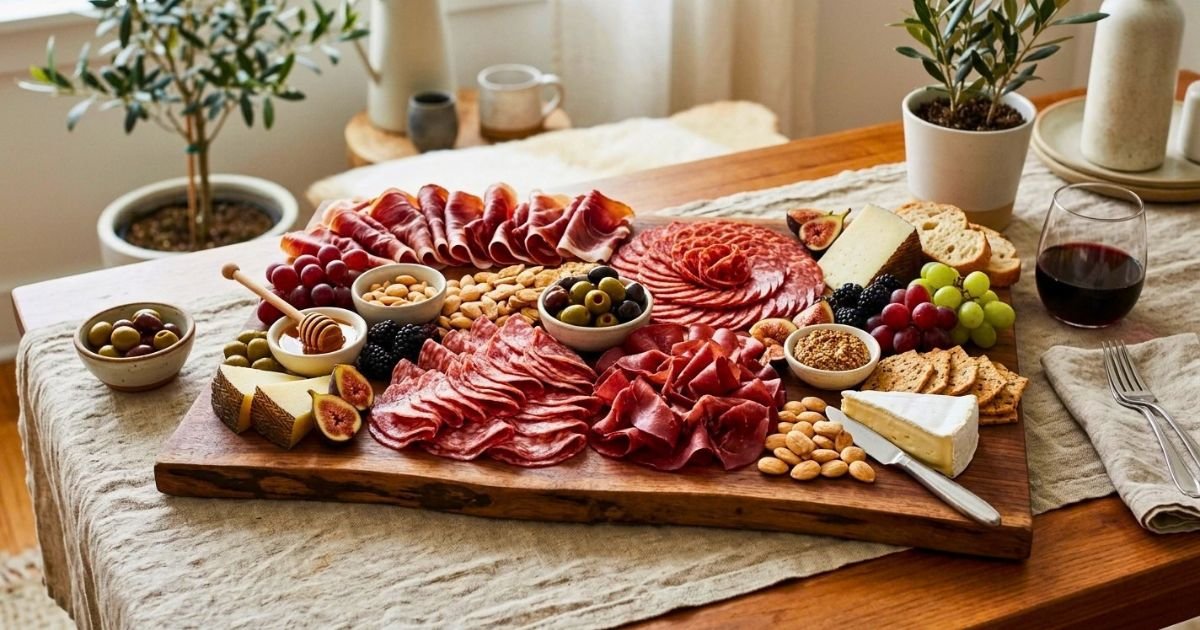
A traditional charcuterie board usually combines cured meats with cheeses, crackers or bread, fruit, nuts, spreads, and savory accompaniments.
For beginners, think about your board in seven simple categories:
| Category | Easy Beginner Choices |
| Cheese | Brie, cheddar, Gouda, goat cheese |
| Cured meat | Salami, prosciutto, soppressata |
| Crackers | Water crackers, seeded crackers |
| Fresh fruit | Grapes, strawberries, apples |
| Crunch | Almonds, pistachios, walnuts |
| Savory | Olives, pickles, cornichons |
| Sweet/spreads | Honey, fig jam, dried fruit |
You don’t need every possible ingredient.
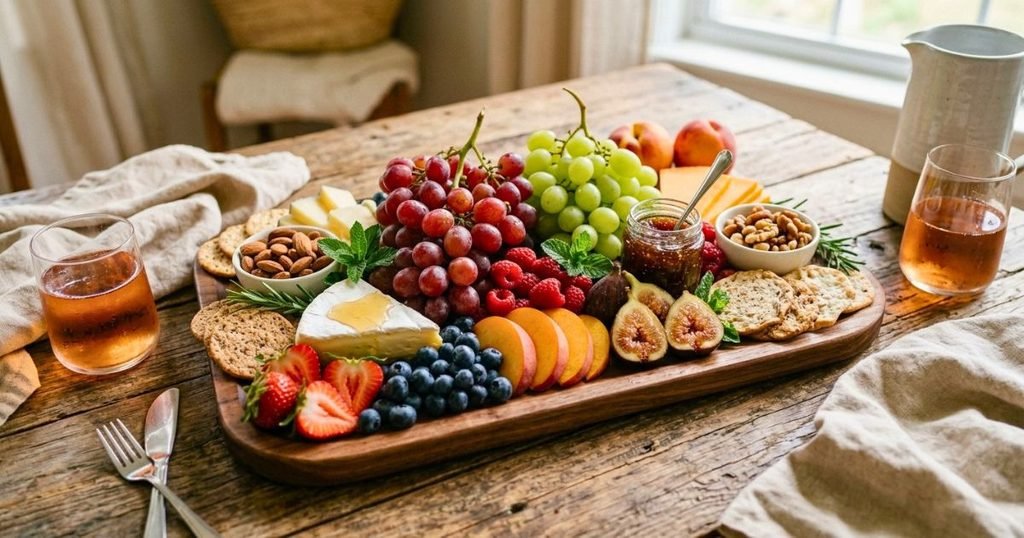
A board with 2–3 cheeses, 1–2 meats, crackers, fruit, one crunchy ingredient, and one spread can already look impressive.
The 7 Essential Parts of a Beginner Charcuterie Board
1. Start With Cheese
Cheese is usually the foundation of a charcuterie board.
For your first board, choose two or three cheeses with different textures and flavors rather than buying five similar varieties.
Easy cheeses for beginners
Brie
- Soft, creamy, mild, and easy to pair with fruit and crackers.
Cheddar
- Familiar, versatile, and available in many varieties.
Gouda
- Smooth and slightly sweet, making it an easy crowd-pleaser.
Goat cheese
- Creamy and tangy, especially good with honey and fresh fruit.
Manchego
- Firm, nutty, and excellent with cured meats.
Beginner rule
Try choosing:
- 1 soft cheese
- 1 firm cheese
- 1 optional speciality cheese
That gives guests variety without making the shopping list complicated.
2. Add Cured Meat
The word charcuterie traditionally refers to prepared and preserved meat products, so cured meat is an important part of a traditional board.
You don’t need a huge selection.
For beginners, start with one or two options.
Popular choices
- Prosciutto
- Salami
- Soppressata
- Pepperoni
- Coppa
- Mortadella
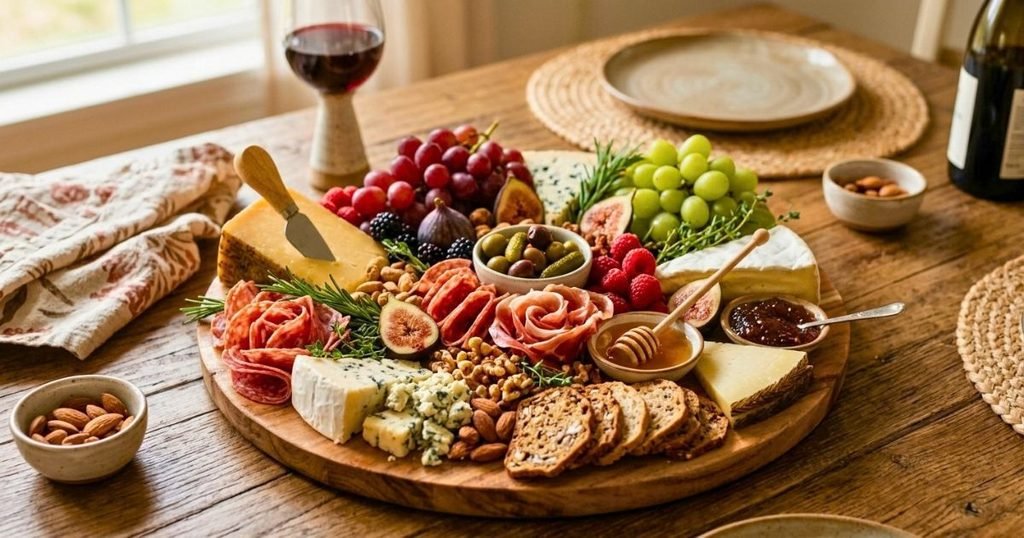
How to arrange meat
Instead of laying every slice flat, try:
- Folding prosciutto loosely
- Rolling salami
- Folding slices into quarters
- Creating small meat clusters
This adds height and makes the board look more abundant.
3. Choose the Right Crackers
Crackers provide the vehicle for cheese, meat, spreads, and other ingredients.
Choose at least two varieties if space allows.
Good beginner options
- Water crackers
- Multigrain crackers
- Seeded crackers
- Herb crackers
- Whole-grain crackers
- Breadsticks
- Crostini
A neutral cracker is particularly useful because it won’t overpower the cheese.
For an attractive presentation, place crackers in small groups or fan them around the cheese instead of creating one giant pile.
4. Add Fresh Fruit
Fresh fruit adds colour, sweetness, and freshness to a charcuterie board.
It’s also one of the easiest ways to make a beginner board look beautiful.
Best fruits for beginners
- Grapes
- Strawberries
- Blueberries
- Apples
- Pears
- Figs
- Melon
- Peaches
- Cherries
Easy combinations
- Brie + strawberries
- Cheddar + apple
- Goat cheese + grapes
- Gouda + pear
- Prosciutto + melon
You don’t need ten different fruits. Pick two or three that provide different colors and textures.
5. Add Something Crunchy
Texture is one of the secrets behind a great charcuterie board.
If everything is soft and creamy, the board can feel flat.
Add something crunchy such as:
- Almonds
- Pistachios
- Walnuts
- Pecans
- Cashews
- Pretzels
Nuts also fill small empty spaces between larger ingredients.
If you’re serving someone with a nut allergy, skip nuts and use seeds or crunchy vegetables instead.
6. Add Something Salty or Tangy
Salty and acidic foods balance rich cheese and cured meat.
Easy options include:
- Green olives
- Kalamata olives
- Cornichons
- Pickles
- Marinated vegetables
- Pepperoncini
Small bowls work especially well for olives and other moist ingredients because they prevent juices from spreading across the board.
7. Finish With Something Sweet
A small sweet element creates contrast.
Try:
- Honey
- Fig jam
- Apricot preserves
- Dried apricots
- Dates
- Dried cranberries
- Dark chocolate
You don’t need a large dessert section.
One small bowl of honey or jam can completely change the flavor possibilities of the board.
How Many Items Should a Beginner Charcuterie Board Have?
This is where many beginners overcomplicate things.
You don’t need 20 different foods.
For a simple board for about 4–6 people, a good starting point is:
- 2–3 cheeses
- 1–2 cured meats
- 2 cracker varieties
- 2 fruits
- 1 crunchy ingredient
- 1 salty ingredient
- 1 spread
That’s enough variety for most casual gatherings.
The goal isn’t maximum variety.
The goal is balanced variety.
What Goes on a Charcuterie Board for 2 People?
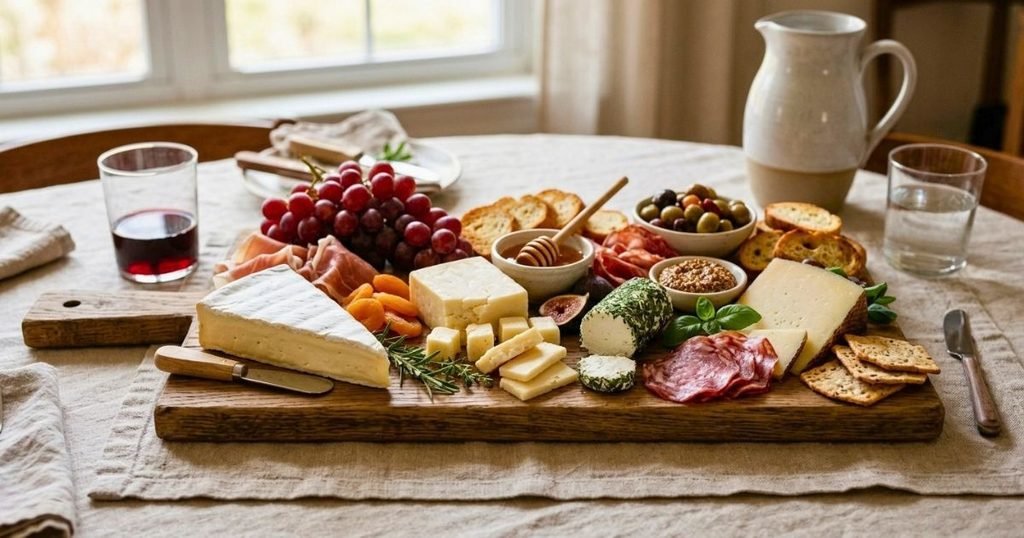
You can absolutely make a charcuterie board for two.
Try:
Cheese
- Brie
- Cheddar
Meat
- Prosciutto
Fruit
- Grapes
- Strawberries
Crunch
- Almonds
Crackers
- Water crackers
Extra
- Honey
- Dark chocolate
A small wooden board, slate plate, or serving tray is enough.
This works beautifully for:
- Date night
- Picnic
- Movie night
- Casual dinner
- Weekend brunch
What Goes on a Charcuterie Board for 6 People?
For six guests, try:
Cheese
- Brie
- Sharp cheddar
- Gouda
Meat
- Salami
- Prosciutto
Fruit
- Grapes
- Strawberries
- Apple slices
Crackers
- Water crackers
- Seeded crackers
Extras
- Almonds
- Olives
- Cornichons
- Honey
- Fig jam
This provides enough variety without making the board unnecessarily complicated.
What Goes on a Large Charcuterie Board?
For a larger party, don’t simply multiply every ingredient.
Instead, create multiple clusters.
For example:
Cheese
- Brie
- Cheddar
- Gouda
- Goat cheese
Meat
- Prosciutto
- Salami
- Soppressata
Fruit
- Grapes
- Strawberries
- Blueberries
- Figs
- Apples
Crunch
- Almonds
- Pistachios
- Crackers
- Breadsticks
Savory
- Olives
- Pickles
Sweet
- Honey
- Fig jam
- Dark chocolate
For a large event, you may also want to create multiple smaller boards or grazing stations instead of putting everything on one enormous board.
How to Choose Cheese for a Beginner Charcuterie Board
A simple formula makes cheese selection much easier.
Pick Different Textures
Try:
Soft: Brie
Semi-firm: Gouda
Firm: Cheddar
This gives guests a noticeable difference between each cheese.
Pick Different Flavor Profiles
Don’t choose three cheeses that all taste nearly identical.
Instead, combine:
- Mild
- Sharp
- Tangy
- Nutty
That creates a more interesting tasting experience.
For more detailed cheese combinations, you can connect this article to your Slice N Serves guide on what the best cheeses are for a charcuterie board.
How Much Cheese Do You Need?
The amount depends on whether the board is an appetiser or the main food.
As a practical starting point, you can plan roughly:
1–2 ounces of cheese per person for an appetiser-style board, with more if the board is intended to be a major part of the meal.
If you’re also serving dinner, you generally don’t need as much.
How Much Meat Do You Need?
For an appetiser-style board, cured meat can be a smaller portion of the overall spread.
A useful starting point is approximately:
1–2 ounces of meat per person, adjusted according to your menu and guest preferences.
For a larger gathering, it’s often better to provide two different meats than a large amount of one.
How to Arrange a Charcuterie Board for Beginners
Don’t worry about making it perfect.
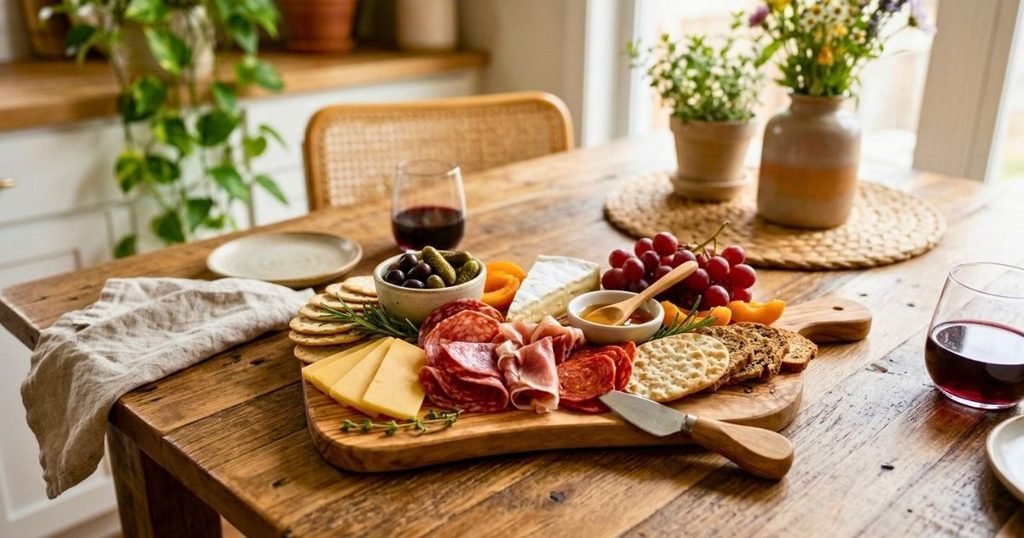
Use this simple 7-step arrangement method.
Step 1: Choose Your Board
Start with a board large enough to leave some breathing room.
Wooden boards, slate boards, marble boards, and serving trays can all work.
Step 2: Place Small Bowls
Put honey, jam, olives, pickles, or dips into small bowls.
Spread the bowls around the board.
They act as visual anchors.
Step 3: Add Cheese
Place your largest ingredients next.
Space cheeses around the board rather than putting them all in one place.
Step 4: Add Meat
Fold, roll, or stack the cured meat around the cheeses.
Step 5: Add Crackers
Create several cracker clusters.
Don’t make one giant pile.
Step 6: Add Fruit and Nuts
Fill open areas with grapes, berries, nuts, dried fruit, and other small ingredients.
Step 7: Fill the Gaps
Look for empty spaces.
Add:
- Pistachios
- Berries
- Dried fruit
- Chocolate
- Herbs
Your board should look abundant but not chaotic.
Beginner Charcuterie Board Formula
If you don’t know where to start, use this formula:
- 3 + 2 + 2 + 1 + 1
- 3 cheeses
- 2 meats
- 2 fruits
- 1 crunchy ingredient
- 1 sweet or savory spread
Then add crackers.
That’s it.
This simple formula is enough to build a balanced board without spending hours choosing ingredients.
Easy Beginner Charcuterie Board Combinations
Combination 1: Classic
- Brie
- Cheddar
- Salami
- Prosciutto
- Grapes
- Strawberries
- Crackers
- Almonds
- Honey
Combination 2: Sweet & Savory
- Goat cheese
- Gouda
- Prosciutto
- Pear
- Figs
- Pistachios
- Crackers
- Fig jam
Combination 3: Budget-Friendly
- Cheddar
- Monterey Jack
- Salami
- Grapes
- Apples
- Crackers
- Pretzels
- Honey
Combination 4: Summer
- Brie
- Goat cheese
- Prosciutto
- Strawberries
- Blueberries
- Peaches
- Crackers
- Pistachios
- Honey
Combination 5: Holiday
- Brie
- Aged cheddar
- Salami
- Grapes
- Pears
- Dried cranberries
- Crackers
- Walnuts
- Fig jam
How to Make a Beginner Charcuterie Board Look Expensive
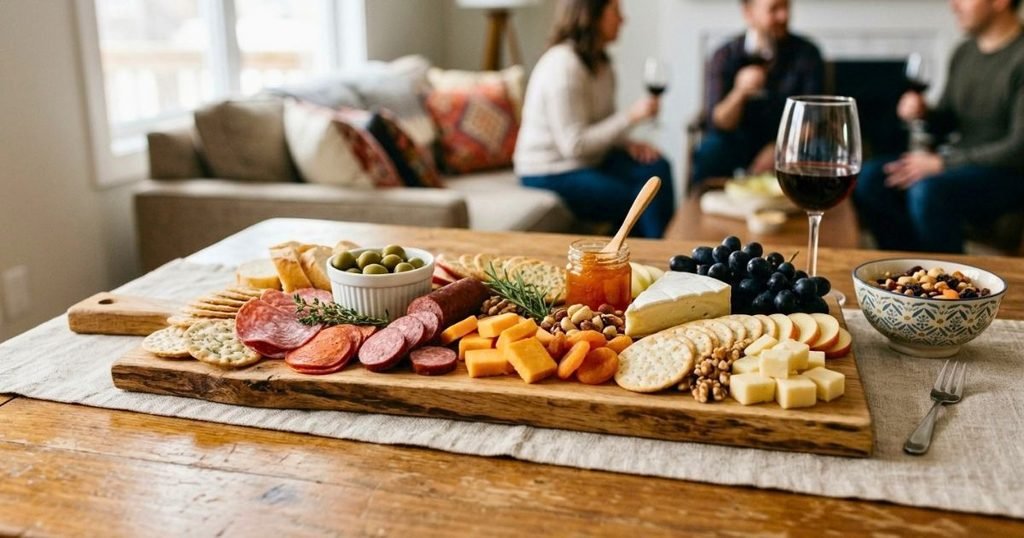
You don’t need expensive ingredients to create an impressive presentation.
Use Height
- Fold meats and stack crackers.
Use Color
- Combine green grapes, red berries, yellow cheese, and dark fruit.
Use Small Bowls
- Small bowls instantly create structure.
Cut Cheese Differently
Use:
- Wedges
- Cubes
- Slices
- Crumbles
Different shapes create visual variety.
Repeat Ingredients
- Put grapes in two different areas rather than creating one huge pile.
Leave Some Space
- A board doesn’t need to be completely covered.
- A little negative space can make the arrangement look intentional.
How to Make a Charcuterie Board on a Budget
Charcuterie doesn’t have to be expensive.
Choose affordable cheeses
- Cheddar, Gouda, and other widely available cheeses can provide excellent variety.
Buy seasonal fruit
- Seasonal fruit is often more affordable and flavorful.
Use fewer meats
- One or two meats are enough.
Add inexpensive fillers
- Popcorn
- Pretzels
- Crackers
- Grapes
- Carrots
- Cucumbers
Buy larger packages
If you’re hosting several people, larger packages can sometimes be more economical.
The trick is to spend more on one or two standout ingredients and use affordable supporting foods to pair with them.
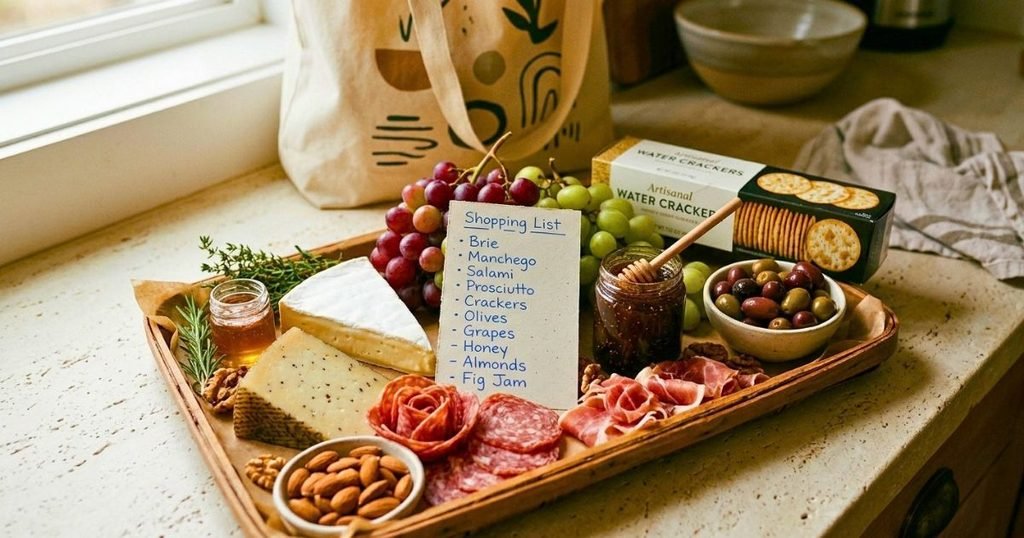
Beginner Charcuterie Board Shopping List
Use this checklist when you’re at the grocery store.
Cheese
- Brie
- Cheddar
- Gouda
- Goat cheese
Meat
- Salami
- Prosciutto
Crackers
- Water crackers
- Seeded crackers
- Breadsticks
Fruit
- Grapes
- Strawberries
- Apples
- Figs
Crunch
- Almonds
- Pistachios
Savory
- Olives
- Pickles
Sweet
- Honey
- Fig jam
- Dried fruit
- Dark chocolate
You don’t need everything on the list. Choose what fits your guest count and budget.

Common Charcuterie Board Mistakes Beginners Make
Mistake 1: Buying Too Much Food
More ingredients don’t automatically create a better board.
Fix: Start with a simple formula and add variety through textures.
Mistake 2: Choosing Only Soft Foods
Cheese, fruit, and dips can make the board feel overly soft.
Fix: Add crackers, nuts, pretzels, or crisp vegetables.
Mistake 3: Using Only One Color
A board made entirely of beige foods can look boring.
Fix: Add colorful fruit and vegetables.
Mistake 4: Putting Everything in One Pile
A giant pile of meat or crackers makes the board difficult to navigate.
Fix: Create smaller clusters throughout the board.
Mistake 5: Forgetting Serving Utensils
Guests shouldn’t have to use their hands for every ingredient.
Fix: Add cheese knives, small spoons, tongs, and forks where appropriate.
Mistake 6: Making It Too Perfect
A charcuterie board isn’t a mathematical diagram.
Fix: Focus on balance rather than symmetry.
How to Keep a Beginner Charcuterie Board Fresh
Freshness is especially important when your board includes cheese, cured meat, cut fruit, and dips.
Keep perishable ingredients properly refrigerated until serving.
If you’re hosting outdoors, avoid direct sunlight and monitor time and temperature carefully. USDA guidance recommends keeping cold perishable foods at 40°F (4°C) or below and generally limiting their time at room temperature to 2 hours, or 1 hour when temperatures exceed 90°F (32°C).
A useful strategy is to put out smaller portions and keep backup ingredients refrigerated so you can refresh the board throughout the event.
This also keeps the presentation looking much better.
What Goes on a Charcuterie Board Without Meat?
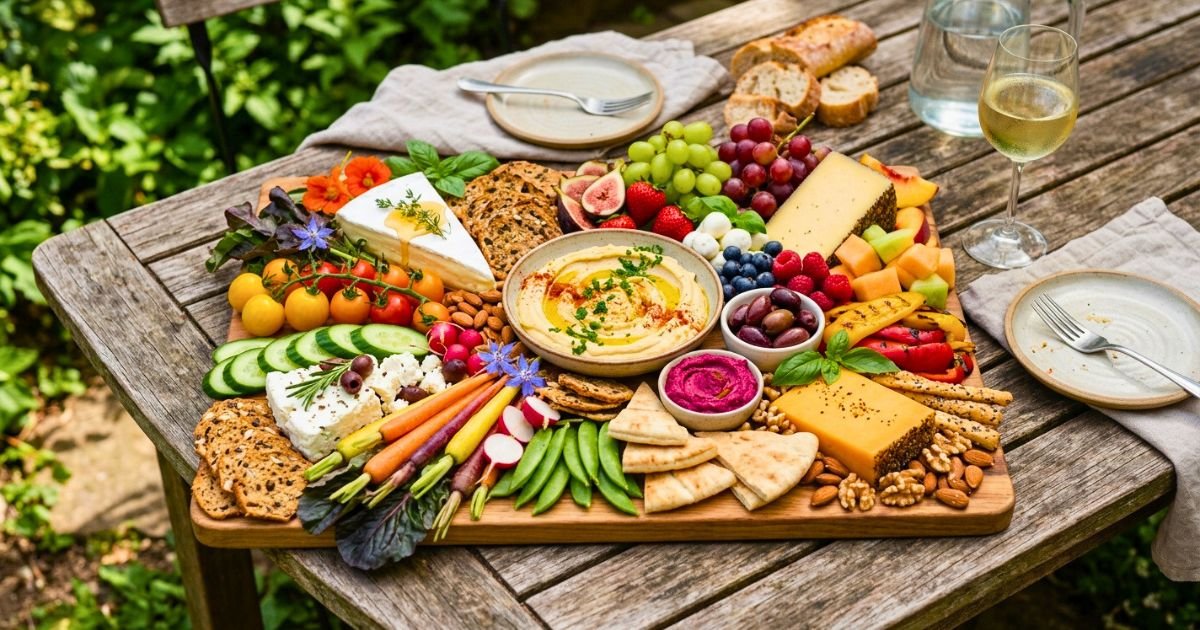
If you’re vegetarian or want a meat-free board, replace cured meat with more plant-based options.
Try:
- Brie
- Goat cheese
- Hummus
- Grapes
- Strawberries
- Cucumbers
- Bell peppers
- Carrots
- Olives
- Nuts
- Crackers
- Dried fruit
- Fig jam
You can create a beautiful vegetarian grazing board without sacrificing variety.
What Goes on a Charcuterie Board for Kids?
For kids, focus on familiar flavors and easy-to-eat foods.
Try:
- Mild cheddar
- Mozzarella
- Crackers
- Strawberries
- Blueberries
- Apples
- Grapes prepared appropriately for the children being served.
- Pretzels
- Cucumber
- Mini sandwiches
- Cookies
For younger children, avoid choking hazards and prepare foods according to age-appropriate safety guidance.
What Goes on a Charcuterie Board for a Party?
For a party, think about variety and accessibility.
A good party board might include:
- 3 cheeses
- 2 meats
- 2–3 fruits
- 2 cracker varieties
- Nuts or seeds
- Olives
- Pickles
- Honey
- Fig jam
- Chocolate
Place popular foods in multiple areas so guests don’t have to reach across the entire board.
FAQ: What Goes on a Charcuterie Board for Beginners?
1. What goes on a charcuterie board for beginners?
A beginner charcuterie board can include cheese, cured meat, crackers, fresh fruit, nuts, olives or pickles, and one sweet spread such as honey or fig jam.
2. How many cheeses should a beginner use?
Start with two or three cheeses. Choose different textures and flavours to give guests variety without complicating the board.
3. What meat is best for a beginner charcuterie board?
Prosciutto and salami are two of the easiest choices because they’re versatile and pair well with many cheeses and fruits.
4. What fruit goes well on a charcuterie board?
Grapes, strawberries, blueberries, apples, pears, figs, peaches, and melon are excellent choices.
5. Do you need meat on a charcuterie board?
No. You can make a vegetarian or plant-based grazing board using cheese, fruit, vegetables, nuts, spreads, and crackers.
6. How many items should be on a charcuterie board?
There is no strict number. For beginners, around 8–12 different components are plenty for a small or medium board.
7. What crackers are best for charcuterie?
Water crackers, seeded crackers, multigrain crackers, artisan crackers, and breadsticks are versatile choices.
8. What is the easiest charcuterie board to make?
A simple board with Brie, cheddar, salami, grapes, strawberries, crackers, almonds, and honey is an excellent beginner option.
9. How do you arrange a charcuterie board?
Start with bowls and larger cheeses, then add meat, crackers, fruit, nuts, and small ingredients to fill the gaps.
10. How much cheese do I need per person?
For an appetiser-style board, around 1–2 ounces of cheese per person is a practical starting point, with more needed if the board is a major part of the meal.
11. How much meat do I need per person?
About 1–2 ounces per person is a good starting point for an appetiser board, but adjust based on the rest of your menu.
12. Can I make a charcuterie board the night before?
You can prepare many components in advance. For the best texture, store ingredients separately and assemble the board closer to serving.
13. How do I make a cheap charcuterie board?
Choose affordable cheeses, seasonal fruit, one or two meats, crackers, pretzels, and simple spreads. You don’t need premium ingredients in every category.
14. What makes a charcuterie board look good?
Color, texture, variety, height, thoughtful spacing, and different shapes all contribute to an attractive presentation.
15. What should I put in the empty spaces on a charcuterie board?
Use small ingredients such as berries, nuts, dried fruit, olives, chocolate, seeds, or fresh herbs to fill small gaps.
Final Thoughts
Learning what goes on a charcuterie board for beginners doesn’t have to feel overwhelming.
You don’t need professional food-stylist experience, an expensive wooden board, or a refrigerator full of speciality ingredients.
Start with the basics:
2–3 cheeses + 1–2 meats + crackers + fresh fruit + something crunchy + something salty + one sweet spread.
Then build from there.
Choose foods with different colors, textures, flavors, and shapes. Place larger ingredients first, create small clusters, and use nuts, fruit, and other bite-sized foods to fill the gaps.
Most importantly, don’t worry about making the board perfectly symmetrical. The charm of a charcuterie board comes from its abundance and variety.
Once you understand the basic formula, you can easily adapt it for birthdays, holidays, summer parties, date nights, brunches, picnics, baby showers, or everyday entertaining.
Start simple. Choose ingredients you enjoy. Arrange with confidence.
That’s really all you need to create your first great charcuterie board.