How to Make a Mediterranean Charcuterie Board: Easy Ideas
A Mediterranean charcuterie board is an easy way to serve fresh vegetables, creamy dips, flavorful cheeses, olives, fruit, and warm pita in one beautiful spread. Inspired by Mediterranean and Middle Eastern food, it combines different flavors and textures without requiring complicated cooking.
Whether you’re hosting a small gathering, preparing a family snack, or serving appetizers to guests, a Mediterranean charcuterie board offers plenty of variety. You can customize the ingredients to match your taste, budget, and guest count.
You don’t need special ingredients or professional food styling skills. A wooden board, a few small bowls, and a selection of fresh and ready-to-serve foods are enough.
In this guide, you’ll learn what to put on a Mediterranean charcuterie board, how to arrange the ingredients, what to buy, and how to create different versions for parties, holidays, and casual gatherings.
Table of Contents
What Is a Mediterranean Charcuterie Board?
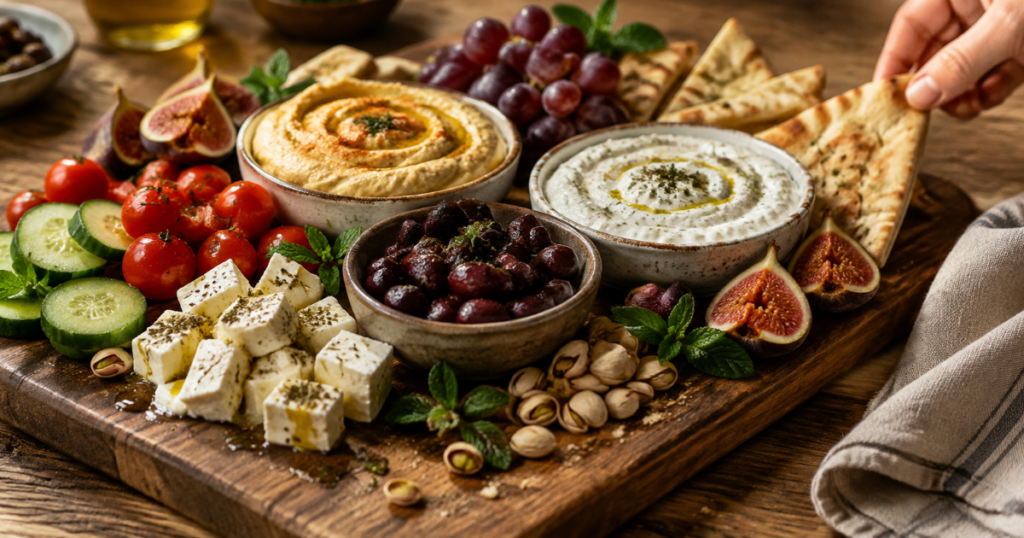
A Mediterranean charcuterie board is a shared appetizer spread featuring ingredients inspired by Mediterranean cuisine. It typically includes cheeses, olives, fresh vegetables, dips, fruit, nuts, and bread.
Unlike a traditional charcuterie board, which often focuses on cured meats and cheeses, a Mediterranean board usually features more vegetables, plant-based dips, and fresh ingredients.
Common choices include:
- Greek feta and halloumi cheese
- Hummus and tzatziki
- Kalamata olives
- Cucumber and cherry tomatoes
- Pita bread and flatbread
- Fresh fruit and nuts
You may also hear it called a Mediterranean mezze platter. Mezze refers to a selection of small dishes served together as appetizers or shared food.
Mediterranean Charcuterie Board vs. Traditional Charcuterie Board
Both boards offer a variety of small foods, but their ingredients and overall focus can differ.
| Feature | Mediterranean Board | Traditional Charcuterie Board |
| Main focus | Vegetables, dips, and cheese | Cured meats and cheese |
| Cheese | Feta, halloumi, goat cheese | Brie, cheddar, gouda |
| Dips | Hummus, tzatziki, baba ganoush | Mustard, spreads, jams |
| Bread | Pita, flatbread | Crackers, baguette |
| Extras | Olives, fruit, nuts | Pickles, dried fruit, nuts |
There is no required ingredient list. You can include cured meats such as salami or prosciutto, but they are optional.
The goal is to create a colorful spread with a balance of creamy, crunchy, salty, sweet, and fresh flavors.
What to Put on a Mediterranean Charcuterie Board
A good Mediterranean board combines different ingredients to create variety in flavor, texture, and color. You don’t need to include everything. Choose a few items from each category to build a balanced spread.
Here are the main ingredients to consider.
1. Mediterranean Cheeses
Cheese adds richness and a creamy or salty flavor. Choose two or three varieties with different textures.
Good options include:
- Feta: A classic Mediterranean cheese with a salty, tangy flavor.
- Halloumi: A firm cheese that can be grilled or pan-cooked before serving.
- Goat cheese: Soft, creamy, and slightly tangy.
- Fresh mozzarella: Mild and soft, especially when paired with tomatoes.
- Manouri: A creamy Greek cheese with a mild flavor.
Feta is an especially useful choice because it pairs well with olives, cucumber, tomatoes, and pita bread. You can serve it in cubes or as a small block drizzled with olive oil and dried oregano.
2. Fresh Vegetables
Fresh vegetables add color, crunch, and freshness. They also balance richer ingredients such as cheese and dips.
Consider adding:
- Cucumber slices
- Cherry tomatoes
- Bell pepper strips
- Carrot sticks
- Radishes
- Celery sticks
- Artichoke hearts
Cut vegetables into easy-to-grab pieces before arranging them. Wash and dry them properly so excess moisture doesn’t affect the other ingredients.
If you enjoy vegetable-focused spreads, vegetarian charcuterie board ideas can help you explore more combinations of fresh produce, dips, and plant-based snacks.
3. Mediterranean Dips and Spreads
Dips are an important part of a Mediterranean appetizer board. They add flavor and make simple ingredients more interesting.
Try including two or three of these:
- Hummus: A creamy chickpea dip made with ingredients such as tahini, lemon, and garlic.
- Tzatziki: A yogurt-based dip commonly made with cucumber, garlic, and herbs.
- Baba ganoush: A smoky eggplant dip.
- Tirokafteri: A spicy Greek feta-based spread.
- Muhammara: A red pepper and walnut spread.
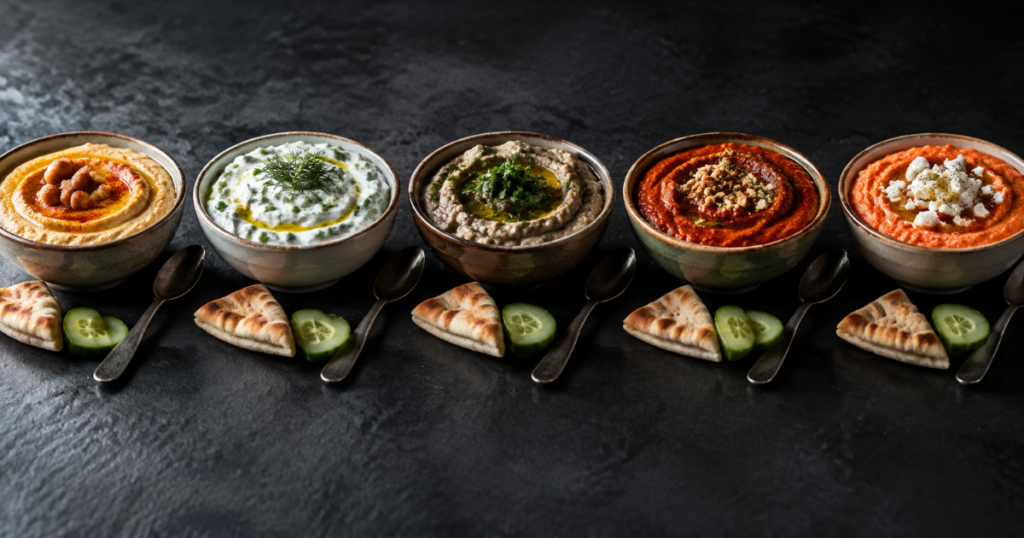
Serve each dip in a small bowl with a spoon. This keeps the board organized and makes serving easier.
For a balanced spread, combine a mild dip such as hummus with a more flavorful option such as muhammara or baba ganoush.
4. Olives and Pickled Ingredients
Olives bring a salty, savory flavor that works well with creamy cheese and fresh vegetables.
Some options include:
- Kalamata olives
- Green olives
- Castelvetrano olives
- Marinated olives
- Pickled red onions
- Pepperoncini
- Pickled cucumbers
Choose a mix of mild and stronger flavors if you’re serving guests with different preferences.
Drain excess liquid before placing olives and pickled ingredients on the board. Small bowls are useful for marinated ingredients because they help prevent other foods from becoming soggy.
5. Fresh and Dried Fruits
Fruit adds natural sweetness and creates a pleasant contrast with salty cheeses and olives.
Good fresh fruit choices include:
- Grapes
- Figs
- Strawberries
- Orange slices
- Pomegranate seeds
- Melon cubes
Dried apricots, dates, and raisins are also easy additions.
Grapes and figs pair particularly well with feta and goat cheese. For more sweet-and-savory combinations, charcuterie board ideas with fresh fruit can provide additional inspiration.
6. Pita Bread, Crackers, and Nuts
Bread and crunchy snacks make the board more filling and give guests something to pair with dips and cheese.
Consider these options:
- Warm pita wedges
- Mini pita bread
- Plain crackers
- Sesame crackers
- Toasted flatbread
- Almonds
- Pistachios
- Walnuts
Keep pita bread in a separate section or basket if your board is small. This leaves more room for dips, vegetables, and cheese.
7. Optional Mediterranean Meats
If you want a more traditional charcuterie feel, add a small selection of cured meats.
Options include:
- Prosciutto
- Salami
- Soppressata
- Sliced turkey
These ingredients are optional. A Mediterranean board can be completely vegetarian and still offer plenty of variety.
Mediterranean Charcuterie Board Shopping List
A simple shopping list helps you prepare everything without buying too many ingredients. For a beginner-friendly board, focus on a few items from each food category.
Basic Shopping List
| Category | What to Buy |
| Cheese | Feta, goat cheese |
| Dips | Hummus, tzatziki |
| Vegetables | Cucumber, cherry tomatoes, bell peppers, carrots |
| Olives | Kalamata or green olives |
| Fruit | Grapes, figs, strawberries |
| Bread | Pita bread, crackers |
| Nuts | Almonds or pistachios |
| Extras | Pickled onions, fresh parsley, mint |
How Much Food Should You Prepare?
The amount depends on whether you’re serving the board as a light appetizer, snack, or main food offering.
For a small gathering of approximately 4–6 people, the following quantities provide a practical starting point.
| Ingredient | Suggested Amount |
| Feta cheese | 4–6 oz |
| Goat cheese | 3–4 oz |
| Hummus | 1 cup |
| Tzatziki | ½–1 cup |
| Cucumber | 1 medium |
| Cherry tomatoes | 1 cup |
| Bell peppers | 1–2 |
| Olives | ½–1 cup |
| Grapes or strawberries | 1–2 cups |
| Pita bread | 4–6 small pieces |
| Crackers | 1 small serving |
| Nuts | ½ cup |
These are flexible estimates, not fixed serving requirements. Adjust the amounts depending on your guests, appetite, and other food being served.
Quick tip: If the board is the main food offering, prepare more pita, vegetables, dips, and cheese. If you’re serving it before dinner, a smaller selection may be enough.
Budget-Friendly Mediterranean Charcuterie Board
You don’t need expensive ingredients to make an attractive Mediterranean board. A few affordable grocery items can create plenty of variety.
To keep costs manageable:
- Choose feta instead of several specialty cheeses.
- Use homemade or store-bought hummus.
- Buy seasonal fruits and vegetables.
- Choose one type of olives instead of several varieties.
- Use regular crackers or pita bread.
- Add carrots, cucumbers, and cherry tomatoes for affordable vegetable options.
You can also use ingredients you already have at home. A simple combination of hummus, feta, olives, cucumber, tomatoes, and pita bread is enough for a basic Mediterranean platter.
How to Assemble a Mediterranean Board
Assembling a Mediterranean board is easier when you arrange the ingredients in stages. Start with bowls and larger items, then fill the remaining spaces with smaller ingredients.
Follow these seven steps.
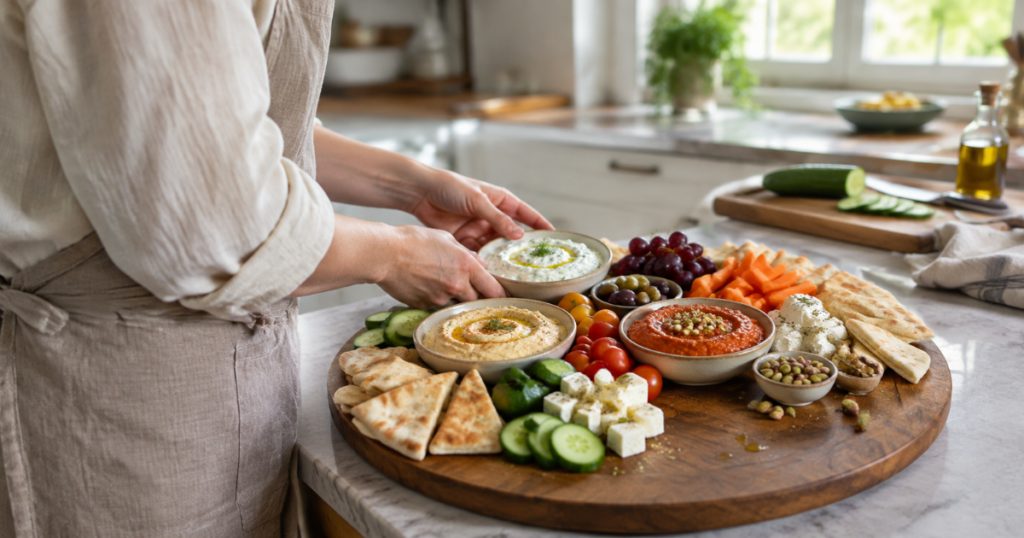
Step 1: Choose the Right Board
Start with a clean wooden serving board, marble platter, or large tray.
The size depends on how much food you plan to serve. A smaller board works well for a casual snack, while a larger tray provides more room for parties.
You don’t need a specially designed charcuterie board. Any clean, food-safe serving surface can work.
Step 2: Add the Dips First
Place your hummus, tzatziki, and other spreads into small bowls.
Arrange the bowls across different areas of the board rather than placing them all together. This creates natural sections and makes the spread easier to access.
Step 3: Arrange the Cheese
Place feta, goat cheese, or mozzarella near the dip bowls.
You can cut firm cheeses into cubes or slices. Serve soft cheeses in small portions with a suitable spreader.
If you’re using feta, try adding a little olive oil and dried oregano for extra flavor.
Step 4: Add Vegetables and Olives
Arrange cucumber slices, bell pepper strips, cherry tomatoes, and carrots around the bowls.
Place olives and pickled ingredients in small groups. Keep wet or marinated foods in bowls when possible.
Step 5: Add Fruit and Nuts
Fill open spaces with grapes, figs, strawberries, or dried apricots.
Add small piles of almonds, pistachios, or walnuts to create more texture.
Try placing sweet fruit close to cheese so guests can easily combine the flavors.
Step 6: Add Pita Bread and Crackers
Arrange pita wedges and crackers around the outside of the board or in open sections.
If the board is getting crowded, serve extra bread in a separate basket.
Step 7: Finish with Fresh Herbs
Add small amounts of fresh parsley, mint, or oregano as a finishing touch.
Before serving, check that:
- Each dip has its own serving spoon.
- Ingredients are easy to reach.
- Crackers and pita are arranged neatly.
- Wet ingredients are kept separate from dry foods.
Beginner tip: Don’t try to make every section perfectly symmetrical. A relaxed arrangement with clear ingredient groups looks inviting and is easier to prepare.
Mediterranean Charcuterie Board Ideas
Build a Mediterranean charcuterie board around a Greek, vegetarian, party, hummus-and-pita, or summer theme.
Each version uses similar basic ingredients, so you can choose the style that suits your gathering and available ingredients.
Here are five easy ideas.
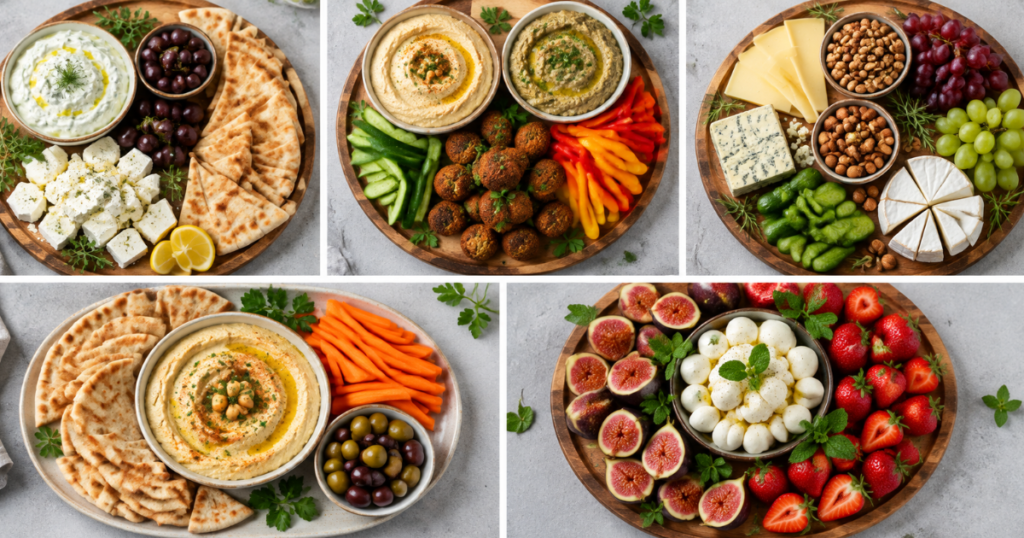
1. Classic Greek Charcuterie Board
A Greek charcuterie board is a great starting point for beginners because many of its ingredients are easy to find in grocery stores.
Include:
- Feta cheese
- Kalamata olives
- Tzatziki
- Hummus
- Cucumber slices
- Cherry tomatoes
- Pita wedges
- Fresh oregano
You can also add dolmas (stuffed grape leaves) for another traditional-inspired option.
2. Vegetarian Mediterranean Board
A vegetarian Mediterranean board focuses on vegetables, dips, cheese, and plant-based snacks.
Include:
- Hummus
- Baba ganoush
- Feta cheese
- Falafel
- Bell peppers
- Carrots
- Cucumber
- Olives
- Pita bread
You can add roasted chickpeas or stuffed grape leaves for more variety. Check ingredient labels if you need to avoid specific animal-derived ingredients.
Mediterranean Appetizer Board for Parties
For parties, choose ingredients that are easy to pick up and eat without much preparation.
Include:
- Two or three cheeses
- Hummus and tzatziki
- Pita chips
- Mini cucumbers
- Cherry tomatoes
- Marinated olives
- Grapes
- Nuts
- Optional cured meats
Use several small bowls to separate dips and marinated ingredients. For larger gatherings, prepare extra ingredients separately so you can refill the board when needed.
Hummus and Pita Platter
If you prefer something simple, build your board around hummus and pita.
Include:
- Classic hummus
- Pita wedges
- Cucumber slices
- Carrot sticks
- Bell pepper strips
- Kalamata olives
- Cherry tomatoes
- Feta cubes
This is a practical option for casual gatherings, afternoon snacks, or a light appetizer.
Mediterranean Summer Board
A summer-inspired board uses fresh seasonal produce to create a colorful spread.
Include:
- Fresh figs
- Strawberries
- Grapes
- Feta cheese
- Fresh mozzarella
- Cucumber
- Cherry tomatoes
- Hummus
- Pita bread
- Pistachios
Choose fruit that’s ripe but firm enough to serve easily. You can also add fresh mint for a light finishing touch.
Make-Ahead and Serving Tips
You can prepare many Mediterranean board ingredients ahead of time, which makes hosting easier. However, some foods are better added just before serving to maintain their texture and freshness.
What Can You Prepare Ahead?
These ingredients can generally be prepared in advance.
| Ingredient | Preparation Tip |
| Vegetables | Wash, dry, and cut ahead; refrigerate in covered containers |
| Cheese | Cut firm cheeses into cubes or slices and refrigerate |
| Dips | Portion into airtight containers and refrigerate |
| Olives | Drain or portion into small containers |
| Nuts | Measure into serving bowls |
| Fruit | Wash firm fruit ahead of time; cut delicate fruit closer to serving |
Keep prepared ingredients refrigerated until you’re ready to assemble the board.
What Should You Add Just Before Serving?
Some ingredients are better added at the last minute:
- Warm pita bread
- Cut strawberries
- Fresh herbs
- Toasted bread
- Delicate crackers
Adding these shortly before serving helps prevent sogginess and keeps the board looking fresh.
Food Safety Tips
Food safety matters when serving a board with cheese, dips, fresh produce, and other perishable ingredients.
Follow these basic practices:
- Keep perishable ingredients refrigerated until serving.
- Avoid leaving dairy-based dips and cheeses at room temperature for extended periods.
- Use clean utensils for each dip.
- Keep raw ingredients separate from ready-to-eat foods during preparation.
- Refrigerate leftovers promptly.
- Discard perishable food that has been left out beyond recommended food-safety limits.
According to USDA food safety guidance, perishable foods should not stay out for more than two hours, or one hour when the temperature is above 90°F (32°C). If the board has been sitting out longer than that, it is safer to discard the perishable items.
Serving and Presentation Tips
A few small details can make your Mediterranean charcuterie board easier to enjoy:
- Use small bowls for hummus, olives, and marinated vegetables.
- Cut pita into wedges before serving.
- Keep serving spoons near each dip.
- Use separate utensils for different cheeses and spreads.
- Arrange similar ingredients together so guests can identify them easily.
- Refill popular ingredients when needed instead of overcrowding the board at the beginning.
If you’re serving guests with food allergies or dietary restrictions, check ingredient labels and keep potentially allergenic foods separate.
Frequently Asked Questions
1. What is usually on a Mediterranean charcuterie board?
- A Mediterranean charcuterie board usually includes feta cheese, hummus, tzatziki, olives, cucumber, cherry tomatoes, pita bread, fresh fruit, and nuts. You can also add halloumi, baba ganoush, falafel, or cured meats depending on your preferences.
2. What is the difference between a Mediterranean board and a mezze platter?
- A Mediterranean charcuterie board is a modern serving arrangement inspired by Mediterranean ingredients. A mezze platter features small dishes traditionally served for sharing in several Mediterranean and Middle Eastern food cultures. Both can include hummus, olives, pita, cheese, and vegetables.
3. What cheese goes best on a Mediterranean charcuterie board?
- Feta is a popular choice because its salty, tangy flavor pairs well with olives, vegetables, and fruit. Other good options include goat cheese, halloumi, fresh mozzarella, and manouri.
4. Can I make a Mediterranean charcuterie board without meat?
- Yes. A Mediterranean board can be completely vegetarian. Use a combination of cheeses, hummus, baba ganoush, vegetables, olives, fruit, nuts, and pita bread. Falafel and roasted chickpeas can also make the spread more filling.
5. How much food do I need for a Mediterranean charcuterie board?
- For approximately 4–6 people, start with two types of cheese, two dips, three or four vegetables, one or two types of olives, fresh fruit, pita bread, and nuts. Adjust the quantities depending on whether you’re serving it as an appetizer or main food offering.
6. Can I make a Mediterranean charcuterie board ahead of time?
- Yes. You can wash and cut vegetables, portion dips, prepare cheese, and organize olives ahead of time. Store perishable ingredients in covered containers in the refrigerator. Assemble the board closer to serving time and add warm pita, delicate fruit, and fresh herbs just before guests arrive.
7. What can I serve with a Mediterranean charcuterie board?
- Good choices include pita bread, pita chips, crackers, and toasted flatbread. You can also serve a simple Greek salad, falafel, stuffed grape leaves, or grilled vegetables if you want to offer additional food.
8. How do I make a Mediterranean charcuterie board on a budget?
- Choose affordable ingredients such as feta, hummus, cucumbers, carrots, cherry tomatoes, seasonal fruit, and regular pita bread. You don’t need several specialty cheeses or expensive ingredients to create a colorful and flavorful spread.
Final Thoughts
Making a Mediterranean charcuterie board doesn’t require complicated cooking or a long ingredient list. A mix of feta, olives, hummus, pita, fresh vegetables, fruit, and nuts is enough to create a colorful spread.
Start with a few ingredients you enjoy, arrange them around small bowls of dips, and add different textures and flavors to fill the board. Whether you choose a classic Greek charcuterie board, a vegetarian Mediterranean board, or a simple hummus and pita platter, you can adjust the ingredients to suit your gathering.
A good Mediterranean charcuterie board is easy to prepare, simple to share, and suited to the people you are serving.