How to Make a Seafood Charcuterie Board: Ideas & Serving Tips
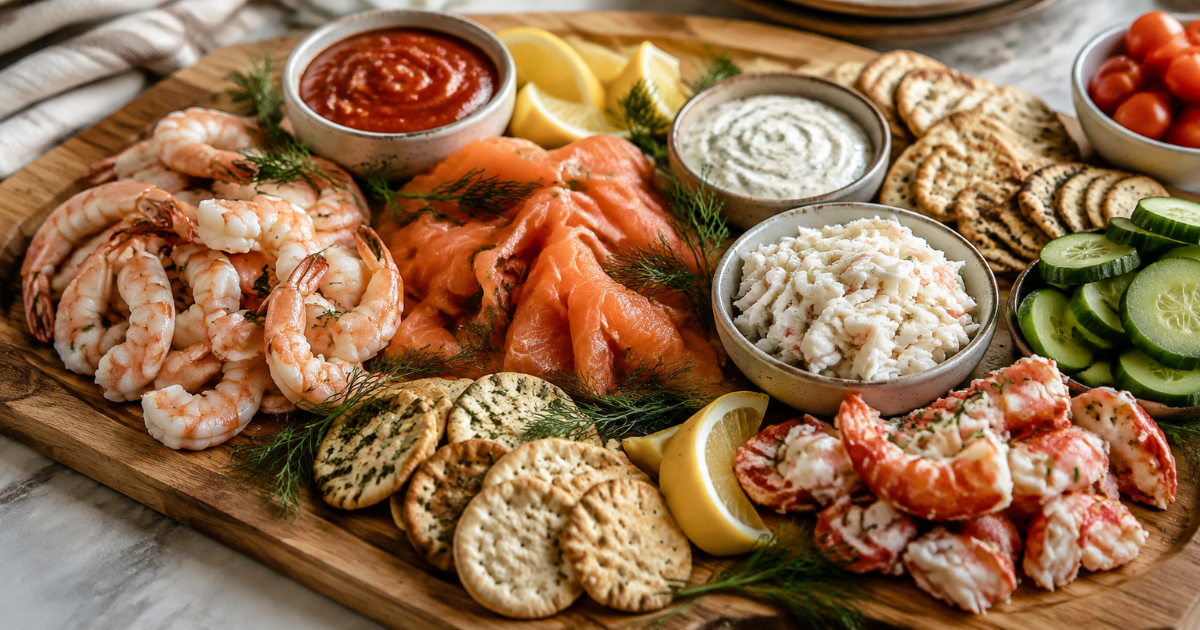
A seafood charcuterie board is a creative way to serve shrimp, smoked salmon, crab, oysters, seafood dips, fresh vegetables, crackers, and flavorful sauces on one large platter. It is a great option for holiday parties, family gatherings, summer celebrations, or a special dinner at home.
Unlike a traditional charcuterie board, which usually focuses on cured meats and cheeses, a seafood board puts seafood at the center. You can combine cooked, chilled, and smoked seafood with fresh sides to create different flavors and textures.
You do not need professional cooking skills to make one. The key is choosing seafood that works well together, preparing suitable accompaniments, and handling everything safely.
In this guide, you will learn what seafood to include, which sides and sauces to serve, how to arrange your platter, and how to prepare and store seafood for a gathering.
Table of Contents
What Is a Seafood Charcuterie Board?
A Seafood Charcuterie Board is an appetizer or shared meal platter featuring different types of seafood alongside crackers, vegetables, fruits, dips, and sauces. It follows the presentation style of a traditional charcuterie board but replaces most cured meats with seafood options.
A typical seafood board may include cooked shrimp, smoked salmon, crab meat, lobster, or other seafood selections. The ingredients are arranged in separate sections so guests can choose different combinations.
Unlike a traditional meat and cheese board, seafood platters often need more attention to refrigeration and serving arrangements because seafood is highly perishable.
What Makes a Seafood Board Different?
There are a few important differences between seafood and traditional charcuterie boards:
- Main ingredients: Seafood boards focus on shrimp, fish, crab, and shellfish rather than cured meats.
- Accompaniments: Lemon wedges, cocktail sauce, tartar sauce, and fresh herbs are common additions.
- Presentation: Seafood is often served in chilled bowls, small dishes, or on beds of ice when appropriate.
- Food safety: Keeping seafood cold and preventing cross-contact are important parts of preparation.
You can make a seafood appetizer board with a few simple ingredients or create a larger spread with several seafood varieties.
The goal is to offer a balanced selection that allows guests to enjoy seafood with different sauces, sides, and textures.
What Seafood to Include
A seafood charcuterie board can include cooked shrimp, smoked salmon, crab, lobster, scallops, and other seafood that is suitable for serving chilled. Choose two or three main seafood options for a small platter, or add more varieties for a larger gathering.
The best choices depend on your guests, serving style, and how much preparation you want to do.
Shrimp
Shrimp is one of the easiest seafood options for a beginner-friendly board. It has a mild flavor and pairs well with several sauces and sides.
You can include:
- Chilled cooked shrimp.
- Peeled and deveined shrimp.
- Cooked shrimp with tails attached for presentation.
- Grilled shrimp served separately while still hot.
Serve chilled shrimp with cocktail sauce and lemon wedges. If you are using frozen shrimp, thaw and prepare it according to the package instructions.
Smoked Salmon
Smoked salmon adds a rich, savory flavor and creates an attractive centerpiece.
You can arrange thin slices in loose folds or small rolls. Serve them with:
- Cucumber slices.
- Lemon wedges.
- Capers.
- Fresh dill.
- Cream cheese.
- Suitable crackers or toasted bread.
Check the product label and storage instructions. Refrigerated smoked seafood can carry food-safety risks, particularly for pregnant people and others at higher risk of foodborne illness. Shelf-stable products and properly cooked alternatives may be more suitable for those guests.
Crab
Crab adds a slightly sweet flavor and works well on a seafood appetizer board.
Options include:
- Cooked crab legs.
- Picked crab meat.
- Crab claws.
- Prepared crab cakes.
If you serve crab legs, provide seafood crackers and small forks where appropriate. Picked crab meat is easier for guests to enjoy because it does not require as much preparation at the table.
Check prepared crab products for added ingredients and allergens.
Lobster
Lobster can make a seafood board feel more substantial and special. It has a delicate, slightly sweet flavor that pairs well with butter, lemon, and fresh herbs.
Consider adding cooked lobster tail pieces or small portions of lobster meat.
Serve melted butter in a separate bowl. Keep cooked lobster chilled if serving it cold, and follow safe handling guidance if serving it warm.
Scallops
Cooked scallops are another option for a seafood board. Their soft texture and mild flavor work well with lemon, garlic butter, and fresh herbs.
You can serve small cooked scallops in individual portions or arrange them in a separate section.
For easier preparation, cook them shortly before serving rather than leaving them exposed while assembling the rest of the board.
Other Seafood Options
You do not need to include every seafood variety. A few additional choices can help create more variety.
Consider:
- Cooked mussels served in their shells.
- Cooked calamari.
- Smoked trout.
- Cooked white fish portions.
- Prepared seafood cakes.
For a simple board, start with cooked shrimp, smoked salmon, and prepared crab meat. These options offer different flavors and textures without requiring complicated preparation.
You can also combine seafood with complementary sauces and sides. For example, shrimp works well with cocktail sauce and lemon, while smoked salmon pairs nicely with cream cheese, cucumber, and dill. Crab can be served with crackers and tartar sauce, and lobster goes well with garlic butter.
These combinations help create variety without adding too many ingredients.

Important: Raw oysters, raw fish, and undercooked shellfish can carry foodborne illness risks. Freezing does not eliminate every harmful germ. Thoroughly cooked seafood is the safer choice for a general gathering.
Best Sides and Accompaniments
The right sides make a seafood board more balanced and easier to enjoy. Combine fresh vegetables, crackers, bread, citrus fruits, dips, and sauces that complement the seafood without overpowering its flavor.
Here are some useful additions.
Crackers and Bread
Crackers and bread give guests something to pair with smoked fish, crab spreads, and other seafood.
Consider:
- Water crackers.
- Butter crackers.
- Whole-grain crackers.
- Toasted baguette slices.
- Breadsticks.
- Pita chips.
- Mini toast rounds.
If you are serving guests with gluten restrictions, provide suitable gluten-free alternatives and keep them separate from regular bread and crackers.
Fresh Vegetables
Fresh vegetables add crunch and color to your platter.
Good options include:
- Cucumber slices.
- Cherry tomatoes.
- Celery sticks.
- Carrot sticks.
- Bell pepper strips.
- Radishes.
- Lettuce leaves.
Cucumber is particularly useful with smoked salmon, while celery and carrots pair well with creamy seafood dips.
Fresh Fruits and Citrus
Citrus fruits help balance the rich and savory flavors of seafood.
Include:
- Lemon wedges.
- Lime wedges.
- Orange slices.
- Grapes.
- Green apple slices.
Lemon and lime are especially useful because guests can squeeze fresh juice over shrimp, crab, or cooked fish.
Sauces and Dips
Sauces add flavor and give guests more ways to enjoy each seafood option.
| Sauce or Dip | Pairs Well With |
| Cocktail sauce | Shrimp and crab |
| Tartar sauce | Cooked fish and crab cakes |
| Garlic butter | Lobster, crab, and scallops |
| Lemon aioli | Shrimp and cooked fish |
| Cream cheese spread | Smoked salmon |
| Dill sauce | Salmon and other fish |
| Remoulade | Shrimp and crab |
Serve sauces in small bowls with separate spoons. This keeps the board organized and helps prevent different foods from mixing.
Cheese and Other Extras
Although seafood is the main focus, you can include a few additional snacks.
Try:
- Mild cheddar.
- Cream cheese.
- Brie.
- Green olives.
- Pickles.
- Capers.
- Fresh dill.
- Parsley.
Avoid adding too many strong flavors. The purpose of the sides is to complement the seafood, not hide its natural taste.
Seafood Charcuterie Board Shopping List
A shopping list helps you organize your ingredients and avoid buying more seafood than you need. Start by choosing your main seafood options, then add sides, sauces, and serving supplies.
Use this list as a starting point.
| Category | Ingredients |
| Main seafood | Cooked shrimp, smoked salmon, crab meat |
| Additional seafood | Lobster, scallops, cooked calamari |
| Crackers and bread | Water crackers, baguette, breadsticks |
| Vegetables | Cucumber, carrots, cherry tomatoes |
| Fruits | Lemons, limes, grapes |
| Cheese | Brie, cheddar, cream cheese |
| Sauces | Cocktail sauce, tartar sauce, garlic butter |
| Extras | Capers, olives, pickles |
| Herbs | Fresh dill, parsley |
| Serving supplies | Small bowls, serving spoons, seafood forks, ice |
You can adjust the list depending on the number of guests and the type of gathering.
For a smaller or more affordable board, focus on two or three seafood choices instead of buying several expensive varieties. Cooked shrimp, prepared crab meat, and a small amount of smoked salmon can provide enough variety without making the shopping list unnecessarily large.
How to Choose Seafood
When shopping, pay attention to freshness, storage, and packaging.
- Purchase seafood from a reputable retailer.
- Check that fresh seafood is properly refrigerated or displayed on ice.
- Look for intact packaging on frozen products.
- Avoid seafood with sour, rancid, or ammonia-like odors.
- Check product labels and storage instructions.
- Purchase seafood near the end of your shopping trip so it spends less time outside refrigeration.
The FDA provides additional guidance on selecting fresh and frozen seafood, including what to look for when purchasing fish and shellfish.
How Much Seafood Should You Buy?
The quantity depends on how you plan to serve the board.
- For appetizers: Offer smaller seafood portions alongside crackers, vegetables, and dips.
- For a party platter: Include several seafood choices with enough sides to provide variety.
- For a main meal: Plan more substantial portions and consider adding salads, bread, or other filling sides.
Also consider whether your guests have shellfish allergies or other dietary restrictions before finalizing the shopping list.
How to Assemble a Seafood Charcuterie Board
To assemble a seafood charcuterie board, arrange your seafood in separate sections, add sauces in small bowls, and fill the remaining spaces with crackers, vegetables, fruits, and garnishes. Keep chilled seafood refrigerated until the board is ready to serve.
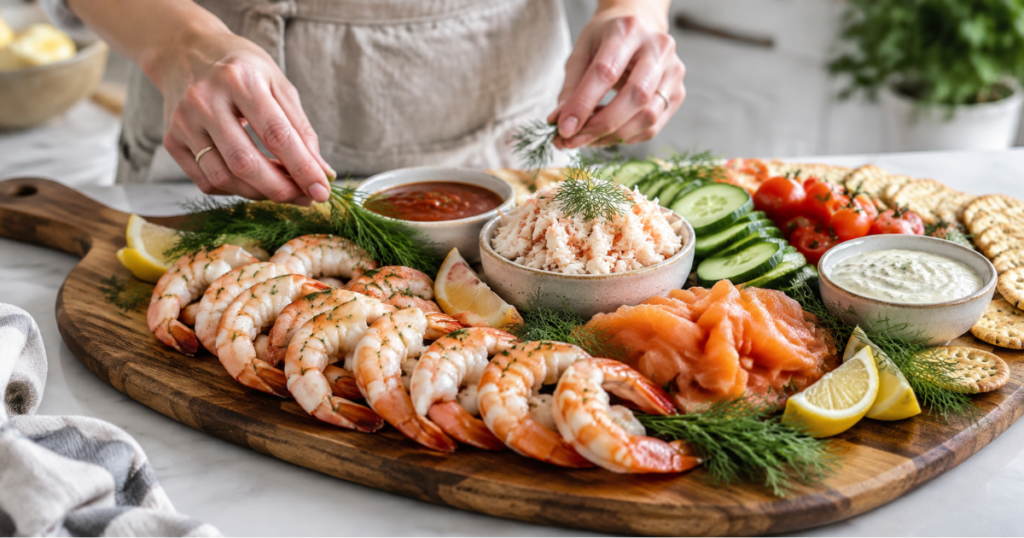
Follow these steps for an organized presentation.
Step 1: Choose a Serving Board
Select a large serving platter, wooden board, slate tray, or food-safe serving surface.
Make sure it is clean and completely dry before use.
For larger gatherings, you may find it easier to use multiple smaller platters rather than placing everything on one oversized board.
Step 2: Add Small Bowls for Sauces
Place your cocktail sauce, tartar sauce, garlic butter, and other dips first.
Spread the bowls across the board so guests can reach them easily.
Leave enough space around each bowl for seafood and serving utensils.
Step 3: Arrange the Main Seafood
Place your largest seafood portions first.
For example:
- Arrange cooked shrimp in a curved row.
- Fold smoked salmon into small rolls.
- Place crab meat in a small bowl.
- Arrange lobster pieces in a separate section.
- Place cooked scallops together in a small serving dish.
Keep different seafood types separate so guests can identify each option.
Step 4: Add Crackers and Bread
Arrange crackers in small stacks or curved rows.
Place bread slices near smoked salmon, cream cheese, or seafood spreads.
Keep dry ingredients away from sauces and seafood juices to prevent them from becoming soggy.
Step 5: Fill Empty Spaces With Fruits and Vegetables
Add cucumber slices, cherry tomatoes, carrots, grapes, and lemon wedges.
Distribute these ingredients around the seafood rather than grouping everything in one area.
This creates a more balanced appearance and makes the platter easier to serve.
Step 6: Add Garnishes and Final Details
Finish the board with fresh dill, parsley, lemon slices, and other suitable garnishes.
Use garnishes that complement the seafood rather than adding decorations that guests will not eat.
Provide separate serving utensils for different seafood options.
Step 7: Keep the Board Chilled
Seafood needs careful temperature control.
Keep the prepared seafood refrigerated until serving. If you are using ice to keep chilled seafood cold, arrange the serving setup so melted ice cannot contaminate ready-to-eat foods.
For longer gatherings, serve smaller portions and replenish them from refrigerated supplies.
Seafood Board Preparation and Food Safety
Seafood boards require careful preparation because fish and shellfish can spoil quickly when handled or stored improperly. Prepare sides ahead of time, keep seafood refrigerated, and arrange the platter shortly before serving.
What Can You Prepare Ahead of Time?
You can prepare many parts of your seafood board in advance without assembling the entire platter.
The day before:
- Wash and dry vegetables.
- Prepare lemon and lime wedges.
- Portion crackers and bread into separate containers.
- Prepare suitable dips and sauces.
- Organize serving bowls and utensils.
- Check seafood packaging and storage instructions.
Shortly before serving:
- Arrange cooked shrimp and other chilled seafood.
- Prepare smoked salmon portions.
- Add fresh vegetables and fruits.
- Place sauces in serving bowls.
- Add herbs and garnishes.
Keep seafood refrigerated until you are ready to serve it.
How to Keep Seafood Fresh and Safe
Proper storage is essential when preparing a seafood appetizer board.
Follow these basic food safety practices:
- Keep seafood refrigerated at 40°F or below.
- Store raw seafood separately from cooked and ready-to-eat foods.
- Use clean cutting boards, knives, and serving utensils.
- Wash your hands after handling raw seafood.
- Never reuse plates or utensils that have touched raw seafood without washing them.
- Keep chilled seafood on ice during serving when necessary.
The FDA advises that perishable foods should not remain at room temperature for more than two hours, or one hour when temperatures exceed 90°F. For longer gatherings, keep cold seafood chilled on ice or return it to refrigeration.
For general storage tips that apply to any board, see how to keep a charcuterie board fresh.
Be Careful With Raw Seafood
Raw seafood may contain harmful bacteria, viruses, or parasites. Raw oysters, sashimi, and other uncooked seafood can carry foodborne illness risks.
Freezing may reduce certain parasite risks in fish, but it does not eliminate every harmful germ. Cooking seafood thoroughly is the safer option.
Pregnant people, young children, older adults, and people with weakened immune systems should avoid raw or undercooked seafood. The FDA also advises these higher-risk groups to avoid certain refrigerated smoked seafood unless it is cooked in a dish.
Remember Shellfish Allergies
Shrimp, crab, lobster, oysters, and other shellfish can cause allergic reactions in people with shellfish allergies.
Before preparing your board:
- Ask guests about seafood allergies.
- Clearly identify shellfish-containing foods.
- Keep different seafood options separated.
- Use separate utensils and serving dishes.
- Avoid cross-contact between allergen-containing and other foods.
If a guest has a shellfish allergy, simply placing non-shellfish foods on the same board may not be enough to prevent cross-contact. A separate, carefully prepared platter is a better option.
How to Transport a Seafood Charcuterie Board
If you are taking your platter to a party or family gathering, transportation needs extra planning.
Here are some practical tips:
- Pack seafood in sealed, food-safe containers.
- Use an insulated cooler with sufficient ice or cold packs.
- Keep sauces in separate leak-resistant containers.
- Transport crackers, bread, and dry snacks separately.
- Assemble the platter when you arrive, if possible.
- Keep the cooler closed as much as possible.
If you need more general guidance on how to transport a charcuterie board, plan to carry delicate and perishable ingredients separately from dry items.
This approach helps protect the presentation and makes it easier to maintain safe serving conditions.
FAQs
1. What do you put on a seafood charcuterie board?
- A seafood board can include cooked shrimp, smoked salmon, crab meat, lobster, and cooked scallops. Add crackers, cucumber, cherry tomatoes, lemon wedges, olives, fresh herbs, cocktail sauce, and garlic butter to create a balanced platter.
2. What seafood is best for a beginner-friendly seafood board?
- Cooked shrimp is a practical starting point because it is easy to portion and pairs well with cocktail sauce and lemon. You can add smoked salmon and prepared crab meat for more variety without needing complicated preparation.
3. What sauces go well with a seafood charcuterie board?
- Cocktail sauce pairs well with shrimp and crab, while tartar sauce works with cooked fish. Garlic butter complements lobster and scallops. Lemon aioli, dill sauce, and cream cheese spreads are also useful options.
4. Can you make a seafood charcuterie board ahead of time?
- You can prepare vegetables, sauces, lemon wedges, and serving supplies ahead of time. Keep seafood refrigerated in separate containers and assemble the board shortly before serving to maintain freshness and safe handling.
5. How do you keep a seafood charcuterie board cold?
- Keep seafood refrigerated until serving. For longer gatherings, place chilled seafood on ice using a suitable serving setup that prevents melted ice from contaminating the food. Replenish the platter with refrigerated portions as needed.
6. Can you include raw oysters or sushi on a seafood charcuterie board?
- You can find raw seafood on some restaurant-style platters, but raw oysters and fish carry foodborne illness risks. Thoroughly cooked seafood is the safer choice for general gatherings, particularly when serving pregnant people, young children, older adults, or people with weakened immune systems.
Final Thought
Creating a seafood charcuterie board is a creative way to serve guests a variety of seafood, fresh sides, and flavorful sauces. You do not need complicated recipes or professional presentation skills to make one.
Choose seafood that suits your gathering, add complementary sides, and keep everything properly chilled. Whether you prepare a simple shrimp charcuterie board or a larger platter with smoked salmon, crab, and lobster, careful planning and safe handling will help make your seafood board enjoyable for your guests.