Graduation Charcuterie Board Ideas for an Easy Graduation Party
A graduation charcuterie board is a practical way to serve food at a graduation party. It brings cheeses, crackers, fresh fruit, mini sandwiches, savory snacks, and sweet treats together on one serving board, so guests can pick what they like. It works for both high school and college celebrations.
Whether you are hosting a small family gathering or a larger party, a well-arranged platter makes the day feel special without complicated recipes. You can match the ingredients, colors, and decorations to the graduate’s school colors or personal style.
This guide covers what to include, what to buy, how to assemble the board, theme ideas, and how to keep everything fresh during the party.
Table of Contents
What Is a Graduation Charcuterie Board?
A graduation charcuterie board is a platter of bite-sized foods arranged together for guests to share, often with decorations inspired by the celebration. It usually mixes cheeses, crackers, fruit, vegetables, desserts, and sometimes meats.
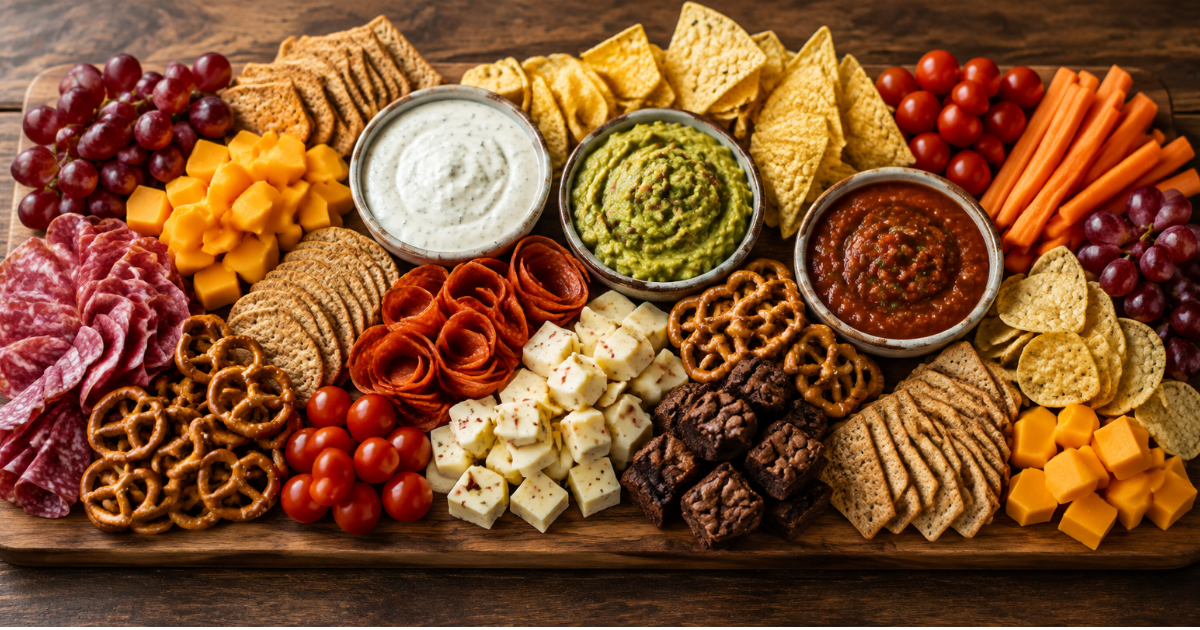
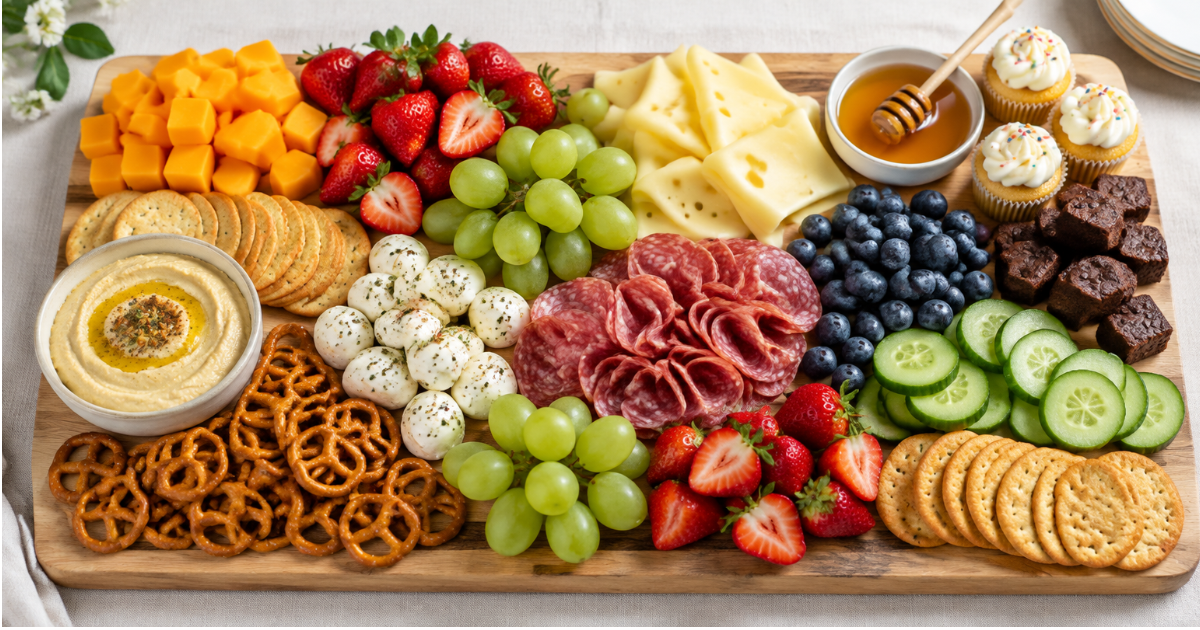
Traditional charcuterie boards focus on cured meats and cheeses. A graduation version can hold almost any party-friendly food that is easy to serve and eat, such as:
- Cheese cubes and slices
- Crackers and pretzels
- Strawberries, grapes, and blueberries
- Mini sandwiches and wraps
- Salami and other sliced meats
- Cookies, brownies, and mini cupcakes
- Nuts, dried fruit, and dips
The goal is a variety of flavors and textures that look inviting.
A graduation snack board has a few practical benefits:
- Easy self-serving: Guests take small portions without waiting for plated food.
- Flexible choices: You can include sweet, savory, vegetarian, and gluten-free options.
- Festive presentation: School colors, graduation caps, and diploma shapes make the board feel like part of the celebration.
- Scalable size: Make one small platter for family or several boards for a bigger party.
You can also match the style to the occasion. A high school party might use colorful snacks and playful decorations, while a college celebration might call for a simpler, more elegant look.
What to Put on a Graduation Charcuterie Board
A good graduation charcuterie board balances savory foods, fresh ingredients, and sweet treats. Choose foods that are easy to pick up, need little preparation, and work well together.
Cheese
Cheese pairs well with crackers, fruit, and bread, which is why it anchors most boards.
- Cheddar cubes
- Swiss slices
- Colby Jack
- Mini mozzarella balls
- Gouda wedges
- Pepper Jack
- Cream cheese spread
Mix shapes and textures. Cut cheddar into small cubes, fold Swiss slices, and put mozzarella balls in a small bowl. Graduation-themed cookie cutters can turn slices into simple shapes.
Crackers, Bread, and Pretzels
These give guests a crunchy or soft base for cheese, dips, and spreads.
- Round butter crackers
- Whole-grain or wheat crackers
- Mini pretzels
- Breadsticks
- Pita chips
- Crostini
- Mini bread rolls
Choose different shapes and sizes for variety. If a guest eats gluten-free, put gluten-free crackers in a separate spot and check ingredient labels, because not all crackers and pretzels are gluten-free.
Fresh Fruits
Fruit adds color and natural sweetness.
- Strawberries, blueberries, raspberries, and blackberries
- Green and red grapes
- Pineapple chunks
- Watermelon cubes
- Apple slices
Combine colors on purpose. Strawberries and blueberries, for example, make a red-and-blue pairing that fits many school color schemes. Cut larger fruit into manageable pieces.
Meat and Savory Snacks
A few savory options make the board more filling for guests who eat meat.
- Salami, turkey, or pepperoni slices
- Mini chicken sandwiches
- Ham and cheese pinwheels
- Mini croissant sandwiches
- Chicken wraps
- Vegetable pinwheels
Fold sliced meats into small groups instead of spreading them across the whole board. For guests who skip meat, offer hummus, cucumber sandwiches, vegetable wraps, and extra cheese.
Graduation Dessert Board
A dessert board is a good add-on, and it can sit apart from the savory platter.
- Mini cupcakes
- Chocolate chip and sugar cookies
- Brownie bites
- Chocolate-covered strawberries
- Mini donuts
- Cake pops
- Marshmallows
Cookies shaped like caps, stars, or diplomas make this section more festive, and icing in the school colors ties it to the graduate.
Dips and Spreads
Small bowls add flavor and give guests more combinations.
- Hummus
- Ranch dip
- Spinach dip
- Cream cheese dip
- Fruit dip
- Honey or jam
- Chocolate spread
Keep sweet dips near the desserts and savory dips near the crackers, vegetables, and sandwiches.
Graduation Charcuterie Board Shopping List
Choose your main food categories first, then pick specific items from the sections above based on your theme and guest count.
| Category | How many types to pick | Notes |
|---|---|---|
| Cheese | 2–3 | Mix cubes, slices, and one spreadable option |
| Crackers and bread | 2–3 | Include one gluten-free option if needed |
| Fresh fruit | 3–4 | Choose colors that match the theme |
| Meat | 1–2 | Optional; add a meat-free alternative |
| Savory snacks | 1–2 | Mini sandwiches, wraps, or pretzels |
| Vegetables | 2–3 | Cucumbers, carrots, bell peppers |
| Desserts | 2–3 | Include one themed item, such as cap cookies |
| Dips | 1–2 | One savory, one sweet |
These counts are suggestions for keeping the board balanced, not fixed rules.
Supplies to pick up:
- Serving board or tray
- Small bowls for dips
- Tongs and small spoons
- Paper liners for desserts
- Food-safe decorative picks and labels
- Napkins and small plates
How Much Food Should You Buy?
Your guest count, the length of the party, and the role of the board all affect how much you need.
- Small family gathering: One medium board may be enough if other food is available.
- Appetizer before a meal: A modest amount of cheese, crackers, fruit, and small savory bites works well.
- Snack table alongside other food: Offer a wider selection of small bites, in smaller amounts of each.
- Main food: Add more filling items such as sandwiches and wraps, and plan larger quantities.
- Larger party: Use several boards or platters so guests can reach the food easily.
Use the board’s role to guide how much food you buy. The table below offers a simple planning approach; exact quantities depend on the menu, guest appetites, party length, and whether other food will be served.
| How the board will be served | What to plan for |
|---|---|
| Appetizer before a meal | Smaller portions of cheese, crackers, fruit, and savory bites |
| Snack table alongside other food | A wider variety, with modest amounts of each item |
| Main food | More filling options, such as mini sandwiches and wraps, plus larger quantities across the food categories |
| Larger gathering | Several smaller boards or platters so guests can reach the food easily |
For example, a board for 10 guests could include a few cheese choices, one meat option, fruit, crackers or pretzels, a dip, and a small dessert selection. For a larger group, increase the amount of each item and consider splitting the food across multiple boards rather than overcrowding one tray.
Also plan for dietary needs. Include vegetarian options and clearly separated alternatives for guests who avoid dairy, gluten, or other ingredients. Buy a few items from each category rather than many similar snacks.
How to Assemble a Graduation Board
Work from the largest items to the smallest. Place bowls and main food sections first, then fill the gaps with fruit, crackers, and treats.
Step 1: Choose the Right Board or Serving Tray
Pick a clean, food-safe surface that fits the amount of food you plan to serve.
Good options include:
- Wooden boards
- Large rectangular trays
- Round platters
- Slate boards
- Divided trays
A wooden board gives a classic look. A large rectangular tray is more practical when you need room for sandwiches, crackers, and several bowls. Trays come in several styles, and the types of serving trays differ in size, material, and whether they have divided sections, so choose one that fits your bowls and food groups. A clean tray with enough space is often more useful than a small, decorative board that gets overcrowded.
Step 2: Place Small Bowls First
Add bowls for dips, spreads, nuts, and other loose items. Spread them across the board to create natural sections, rather than grouping them in one corner.
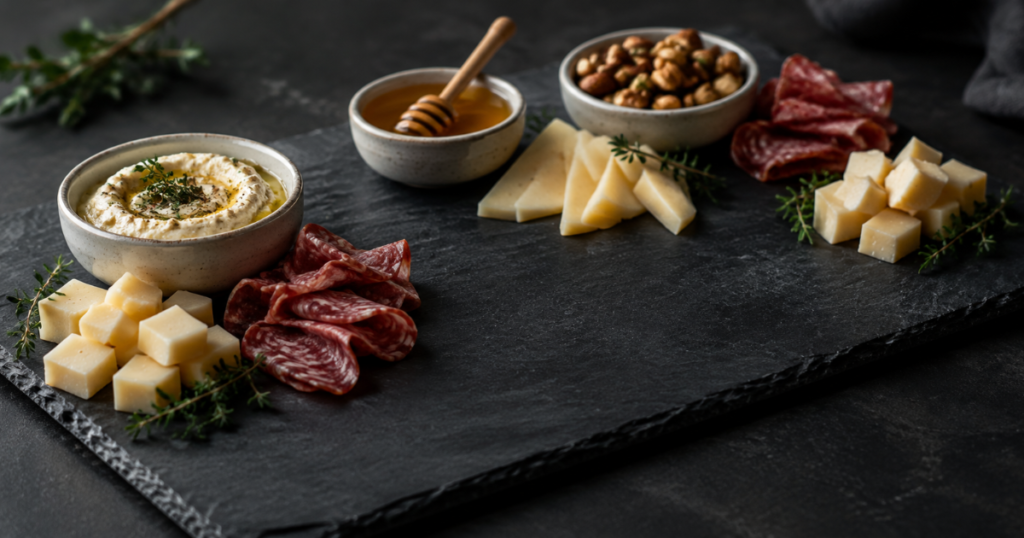
Step 3: Arrange the Cheese and Meat
Place cheese cubes, slices, and wedges around the bowls. If you are adding meat, arrange salami, pepperoni, and turkey in small groups, folded or in overlapping rows. Keep meat-free foods separate from the meat where possible.
Step 4: Add Fresh Fruits and Vegetables
Fill open areas with grapes, strawberries, blueberries, and cucumber slices. Group similar items together for a clean look, such as strawberries beside blueberries and cucumber slices beside a vegetable dip.
Step 5: Arrange Crackers and Savory Snacks
Add crackers, pretzels, breadsticks, and mini sandwiches. Stack some crackers in small groups and fan others in overlapping rows. Keep them away from wet ingredients and dips so they stay crisp.
Step 6: Add Graduation Desserts
Place cookies, brownies, and mini cupcakes in the remaining spaces, using paper liners to separate them. Spread the colors around the board instead of putting every dessert in one area.
Step 7: Finish With Graduation Decorations
Simple details complete the look:
- Graduation cap-shaped cookies
- Diploma-shaped treats
- Food-safe decorative picks
- Cupcake toppers in school colors
- Graduation-themed food labels
- Stars and simple edible decorations

If the school colors are red and white, strawberries, white chocolate treats, and matching decorations carry the theme. Keep decorations simple enough that guests can easily reach the food.
Graduation Charcuterie Board Theme Ideas
You can personalize the board by changing the colors, decorations, and arrangement. The graduate’s school colors, favorite treats, or graduation level are all good starting points.
School Colors Graduation Board
Using school colors is the easiest way to personalize the board.
- Red and white: Strawberries, red grapes, white cheese cubes, white chocolate cookies, red-frosted cupcakes
- Blue and gold: Blueberries, yellow fruit, golden crackers, blue-decorated cookies
Choose foods that naturally match the colors rather than relying on food coloring.
High School Graduation Board
A high school board can be playful and colorful. Good fits include:
- Graduation cap cookies
- Mini sandwiches
- Pretzels
- Brownie bites
- Colorful cupcakes
- Small decorations in school colors
It works well for family parties where guests of all ages are eating.
College Graduation Board
A college board can look more polished and simple. Good fits include:
- Assorted cheeses
- Breadsticks
- Fresh berries
- Salami and turkey
- Chocolate-covered strawberries
- Small decorated cookies
Use the university colors for a personal finish.
Graduation Dessert Board
A dessert-focused board suits parties where the main meal is already planned.
Good fits include:
- Mini cupcakes
- Cap cookies
- Brownie bites
- Cake pops
- Chocolate-covered strawberries
Arrange desserts by color and size, with larger cupcakes toward the center or edges and smaller treats filling the gaps.
Red, White, and Blue Graduation Board
This theme creates a festive look for an American graduation celebration. Strawberries, blueberries, white cheese cubes, white chocolate-covered pretzels, and red and blue decorated cookies carry the colors, and simple red, white, and blue serving decorations pull it together.
Healthy-Inspired Graduation Snack Board
For a lighter option, build the board around fruit, vegetables, and hummus, with cheese cubes and whole-grain crackers to keep it filling. It gives guests an alternative to sweeter, heavier party food.
Make-Ahead and Party Serving Tips
Preparing some items ahead makes party day easier. Keep perishable foods refrigerated until serving, and assemble the board close to the time guests will eat.
Prepare Ingredients Ahead of Time
Several tasks can be done before the party:
- Wash and dry fruit
- Cut vegetables
- Portion cheese into cubes or slices
- Bake or buy desserts
- Prepare food labels
- Organize trays and utensils
Store prepared ingredients in covered containers in the refrigerator when needed. Avoid assembling the whole board too early, especially if it includes fresh fruit, cut vegetables, cheese, meat, or dips.
Keep Food Categories Separate
Arrange foods in separate sections when you can:
- Keep meat away from vegetarian options.
- Place gluten-free crackers in their own area.
- Keep desserts away from savory dips.
- Use separate serving utensils for different foods.
This makes the board easier to navigate and helps reduce cross-contact between ingredients.
Keep Perishable Foods at a Safe Temperature
Cheese, sliced meats, dairy-based dips, cut fruit, and prepared sandwiches should be kept refrigerated until serving. The USDA’s Food Safety and Inspection Service (FSIS) gives these basic guidelines for food at parties:
- Keep cold foods at 40°F (4°C) or below until they are ready to serve.
- Do not leave perishable food out at room temperature for more than two hours.
- If the temperature is above 90°F (32°C), such as at an outdoor summer party, limit that time to one hour.
A few simple habits make these rules easier to follow:
- Set out small portions and keep the rest refrigerated. Refill the board with fresh portions instead of adding new food on top of food that has been sitting out.
- If food will stay out for a while, place cold dishes over a bed of ice.
- Use clean serving utensils, and keep separate utensils for foods that need to remain apart because of dietary needs or allergens.
For an outdoor party, place the board in the shade and keep backup portions in a cooler with ice or ice packs. When a perishable item has been left out beyond the time limit, do not save it for later.
Use Multiple Boards for Larger Gatherings
One large board gets hard to reach when many guests are serving themselves. Splitting the food into a savory appetizer board, a dessert board, and a fruit and vegetable platter keeps sweet and savory foods apart, and different charcuterie board styles can suit each of those jobs.
Make Serving Easy for Guests
- Provide small plates and napkins.
- Place tongs near shared foods and small spoons by the dips.
- Label foods that contain common allergens.
- Keep the board reachable from different sides.
- Refill empty sections with fresh portions instead of overcrowding the board.
- For an outdoor celebration, think about shade and cooling for foods that need refrigeration.
Frequently Asked Questions
1. What should I put on a graduation charcuterie board?
- Choose a mix of cheese, crackers, fruit, vegetables, savory bites, dips, and a few desserts. Add one or two graduation-themed treats in the graduate’s school colors to make the board feel personal.
2. How do I decorate a graduation charcuterie board?
- Use cap-shaped cookies, diploma-shaped treats, school-colored toppers, themed food labels, and food-safe decorative picks. Keep the arrangement simple so guests can reach the food easily.
3. Can I make a graduation charcuterie board ahead of time?
- Partly. Wash fruit, cut vegetables and cheese, prepare desserts, and organize packaged snacks in advance. Keep perishable items in the refrigerator and assemble the board close to serving time.
4. What are some easy graduation party food ideas for a charcuterie board?
- Choose easy-to-serve foods such as mini sandwiches, cheese cubes, crackers, fruit, pretzels, cookies, and brownie bites. Serve them together or split them into separate savory and sweet platters.
5. How much food do I need for a graduation snack board?
- It depends on the guest count, the party length, and whether the board is an appetizer or the main food. Plan more filling items such as sandwiches and wraps if guests will rely on the board as their meal.
6. What can I use instead of meat on a graduation charcuterie board?
- Use hummus, vegetables, cheese, fresh fruit, nuts, vegetarian wraps, and cucumber sandwiches. Keep separate serving utensils for each section.
Final Thought
A graduation charcuterie board is an easy way to bring favorite party foods into one festive display. Choose a mix that suits your guests, add a few treats in the graduate’s school colors, and arrange the food so everyone can serve themselves.
Use your shopping list and guest count to choose a suitable tray, prepare ingredients ahead, and keep perishable foods at a safe temperature.