Powerful: What Is a Chef’s Knife Used For? Master Every Cutting Task
If there is one tool that defines confidence in the kitchen, it is the chef’s knife. From professional restaurant kitchens to everyday home cooking, this single-blade handles most food-preparation tasks with precision and speed. So, what is a chef’s knife actually used for? It is designed as a versatile all-purpose knife that can slice, chop, mince, and dice almost every ingredient—from vegetables and fruits to meat and herbs.
In fact, most chefs agree that nearly 80–90% of kitchen cutting tasks can be completed using just a chef’s knife. Mastering it is not just about cooking—it is about improving safety, efficiency, and control in the kitchen.
This guide explores everything: anatomy, uses, knife types, materials, comparisons, buying tips, and expert-level techniques.
Table of Contents
What Is a Chef’s Knife? Meaning & Anatomy
A chef’s knife (also called a cook’s knife) is a versatile all-purpose kitchen blade designed to perform a wide range of cutting tasks. Its design has been refined over centuries to balance control, comfort, and cutting efficiency.
Key Structural Features
- Broad Blade Design: Wide near the handle for power cutting, tapering toward a sharp tip for precision work.
- Curved Cutting Edge (Belly): Enables rocking motion for fast chopping and mincing.
- Strong Heel Area: Used for cutting dense or tough ingredients like squash or root vegetables.
- Precision Tip: Ideal for fine tasks like trimming fat or scoring meat.
- Blade Length Variety: Typically 6–12 inches, with 8 inches being the global standard.
Construction & Build Quality
- Full Tang Design: Metal runs through the handle for balance and durability.
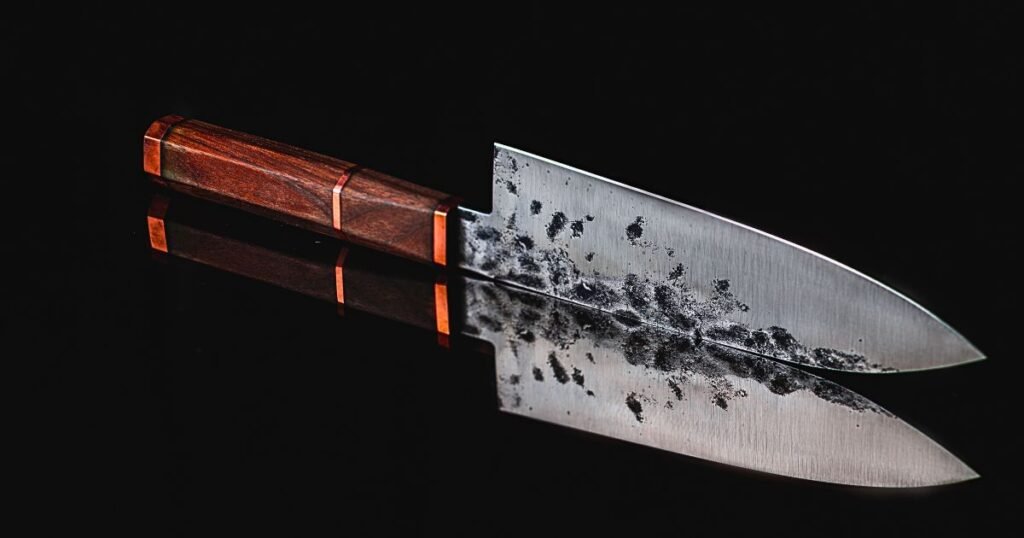
- Forged Blades: Stronger, heavier, and more durable due to single-steel construction.
- Stamped Blades: Lightweight and budget-friendly, cut from steel sheets.
Steel Types Explained
- German Stainless Steel: Durable, rust-resistant, and beginner-friendly.
- High Carbon Steel: Extremely sharp and long-lasting edge, but needs maintenance.
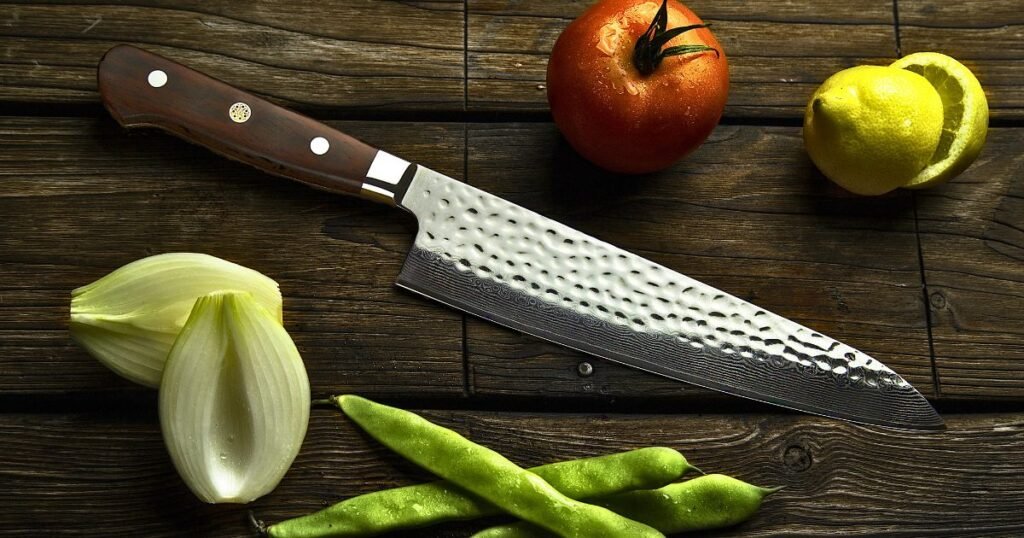
- Damascus Steel: Layered steel pattern offering beauty and strength.
- Cryogenically Treated Steel: Enhances hardness and edge retention.
👉 A well-made chef’s knife is not just sharp—it is engineered for performance, balance, and control.
What Is a Chef’s Knife Used For?
Key Kitchen Tasks
So, what is the primary use of a chef’s knife? Versatility. Its blade shape and size make it the go-to tool for about 90% of your cutting needs.
Core Uses
- Slicing: Clean cuts through meat, poultry, fish, fruits, and vegetables.
- Dicing: Perfect for uniform cuts of vegetables like onions, carrots, and celery.
- Chopping: Fast breakdown of herbs, nuts, and bulk ingredients.
- Mincing: Ideal for garlic, ginger, shallots, and fresh herbs.
- Crushing: Flat blade side used to crush garlic or spices.
- Julienne Cutting: Producing thin matchstick-style vegetable cuts.
- Precision Cutting: Fine work on delicate ingredients like herbs and garnishes.
- Heavy Prep Tasks: Breaking down squash, melons, or small poultry sections.
Its curved blade allows a rocking motion technique, which improves speed and consistency in professional cooking. In short, from delicate herbs to tough proteins, the chef’s knife is the multi-purpose tool that makes food preparation possible.
Types of Chef Knives: Western vs. Japanese Blades
While the “chef’s knife” concept is universal, two main traditions define its modern form: the Western and Japanese traditions. Understanding the Japanese knife vs. Western knife philosophies will help you find your perfect match.
Western-Style Chef Knives (German & French)
- Heavier and more robust design
- Strong curved belly for rocking motion
- Sharpened at a 20° angle per side
- Highly durable and impact-resistant
- Ideal for heavy-duty chopping
✔ Best for: Home cooks who want strength and reliability
Japanese-Style Chef Knives (Gyuto & Santoku)
- Lightweight and ultra-sharp design
- Flatter edge for push-cut technique
- Sharpened at a 12–15° angle
- Excellent precision and control
Santoku Knife (Special Variation)
- Shorter blade (5–7 inches)
- Flat edge for clean slicing
- Ideal for vegetables, fish, and fine chopping
✔ Best for: Precision cooking and delicate preparation
Chef’s Knife vs. Other Kitchen Knives (A Short Guide)
A chef’s knife is a versatile tool, but specialized types of cooking knives are designed to perform specific tasks more effectively. Here’s how it compares to other common knives.
| Knife Type | Main Purpose | Why It Matters |
| Chef’s Knife | All-purpose cutting | Handles 90% of kitchen tasks |
| Paring Knife | Peeling & precision | Best for small in-hand work |
| Utility Knife | Medium slicing tasks | Balanced everyday option |
| Boning Knife | Meat separation | Flexible for joints & bones |
| Bread Knife | Slicing bread | Serrated edge prevents crushing |
| Carving Knife | Roast slicing | Thin blade for clean cuts |
| Cheese Knife | Cheese preparation | Prevents sticking and crumbling |
Using the right knife increases safety, efficiency, and presentation quality.
Blade Materials, Construction, and What to Look For
Choosing the right chef’s knife requires understanding quality indicators.
Important Features
- Full Tang Construction: Ensures durability and balance.
- Forged Blade: Stronger and more durable than stamped blades.
- Edge Retention: How long the blade stays sharp.
- Balance Point: Should rest near the handle for control.
- Bolster: Adds stability and finger protection.
- Grip Texture: Prevents slipping during wet or oily use.
A high-quality chef’s knife is a long-term investment, not a temporary kitchen tool.
Choosing the Right Chef’s Knife: 6 vs 8 Inch & More
8-Inch Chef’s Knife (Recommended Standard)
- Best overall balance of control and power.
- Ideal for most home cooks.
- Handles large ingredients easily.
- Supports rocking motion technique.
6-Inch Chef’s Knife
- Lightweight and beginner-friendly.
- Better for small kitchens or limited spaces.
- Easier control for precision tasks.
- Less efficient for large food prep.
Expert Recommendation
Start with an 8-inch knife for long-term use, as most cooks eventually prefer its versatility.
Care, Maintenance & Safety Tips
Proper maintenance extends the life of your knife significantly.
Essential Care Practices
- Honing Regularly: Realigns the edge before use.
- Sharpening occasionally: Restores dull edges using a whetstone or tools.
- Hand Washing Only: Prevents rust and handle damage.
- Proper Storage: Use knife blocks or magnetic strips.
- Correct Cutting Surface: Always use wood or plastic boards.
Safety Tips
- Use the claw grip technique to protect fingers.
- Keep cutting boards stable.
- Never leave knives loose in drawers.
- Always cut away from your body.
A dull knife is more dangerous than a sharp one.
Frequently Asked Questions for What Is a Chef’s Knife Used For?
Q. What is a chef’s knife mainly used for?
- A chef’s knife is used for everyday food prep such as chopping vegetables, slicing meat, mincing herbs, and dicing ingredients quickly and efficiently.
Q. Can a chef’s knife replace all other knives?
- Not completely. It can handle most kitchen tasks, but specialized knives like bread knives, paring knives, and boning knives perform certain jobs more safely and precisely.
Q. What foods are best cut with a chef’s knife?
- It works best with vegetables, fruits, boneless meat, herbs, nuts, and general meal prep ingredients.
Q. Is a chef’s knife good for beginners?
- Yes. It is the most beginner-friendly and versatile knife, making it the first essential tool for learning proper knife skills.
Q. What size chef’s knife is best for home use?
- An 8-inch chef’s knife is ideal for most home cooks because it balances control, comfort, and cutting efficiency.
Q. How often should a chef’s knife be sharpened?
- It depends on usage, but generally every few months. Regular honing before use helps maintain sharpness longer.
Q. Can a chef’s knife cut through bones?
- No. It is not designed for hard bones. A cleaver or butcher knife should be used for that purpose.
Q. What makes a chef’s knife so important?
- Its versatility. A chef’s knife can handle up to 90% of kitchen cutting tasks, making it the most essential tool in any kitchen.
Your Most Valuable Kitchen Tool
A chef’s knife is more than just a cutting tool—it is the foundation of all cooking preparation. It improves speed, precision, and safety in the kitchen while reducing the need for multiple specialty knives.
By understanding its design, uses, and proper care, you gain full control over your food preparation process.
Investing in a high-quality chef’s knife and learning how to use it properly will transform your cooking experience from basic preparation to professional-level efficiency and confidence.
Conclusion
The chef’s knife is the backbone of every kitchen, combining versatility, precision, and efficiency in a single tool. From chopping vegetables and mincing herbs to slicing meats and handling everyday prep, it simplifies almost every cooking task you perform. Understanding how to use it properly—and choosing the right size, material, and style—can significantly improve both your cooking speed and food quality. More importantly, it enhances safety by allowing better control compared to using multiple unsuitable knives for the same job.
While specialized knives have their place, the chef’s knife remains the most reliable and essential tool for beginners and professionals alike. Investing in a high-quality blade and maintaining it correctly will not only make cooking easier but also more enjoyable and consistent.
In short, mastering the chef’s knife is one of the most important steps toward becoming confident and efficient in the kitchen.