Best Wood for Serving Trays Acacia vs Walnut vs Oak Guide: Choose the Right One Today
Selecting the right wood for a serving tray is about far more than appearance alone. The material you choose affects durability, weight, maintenance, resistance to moisture, and how well the tray performs over the years of entertaining and everyday use. Among the most popular options, acacia, walnut, and oak each offer unique strengths that suit different lifestyles and design preferences.
Whether you need a tray for serving coffee in the morning, displaying charcuterie at parties, or adding warmth to your home décor, understanding the differences between these woods can help you make a smarter long-term investment.
In this complete guide, we’ll compare acacia vs. walnut vs. oak serving trays in detail, covering durability, appearance, maintenance, food safety, weight, and best use cases so you can confidently choose the best wood for your needs.
Table of Contents
Quick Answer: Best Wood for Serving Trays Acacia vs Walnut vs Oak Guide
The best wood for a serving tray depends largely on how you plan to use it.
- Acacia is best for everyday serving because it combines durability, affordability, and natural water resistance.
- Walnut is ideal for elegant entertaining, luxury presentation, and premium gift-worthy trays.
- Oak is the strongest and most heavy-duty option, making it excellent for large trays and long-term durability.
Each wood has advantages, so the “best” choice depends on your balance of style, maintenance, and functionality.
Why the Wood of Your Serving Tray Matters?
Many people choose a serving tray based only on shape or color, but the wood itself plays a major role in performance and longevity.
A high-quality wooden serving tray should provide:
- Strength without excessive weight
- Resistance to moisture and food stains
- Stability under heavy dishes and drinks
- Comfortable carrying and handling
- Long-lasting beauty with minimal maintenance
The wrong wood may crack, warp, stain, or become difficult to maintain over time. Choosing the right hardwood ensures your tray remains attractive and functional for years.
Wood type also influences the tray’s style. Some woods create a rustic farmhouse look, while others feel sleek, modern, or luxurious. Understanding these differences helps you choose a tray that complements both your home décor and your hosting style.
Acacia Wood Serving Trays: Durable & Versatile
Acacia wood has become one of the most popular materials for serving trays and charcuterie boards because it offers an excellent balance between practicality and visual appeal.
Acacia is a dense hardwood known for its durability, striking grain patterns, and natural resistance to moisture. It often features warm honey, amber, and chocolate tones that create a welcoming, rustic appearance.
Pros of Acacia Wood
- Naturally water-resistant
- Highly durable for everyday use
- Attractive grain variations
- Resistant to scratches and wear
- More affordable than premium hardwoods
- Works well for both casual and formal serving
Because acacia contains natural oils, it handles spills and humidity better than many other woods. This makes it especially useful for serving drinks, appetizers, and foods that release moisture.
Cons of Acacia Wood
- Grain and color vary significantly
- Can darken slightly with age
- Requires occasional oiling
- Some lower-quality acacia trays may feel uneven in finish
Best Uses
- Everyday food serving
- Breakfast trays
- Charcuterie boards
- Coffee table trays
- Casual entertaining
Acacia offers one of the best all-around values for homeowners who want both durability and visual warmth without paying luxury prices.
Walnut Wood Serving Trays: Premium & Elegant
Walnut is considered one of the most luxurious woods used in kitchen and serving accessories. Known for its rich dark color and smooth grain, walnut instantly creates a sophisticated, upscale appearance.
Walnut trays are often used for formal entertaining, luxury kitchen styling, and premium gifting.
Pros of Walnut Wood
- Deep, elegant brown tones
- Smooth and refined grain
- Lightweight yet durable
- High-end aesthetic appeal
- Excellent for modern interiors
Walnut develops a beautiful natural patina over time, which many homeowners appreciate. Its darker tones also hide minor scratches more effectively than lighter woods.
Cons of Walnut Wood
- Higher cost than acacia or oak
- Slightly softer than oak
- Requires regular conditioning
- Premium trays may be expensive
Best Uses
- Luxury entertaining
- Wine and cheese nights
- Decorative serving trays
- Wedding or housewarming gifts
- Modern or minimalist décor
If visual presentation matters most, walnut is one of the finest choices available.
Oak Wood Serving Trays: Strong & Long-Lasting
Oak has been used in furniture and kitchenware for centuries because of its exceptional strength and longevity. It is one of the hardest and most durable woods commonly used for serving trays.
Oak typically features a bold, visible grain that creates a rustic, timeless appearance.
Pros of Oak Wood
- Extremely durable and long-lasting
- Handles heavy serving loads well
- Strong resistance to dents
- Traditional and timeless appearance
- Ideal for oversized trays
Oak trays often feel sturdier and more substantial than acacia or walnut trays, making them ideal for larger serving setups.
Cons of Oak Wood
- Heavier than most other woods
- Requires sealing and maintenance
- Grain can feel rougher than walnut
- Less resistant to moisture without treatment
Best Uses
- Large serving trays
- Heavy-duty entertaining
- Farmhouse and rustic décor
- Long-term daily use
- Serving drinks and large platters
Oak is an excellent choice if strength and durability are your highest priorities.
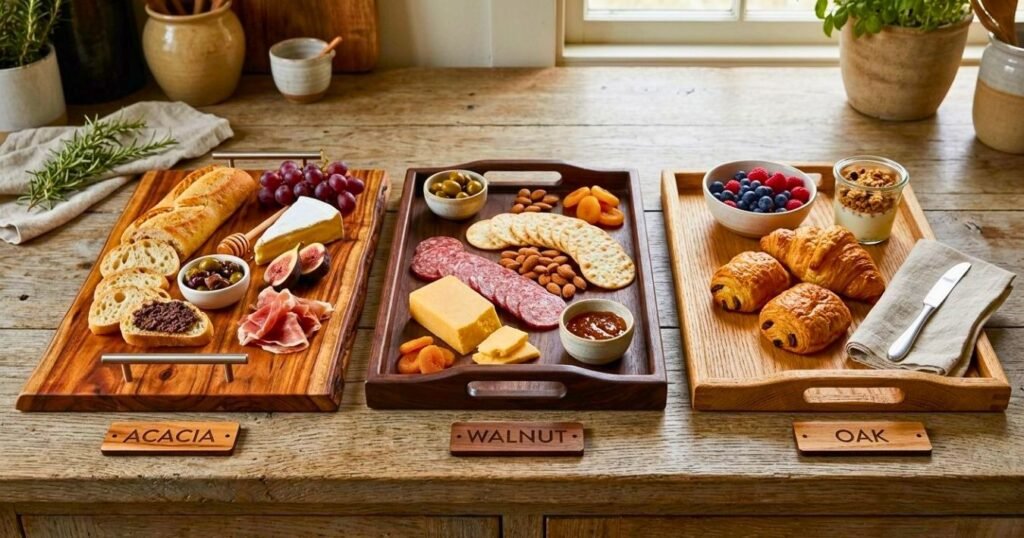
Acacia vs. Walnut vs. Oak: Quick Comparison
| Feature | Acacia | Walnut | Oak |
|---|---|---|---|
| Durability | High | Medium–High | Very High |
| Appearance | Warm & varied | Dark & elegant | Bold & rustic |
| Weight | Medium | Light | Heavy |
| Maintenance | Low | Medium | Medium |
| Price Range | Affordable | Premium | Mid-range |
| Best For | Everyday serving | Elegant hosting | Heavy-duty use |
| Water Resistance | High | Medium | Medium |
Which Wood Is Best for a Serving Tray?
Choosing the best wood depends on your lifestyle, design preferences, and how often you plan to use the tray.
Choose Acacia If You Want:
- Everyday practicality
- Water resistance
- Affordable quality
- Rustic warmth
- Low maintenance
Choose Walnut If You Want:
- Luxury presentation
- Elegant table styling
- Gift-worthy aesthetics
- Modern décor compatibility
Choose Oak If You Want:
- Maximum durability
- Heavy serving capability
- Large trays
- Long-term strength
There is no universally “perfect” wood. The best choice is the one that fits your serving habits and personal style.
Additional Factors to Consider Before Buying
Beyond wood type, several other factors influence how functional and enjoyable a serving tray will be.
Tray Weight: Heavy trays may feel stable, but can become uncomfortable when carrying drinks or large platters. Walnut is typically the lightest option, while oak is the heaviest.
Handle Design: Integrated handles improve grip and carrying comfort. Large oak trays especially benefit from sturdy side handles.
Finish and Sealing: Food-safe finishes help protect against stains and moisture. Look for trays treated with mineral oil, beeswax, or food-safe sealants.
Tray Thickness: Thicker trays feel more premium and resist warping better over time.
Intended Use: Think about how you’ll use the tray most often.
- Decorative styling
- Daily serving
- Outdoor entertaining
- Charcuterie presentation
- Breakfast in bed
- Coffee serving
The ideal wood often depends on the tray’s primary purpose.
Wooden Serving Tray Styles and Décor Matching
Different woods naturally complement different interior styles.
Acacia Works Best With:
- Boho interiors
- Rustic décor
- Scandinavian kitchens
- Casual dining spaces
Walnut Works Best With:
- Modern interiors
- Luxury kitchens
- Dark-tone furniture
- Minimalist aesthetics
Oak Works Best With:
- Farmhouse décor
- Traditional homes
- Cottage-style interiors
- Large dining spaces
Matching your serving tray to your home décor creates a more cohesive visual experience.
How to Care for a Wooden Serving Tray?
Proper maintenance dramatically extends the lifespan of any wooden serving tray.
Essential Care Tips
- Hand-wash only using mild soap
- Never soak wooden trays in water
- Dry immediately after cleaning
- Avoid direct heat exposure
- Apply food-safe mineral oil regularly
Consistent maintenance prevents cracking, warping, and drying.
What to Avoid
- Dishwashers
- Harsh chemical cleaners
- Prolonged moisture exposure
- Leaving food residue overnight
Even the most durable hardwood benefits from gentle care.
Common Mistakes When Buying Wooden Serving Trays
Many buyers focus only on appearance and overlook practical factors.
Avoid These Common Errors
- Choosing overly heavy trays
- Ignoring handle comfort
- Buying poorly sealed wood
- Selecting trays too small for entertaining
- Prioritizing looks over durability
Balancing aesthetics with functionality helps ensure long-term satisfaction.
Frequently Asked Questions About Best Wood for Serving Trays Acacia vs Walnut vs Oak Guide
Q. What is the best wood for a serving tray?
- Acacia is often considered the best all-around wood because it combines durability, affordability, and moisture resistance. Walnut is best for elegance, while oak excels in strength.
Q. Is acacia wood safe for food serving?
- Yes. Acacia is naturally food-safe when properly sealed and maintained, making it ideal for charcuterie boards and serving trays.
Q. Which wood tray lasts the longest?
- Oak trays generally last the longest because of their dense grain and exceptional durability.
Q. Does a walnut scratch easily?
- Walnut is durable but slightly softer than oak. Minor scratches can occur over time, though the dark grain often hides them well.
Q. Are wooden serving trays waterproof?
- No wood is fully waterproof. However, acacia offers better natural water resistance than many other hardwoods.
Q. Can I put a wooden serving tray in the dishwasher?
- No. Dishwashers expose wood to heat and moisture, which can cause cracking, splitting, or warping.
Q. How often should I oil a wooden serving tray?
- For regular use, applying food-safe mineral oil every few weeks helps maintain the wood’s appearance and durability.
Q. Are wooden trays better than metal or marble trays?
- Wooden trays are lighter, warmer in appearance, and more comfortable to carry. Marble and metal trays are heavier and typically used for decorative or specialized serving purposes.
Final Thoughts
When comparing acacia vs. walnut vs. oak, the best wood for a serving tray ultimately comes down to your personal needs and entertaining style.
- Acacia delivers excellent everyday durability and versatility.
- Walnut provides unmatched elegance and premium appeal.
- Oak offers exceptional strength and long-term reliability.
A well-made wooden serving tray is more than just a serving accessory—it becomes part of your entertaining experience and home décor. By choosing the right wood, you can enjoy both beauty and functionality for many years to come.