Introduction
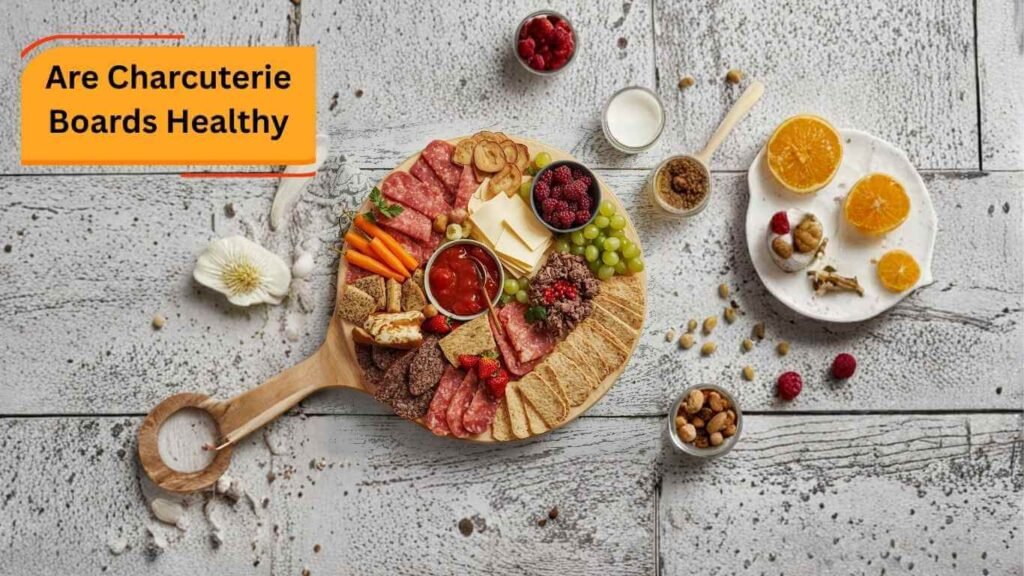
If you’ve scrolled through Instagram or Pinterest in the last few years, you’ve seen them: sprawling, beautiful platters of artfully arranged meats, cheeses, fruits, and crackers. The charcuterie board trend has exploded, transforming from a simple appetizer into a full-blown meal and a symbol of communal, rustic dining.
But as these boards grow more elaborate, a pressing question arises for the health-conscious snacker: Are charcuterie boards healthy, or are they just a beautiful platter of processed meats, high-fat cheese, and caloric indulgence?
The truth is, a charcuterie board is whatever you make it. While traditional boards are heavy on sodium and saturated fat, the modern “snack board” is a blank canvas. With a few smart choices and a focus on balance, you can create a stunning and healthy charcuterie board that is not only guilt-free but can also perfectly align with specific dietary goals, including keto, low-carb, and even weight loss plans. This guide will show you how.
The Health Reality: Are Charcuterie Boards Healthy?
Let’s be honest: the traditional charcuterie board is a nutritional minefield. The term “charcuterie” itself refers to cured meats like salami, prosciutto, and pâté.1 These are often delicious but are also high in sodium, nitrates, and saturated fats.2 When paired with large wedges of rich, creamy cheeses like brie or triple-crème, the calorie, fat, and sodium counts skyrocket.
But here’s the good news: the “charcuterie board” of 2025 has evolved. It’s no longer just about cured meats. It has become a customizable grazing platter. The healthiness of your board is not determined by its name, but by its ingredients.
By shifting the focus from processed meats to lean proteins, from rich cheeses to smart selections, and from sugary jams to whole fruits and vegetables, you can completely transform its nutritional profile. A healthy snack board prioritizes balance, color, and nutrient density over traditional indulgence.
Principles of a Healthy Charcuterie Board
Creating a healthy board isn’t about deprivation; it’s about smart construction. Dietitians and nutrition experts agree that a well-built board can be a perfectly balanced meal. The key is to follow three core principles.
- Balance is Everything: A healthy board should reflect the principles of a healthy plate. Aim for a mix of all three macronutrients.
- Lean Protein: To build muscle and promote satiety.3
- Healthy Fats: For long-lasting energy and satisfaction.
- High-Fiber Carbs: From fruits and vegetables for gut health and antioxidants.4
- Portion Awareness: Even healthy foods have calories. Nuts, seeds, cheese, and olives are fantastic, but they are calorie-dense. A “healthy” board can still lead to weight gain if over-consumed. Use a smaller board to naturally limit portions, or think of the board as a meal for several people, not a snack for one.
- Prioritize Whole Foods: Build your board around ingredients that are as close to their natural state as possible. Think fresh vegetables, raw nuts, and grilled chicken over processed crackers, candied nuts, and mystery meats. The goal is to maximize fiber, protein, and micronutrients while minimizing added sodium, sugar, and preservatives.
How to Build a Healthy Charcuterie Board (Step-by-Step)
Ready to build your masterpiece? Here is the blueprint for a balanced, beautiful, and healthy charcuterie board.
1. Start with Lean Proteins
Move beyond traditional cured meats. While a small amount of high-quality prosciutto can have a place, make these the star.
- Poultry: Sliced grilled chicken breast, low-sodium turkey slices, or turkey jerky.
- Seafood: Grilled shrimp, or a small bowl of smoked salmon.
- Plant-Based: Roasted chickpeas, edamame (steamed and salted), baked tofu cubes, or a small bowl of lentils.
- Other: Hard-boiled eggs (cut in half) are a fantastic addition to a protein charcuterie board.5
2. Make Smart Cheese Choices
You don’t have to skip the cheese! A healthy cheese board is all about selection and portion.
- Lower-Fat: Part-skim mozzarella (bocconcini), feta, or goat cheese.
- Flavorful Hard Cheeses: A little goes a long way. Aged cheddar, Parmesan, or Pecorino have strong flavors, so you need less to feel satisfied.
- Plant-Based: Look for high-quality vegan cheeses made from cashews or almonds.
3. Add Healthy Fats
These are crucial for making your board satisfying and “meal-worthy.”
- Nuts & Seeds: A small bowl of raw, unsalted almonds, walnuts, or pumpkin seeds (pepitas).
- Olives: A classic charcuterie item that’s loaded with healthy monounsaturated fats.6
- Avocado: Sliced avocado or a small bowl of fresh guacamole.
4. Load Up on High-Fiber Additions (Fruits & Veggies)
This should be the largest component of your board. Color is key!
- Raw Veggies: Cucumber spears, bell pepper strips (red, yellow, orange), cherry tomatoes, snap peas, celery sticks, and radish slices.
- Pickled Veggies: Gherkins, pickled onions, or carrots add a tangy crunch for almost zero calories.
- Fresh & Dried Fruits: Berries (strawberries, blueberries, raspberries) are low in sugar. Sliced apples, pears, or a small amount of dried apricots or figs (watch the sugar) add natural sweetness.
5. Choose Whole Grains (or Skip Them)
This is the “vehicle” for your dips and cheeses.
- Crackers: Look for 100% whole-wheat, rye, or seed-based crackers (flax, chia).
- Gluten-Free: Brown rice crackers or almond-flour crackers are great options.
- Grain-Free: For a low carb charcuterie board, skip the crackers entirely and use cucumber slices or pepper strips as dippers.
6. Select Better Dips & Spreads
Store-bought dips can be high in sodium and unhealthy oils.7 Go homemade or read labels carefully.
- Hummus: A classic, protein-and-fiber-packed dip.8
- Greek Yogurt Dip: Think tzatziki or a simple dip made with Greek yogurt, lemon, and herbs.
- Guacamole: A perfect healthy fat.9
- Mustard: A robust, low-calorie option that pairs well with meats.
7. Add a Touch of Sweetness (In Moderation)
A small, intense sweet flavor can make the board feel more decadent.
- A few squares of dark chocolate (70% cocoa or higher).
- A tiny drizzle of raw honey or pure maple syrup over goat cheese.
- A small bowl of homemade chia seed berry jam.
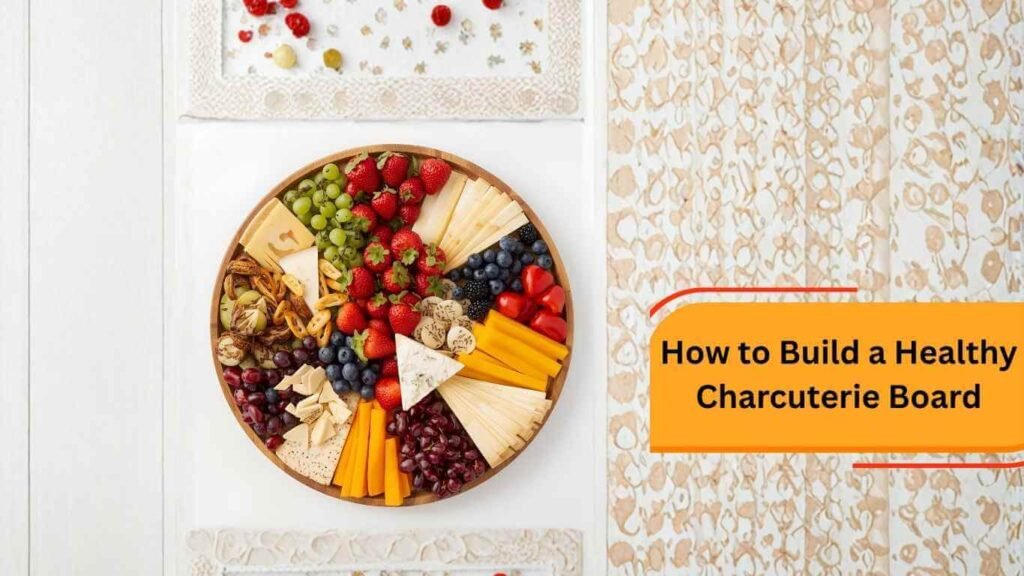
The Healthy Board Blueprint
Visualize your platter as a plate:
- ½ of the board: High-Fiber Veggies & Fruits
- ¼ of the board: Lean Proteins
- ¼ of the board: Healthy Fats & Smart Cheeses
- Accents: Dips & Whole-Grain Crackers
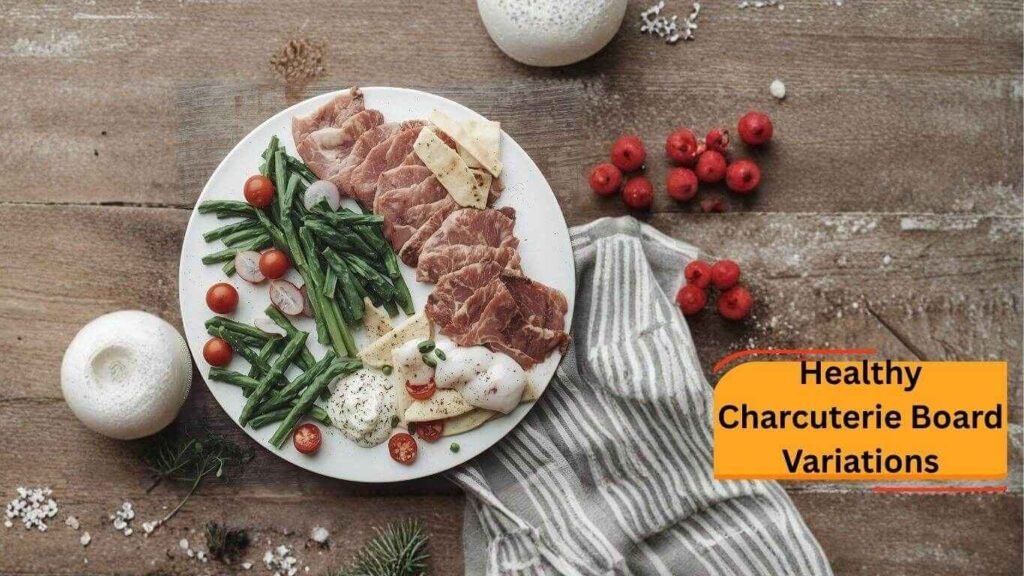
Healthy Charcuterie Board Variations
Your board can be customized to fit any dietary need.
Charcuterie Board for Weight Loss
The goal here is high volume and high satiety for the fewest calories.
- Focus: Make 70% of the board fresh, non-starchy vegetables (cucumbers, peppers, tomatoes, snap peas).
- Proteins: Rely heavily on lean options like turkey slices, grilled chicken, and hard-boiled eggs.
- Dips: Choose low-calorie dips like salsa, tzatziki, or a mustard-based dip.
- Limits: Be very sparse with nuts, cheese, and crackers. Use one small, portion-controlled wedge of a flavorful hard cheese.
Keto / Low-Carb Charcuterie Board
This is a natural fit for a keto charcuterie plan. The focus is on fats and protein, with minimal carbs.
- Focus: Fats and proteins. Include traditional cured meats (salami, pepperoni) but check for added sugars.
- Cheeses: Go for full-fat hard and soft cheeses (brie, cheddar, blue cheese).
- Fats: Olives, almonds, walnuts, pecans, and avocado are your best friends.
- Dippers: Use celery sticks, cucumber slices, and bell pepper strips instead of crackers.
High-Protein / Protein Charcuterie Board
Ideal for a post-workout snack or a meal focused on muscle-building and satiety.
- Focus: A high protein charcuterie board should be loaded with protein sources.
- Proteins: Grilled chicken, turkey jerky, roast beef slices, hard-boiled eggs, grilled shrimp, roasted chickpeas, and edamame.
- Cheeses: Add cottage cheese (a protein powerhouse) or high-protein cheeses like Swiss or Parmesan.10
- Dips: Use a Greek yogurt-based dip to boost protein content even further.
Healthy Snack Board for Families
Make it fun, colorful, and accessible for kids.
- Focus: Nutrient-dense foods in fun shapes.
- Additions: Cheese sticks, clementines (easy to peel), apple slices, “ants on a log” (celery with nut butter and raisins), hummus, and whole-wheat pretzels.
- Tip: Keep it allergy-friendly by using seed butters (like sunbutter) instead of peanut butter.
Conceptual Macro Comparison
| Board Variation | Primary Protein Source | Primary Fat Source | Primary Carb Source |
| Weight Loss | Turkey, Chicken, Eggs | Minimal (e.g., hummus) | Non-Starchy Veggies |
| Keto/Low-Carb | Cured Meats, Salami | Full-Fat Cheese, Nuts, Olives | Low-Carb Veggies (Celery) |
| High-Protein | Grilled Chicken, Eggs, Shrimp, Jerky, Greek Yogurt | Nuts, Hard Cheese | Veggies, Legumes (Chickpeas) |
| Family Snack | Cheese Sticks, Hummus | Nut/Seed Butter | Whole Grains, Fruits |
Tips for Making Charcuterie Healthier
- Read Meat Labels: Choose “nitrate-free” and “low-sodium” options when buying cured meats or turkey.
- Crowd with Plants: A simple rule: make at least half your board fruits and vegetables. The more color, the more antioxidants and fiber.
- Healthy Garnishes: Use fresh herbs like rosemary or thyme and even edible flowers. They add flavor and antioxidants without calories.
- Watch Sneaky Calories: The calories add up fast from grazing on crackers, jams, and handfuls of nuts. Be mindful.
- Meal Prep It: Create mini, single-serving “healthy snack boxes” in food prep containers. This provides perfect portion control for lunches or snacks during the week.
Are Charcuterie Boards Good for Weight Loss or Diets?
Yes, a charcuterie board can absolutely be good for weight loss and fit into most popular diets, if constructed correctly. It’s all about macro-balance.
- For Weight Loss: A charcuterie board for weight loss works because it’s visually abundant, which tricks your brain into feeling satisfied. By loading it with high-fiber veggies and lean protein, you get a high-satiety, low-calorie-density meal.
- Real Example: A “Weight-Loss Lunch Board” could feature 3 oz of sliced turkey, one hard-boiled egg, a cup of mixed veggies (peppers, cucumber), 2 tablespoons of hummus, and a handful of berries. This is a balanced, low-calorie, and filling meal.
- For Keto/Low-Carb: A keto charcuterie board is one of the easiest ways to adhere to the diet. It naturally combines the required high-fat, moderate-protein, and low-carb foods.
- Real Example: A “Keto Dinner Board” could have salami, brie, olives, almonds, and celery sticks. It’s perfectly compliant and requires no cooking.
- For Mediterranean Diet: This is also a perfect fit. Focus on hummus, olives, fresh vegetables, feta or goat cheese, and perhaps some grilled fish or shrimp.
- For Gluten-Free: Simply swap any grain-based crackers for gluten-free crackers (made from rice, almonds, or seeds) or use vegetables as dippers.
Sample Board Ideas & Quick Recipes
Here are three quick “recipes” for healthy boards.
- The Keto Power Board:
- Ingredients: Salami slices, a wedge of brie, 1/4 cup almonds, 1/4 cup green olives, 1/2 cucumber (sliced), 1/2 bell pepper (sliced).
- Macro Highlight: High-Fat, Very Low-Carb.
- The High-Protein Power Board:
- Ingredients: 4 oz grilled chicken strips, 2 hard-boiled eggs (halved), 1/2 cup edamame, 1/2 cup 2% cottage cheese, 1 cup snap peas.
- Macro Highlight: High-Protein, High-Fiber.
- The Weight-Loss Veggie Board:
- Ingredients: 3 oz low-sodium turkey breast, 1 cup mixed veggies (cherry tomatoes, carrots, peppers), 2 tbsp tzatziki dip, 1 rice cake, 1/2 cup strawberries.
- Macro Highlight: Low-Calorie, High-Volume.
Quick Recipe: 2-Minute Creamy Herb Dip
- 1 cup plain Greek yogurt (0% or 2%)
- 1 tbsp lemon juice
- 1 tsp garlic powder
- 1 tbsp fresh chopped dill (or 1 tsp dried)
- Salt and pepper to taste
Directions: Mix all ingredients in a bowl. It’s the perfect high-protein, low-fat dip for your board.
Common Questions & Myths
- Is charcuterie always unhealthy? Not at all. Traditional charcuterie (cured meats) is high in sodium and fat, but a modern “healthy charcuterie board” built with lean proteins, veggies, and healthy fats is incredibly nutritious.
- Can I make a vegetarian charcuterie board? Absolutely. A vegetarian board can be a healthy cheese board with hummus, babaganoush, hard-boiled eggs (if lacto-ovo), nuts, seeds, olives, and plenty of fruits and vegetables. For a vegan board, use plant-based cheeses and proteins like roasted chickpeas or tofu.11
- What’s the healthiest cheese/meat choice?
- Healthiest Meat: Look for minimally processed options like grilled chicken breast, low-sodium turkey, or shrimp.
- Healthiest Cheese: Part-skim mozzarella, goat cheese, feta, or Swiss cheese are great choices. For hard cheeses, a high-flavor option like Parmesan means you can use less.
- How do I manage sodium and fat content? The easiest way is to build the board yourself. Limit processed meats, rinse canned items like chickpeas or olives, make your own dips, and load up on fresh, whole foods (veggies and fruits) which are naturally low in sodium and fat.
Conclusion
So, are charcuterie boards healthy? The answer is a resounding yes as long as you are the architect.
By ditching the “more is more” mentality of processed meats and heavy cheeses and embracing a new model of balance, color, and whole foods, you can transform the charcuterie board from a guilty indulgence into a healthy, satisfying, and beautiful meal.
Whether you’re building a charcuterie board for weight loss, a keto charcuterie platter, or a high-protein snack board, the principles are the same: prioritize plants, pick lean proteins, and choose smart fats. Don’t be afraid to experiment. The healthy, guilt-free board of your dreams is just a few smart choices away.