When you’re dining with kids, it can feel like you’re running a triathlon. You’re navigating picky eaters, serving a balanced meal, and hoping everybody stays seated longer than five minutes. Here’s a game-changing solution to the “finish your plate” battle: the dinner grazing board.
Grazing boards, or “snackle boxes” as some parents call them, turn a standard meal into something fun, colorful, and interactive. The kids love it. Exactly why? Besides giving them a choice, it also looks like a party. The benefits for parents are even greater: they are surprisingly easy to prepare, introduce new foods, and make family dinners more enjoyable.
This article will provide you with all the information you need to know about kids dinner grazing boards. You’ll learn how to build one, why they work so well for families, and lots of creative themes to get you started.
What Is a Kids Dinner Grazing Board?
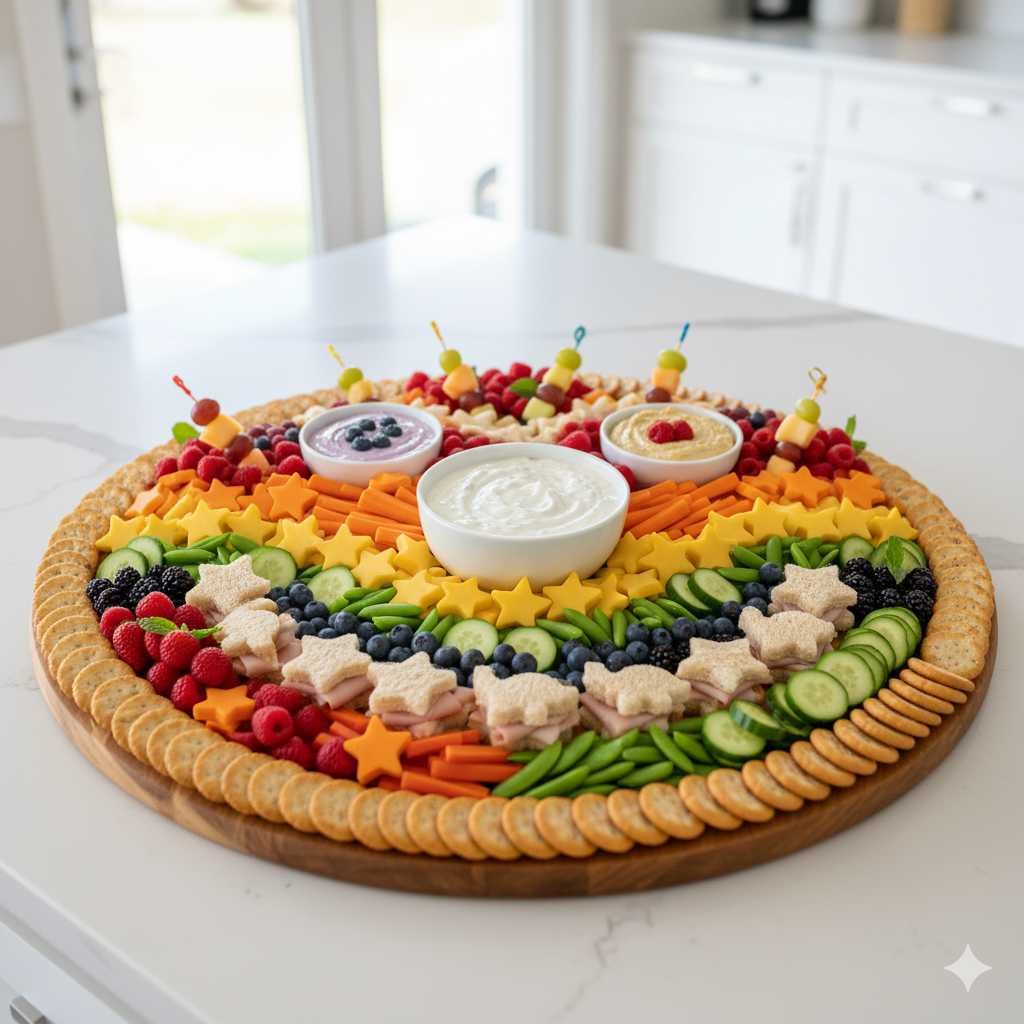
A kids dinner grazing board can be viewed as a deconstructed, visual feast. A grazing board is an alternative to a plate with separate, non-negotiable piles of food. It consists of a large platter, cutting board, or even a sheet pan layered with all the components of a balanced meal.
Presentation is the key to magic. There are small portions of proteins, carbs, fruits, and vegetables arranged in an appealing manner, often alongside a favorite dip.
Traditional meals are flipped with this approach. A plated dinner, on the other hand, can sometimes seem prescriptive to a child-“you must eat that.” A grazing board, on the other hand, feels more like a suggestion. By doing so, kids are encouraged to try new things at their own pace. Children are more likely to try a “new” food (like a sugar snap pea) if they are placed alongside a “safe” food (like a cheese cube). This empowers them to design their own plate, which is a huge step toward empowering them to make healthy food choices for themselves.
Why Grazing Boards Are Great for Kids
This trend is more than just a pretty picture; it’s a smart parenting hack. What started as a “family snack board dinner” has become a go-to strategy for many parents, including me. The positive feedback is always the same: it just makes mealtime easier.
Variety and Nutrition in Every Bite
The biggest challenge for parents is often nutritional balance. A grazing board makes this simple. You can visually “eat the rainbow” by including small amounts of many different food groups.
- Protein: Chicken nuggets, rolled deli meat, hard-boiled eggs, edamame.
- Healthy Fats: Avocado slices, cheese cubes, hummus.
- Carbs: Crackers, mini pitas, pretzels, whole-grain mini muffins.
- Veggies: Bell pepper strips, cucumber circles, cherry tomatoes, baby carrots.
- Fruits: Berries, apple slices, grapes, clementine segments.
When kids have a variety of healthy options, they are more likely to eat a balanced meal overall, even if they only take one bite of each thing.
Fun, Creative, and Interactive
Kids eat with their eyes first. A board covered in different colors, shapes, and textures is infinitely more exciting than a standard plate. It’s an interactive experience. They get to use their hands, experiment with dipping, and build their own combinations.
I’ve found that a little bit of creativity goes a long way. Using a small cookie cutter to turn a slice of cheese into a star, or putting fruit on a colorful skewer, can make a “boring” food suddenly irresistible.
Easy for Parents to Prepare
This is the best part for busy families. A dinner grazing board looks impressive, but it’s often less work than a traditional cooked meal.
It’s all about assembly. You can use leftovers (like last night’s chicken), pre-cut veggies, and pantry staples. It’s the perfect “clean out the fridge” dinner idea. Simply grab a board, gather your components, and arrange them. Cleanup is minimal—often just the board itself and a few small bowls for dips.
How to Build a Balanced Kids Dinner Grazing Board
Ready to build one? The formula is simple. Think of it as four easy steps to a perfect, balanced board.
Step 1 – Choose a Kid-Friendly Base
These are the “anchors” of the meal—the protein and complex carbs that provide lasting energy. Aim for at least one or two options from each category.
- Protein Examples: Mini meatballs, chicken bites, rolled-up turkey or ham, hard-boiled eggs (halved), edamame, tofu cubes, cheese sticks cut into rounds.
- Carb Examples: Whole-grain crackers, mini naan or pita bread, pretzel sticks, small dinner rolls, mini waffles, or even a small pile of pasta.
Step 2 – Add Color and Crunch
This is where you load up on vitamins and visual appeal. This step is all about fresh fruits, crisp veggies, and a few fun snacks for texture.
- Fruit Examples: Strawberries, blueberries, (cut) grapes, apple slices (with a little lemon juice to prevent browning), melon cubes, clementine segments.
- Veggie Examples: Baby carrots, cucumber slices, bell pepper strips (red and yellow are sweetest), sugar snap peas, cherry tomatoes (halved), steamed broccoli florets.
- Crunchy Snacks: A small handful of pretzels, veggie straws, or lightly salted popcorn.
Step 3 – Don’t Forget Dips and Spreads
Dips are the secret weapon. They make vegetables and proteins infinitely more fun. I’ve seen kids who swear they hate carrots happily dip them in hummus or ranch.
- Dip Examples: Hummus (classic or roasted red pepper), ranch dip (try making a healthier version with Greek yogurt), guacamole, bean dip, or a sweet yogurt dip for fruit. Place dips in small, kid-friendly bowls to anchor them on the board.
Step 4 – Add Some Fun
This is the “wow” factor. It takes just a few seconds but makes a huge difference to a child.
- Fun Ideas: Use mini cookie cutters for cheese and soft fruits. Skewer berries and melon chunks on colorful food picks. Arrange items in a pattern, like a “rainbow” or a smiley face. Mini sandwiches cut into shapes are also a huge hit.
Creative Kids Dinner Grazing Board Ideas
Need some inspiration? Here are a few themed kids dinner grazing board ideas that are always a success. These are some of the most fun meal ideas for kids you can make.
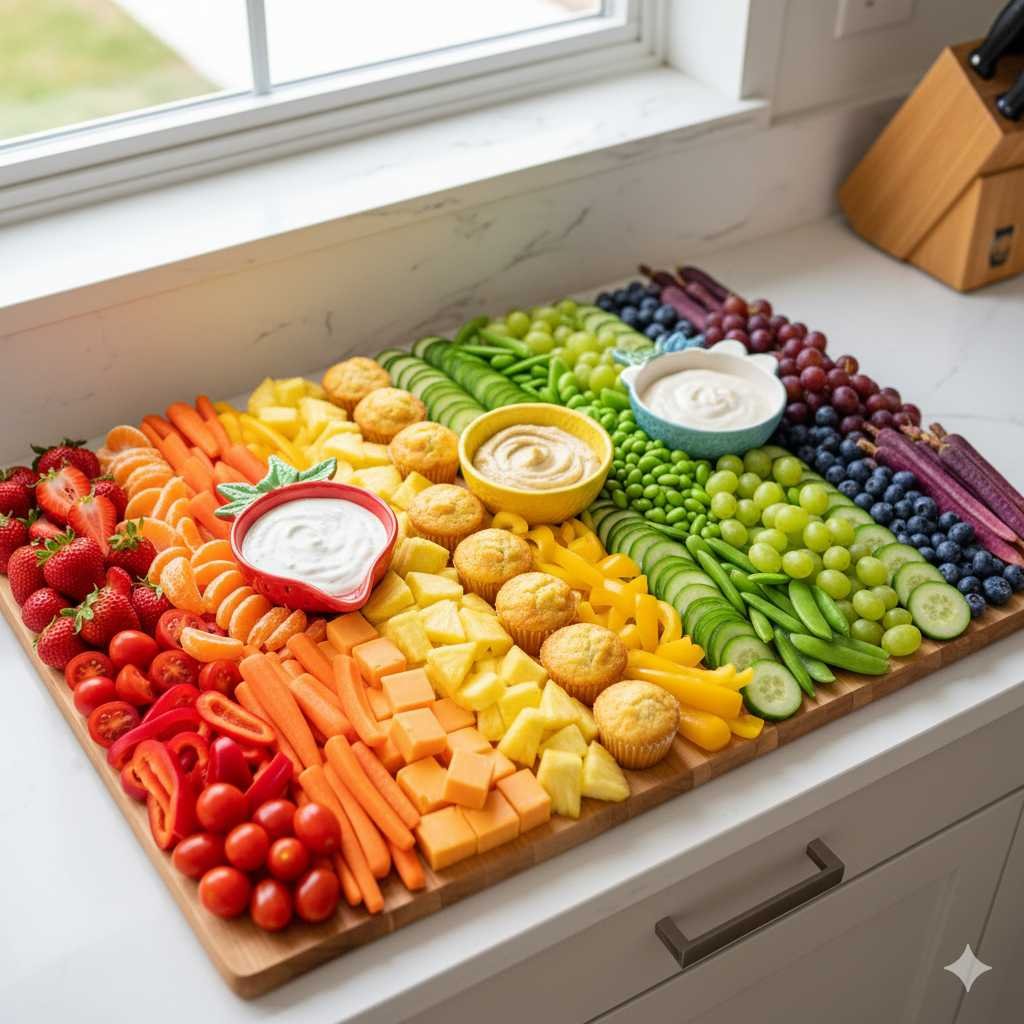
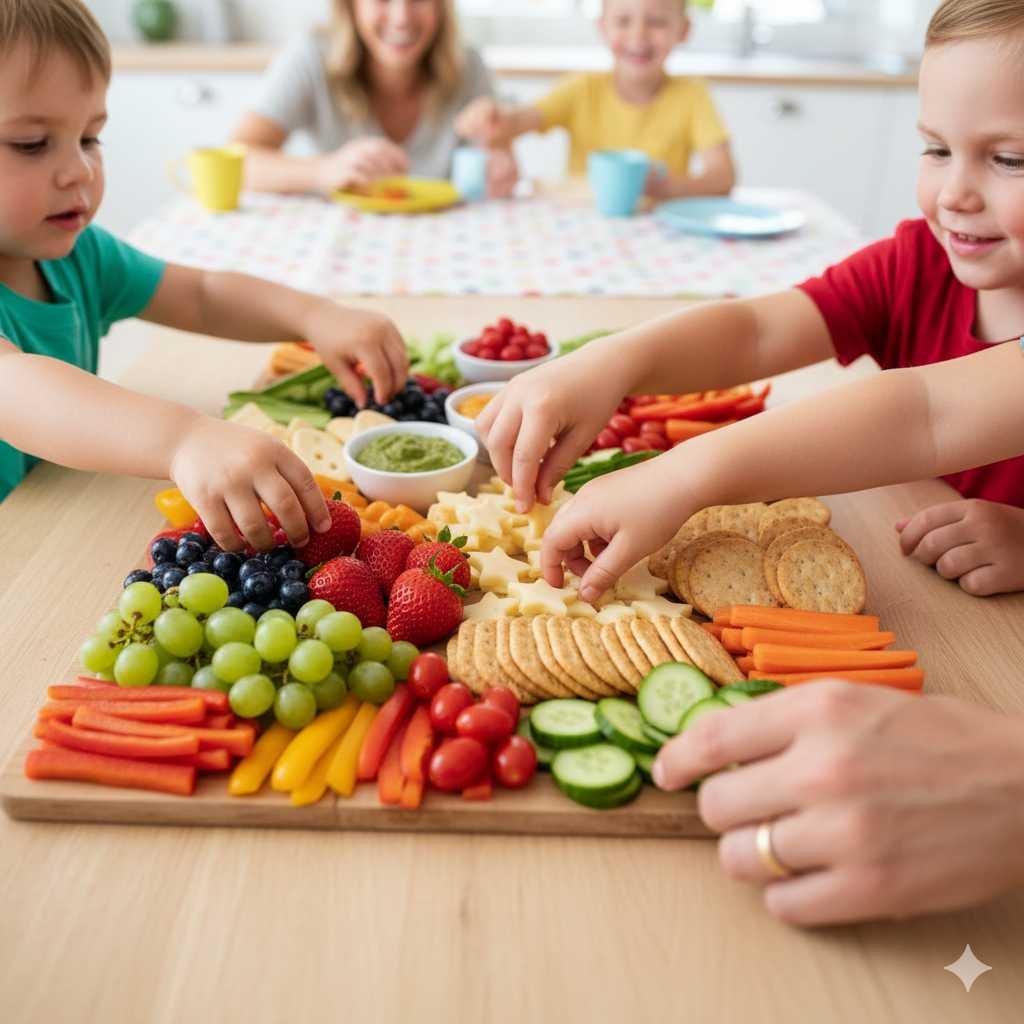
- The Rainbow Board: This is a fantastic way to build a healthy kids grazing board. Challenge yourself (and your kids!) to find a food for every color.
- Red: Strawberries, raspberries, red bell peppers, cherry tomatoes.
- Orange: Carrot sticks, clementine segments, cheddar cheese cubes.
- Yellow: Pineapple chunks, yellow bell peppers, corn, mini-muffins.
- Green: Cucumber, snap peas, edamame, (cut) green grapes, avocado.
- Blue/Purple: Blueberries, blackberries, purple carrots.
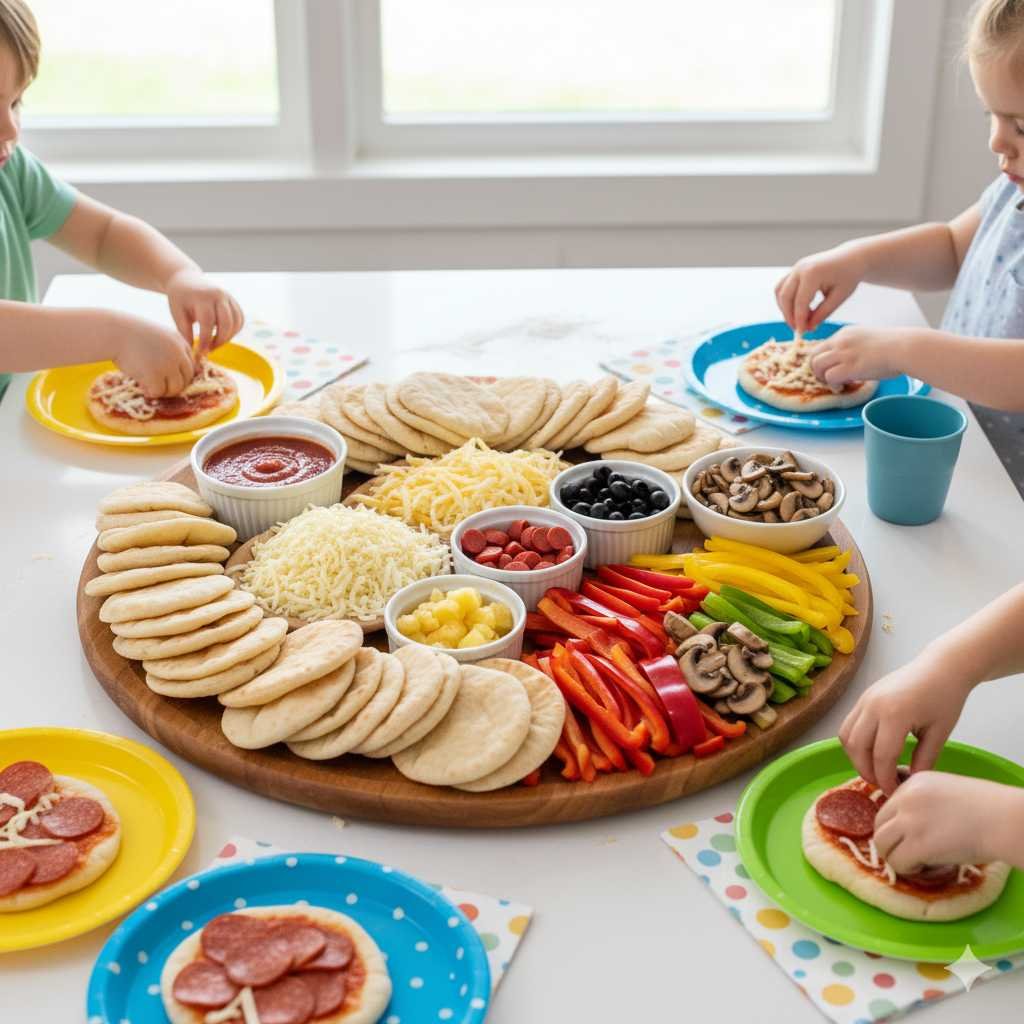
- The Mini Pizza Board: Perfect for a Friday night. Kids love to build their own.
- Base: Mini pita bread, naan dippers, or even large crackers.
- Sauce: A small bowl of marinara.
- Cheese: Shredded mozzarella.
- Toppings: Mini pepperoni, sliced olives, cooked mushroom slices, pineapple tidbits, bell pepper strips.
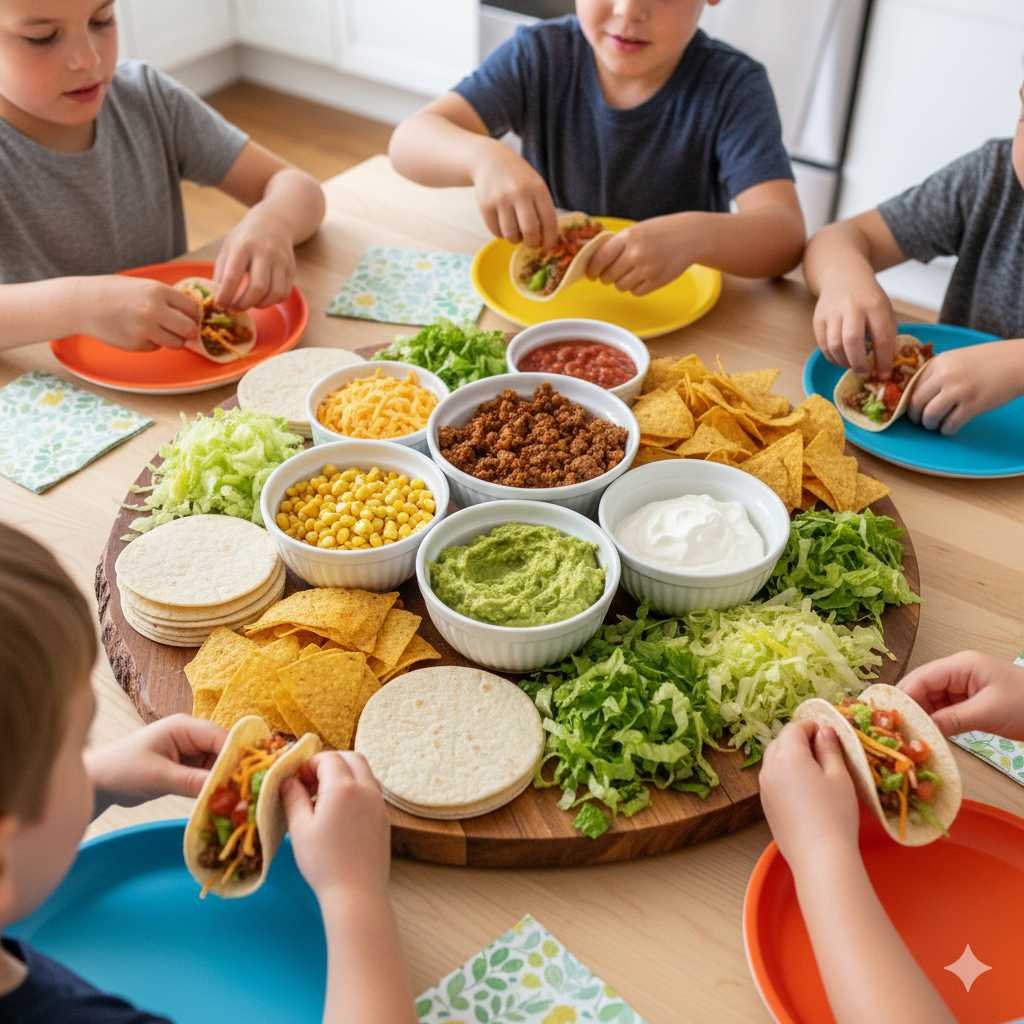
- The Taco Night Board: A deconstructed taco night is often easier for little hands.
- Protein: A bowl of seasoned ground turkey or beef, or black beans.
- Fillings: Shredded lettuce, shredded cheese, corn.
- Base: Small, soft tortilla shells or a pile of tortilla chips.
- Toppings: Mild salsa, sour cream or plain Greek yogurt, guacamole.
- The Breakfast-for-Dinner Board: This is a guaranteed crowd-pleaser.
- Main: Silver dollar pancakes or mini waffles (store-bought is fine!).
- Protein: Scrambled eggs in a bowl, sausage links, or bacon strips.
- Sides: Lots of berries, banana slices, and a small pot of maple syrup for dipping.
- The Protein-Packed Board: Great for active kids or after a busy day at school.
- Proteins: Hard-boiled eggs, chicken or turkey meatballs, rolled deli meat, cheese sticks.
- Sides: Hummus, nuts (if age-appropriate), seed crackers, edamame, and apple slices.
Tips for Making It Balanced and Healthy
A grazing board is naturally healthy, but it’s easy to let it skew into “snack” territory. Here are a few expert tips to keep it a balanced dinner.
- Prioritize Protein and Veggies: Make these the most abundant items on the board. Use the “fun” foods (like crackers and pretzels) to fill in the small gaps, not as the main event.
- Portion Control: The beauty of a board is that it encourages portion control naturally. Put out small amounts of each item. You can always refill a favorite, but this ensures kids get a chance to see (and try) everything.
- Read Labels on Dips: Store-bought dips can be high in sodium and unhealthy fats. Look for simple ingredients, or whip up a quick Greek yogurt ranch or hummus at home.
- Mind Choking Hazards: This is a critical E-E-A-T (Trustworthiness) point. For toddlers and young children, always cut foods to a safe size.
- Cut grapes, cherry tomatoes, and large berries lengthwise.
- Cut hotdogs or sausages lengthwise and then into small, non-round pieces.
- Avoid whole nuts, large globs of nut butter, and hard, sticky candies for children under 4.
How to Make It Appealing for Picky Eaters
If you have a picky eater, the grazing board is your new best friend. The low-pressure environment is key.
- The “No Pressure” Rule: The rule of the board is simple: “You don’t have to eat it, but it’s here if you want to try.” When a child doesn’t feel forced, their natural curiosity often takes over.
- Include “Safe” Foods: Always include one or two “safe” foods you know your child loves (like their favorite cracker or fruit). This makes the board feel familiar and less intimidating.
- Get Them Involved: This is my number one tip. Ask your child to help you build the board. Let them choose where the carrots go or have them wash the berries. Kids who are involved in the prep are significantly more likely to eat the food.
- Make it Themed: Is your child obsessed with dinosaurs? Call it a “Dinosaur Board” and cut sandwiches into dino shapes. A “Frozen” theme? Use blue and white foods (blueberries, yogurt, cauliflower). The possibilities are endless.
Conclusion
Dinnertime doesn’t have to be a battle. By shifting from a plated meal to a shared platter, you can make food fun, colorful, and interactive. A grazing board empowers kids to make healthy choices, try new things, and enjoy the food in front of them.
These kids dinner grazing board ideas are more than just a meal; they’re a way to create a positive, pressure-free family experience. They are easy to prepare, simple to clean up, and endlessly customizable.
Try one of these grazing board ideas tonight and make dinner both easy and exciting!